Every Reader Deserves a Room for It
There is a particular pleasure in a room built around books — the smell of paper, the weight of a shelf that goes floor to ceiling, a chair positioned exactly where the afternoon light lands. A home library is not a luxury reserved for manor houses. It is one of the most achievable dedicated rooms in interior design: it needs no plumbing, no special ventilation, and no expensive equipment. It needs shelving that holds weight, light that does not strain eyes, seating that invites long stays, and a layout that makes a large collection browsable instead of merely stored.
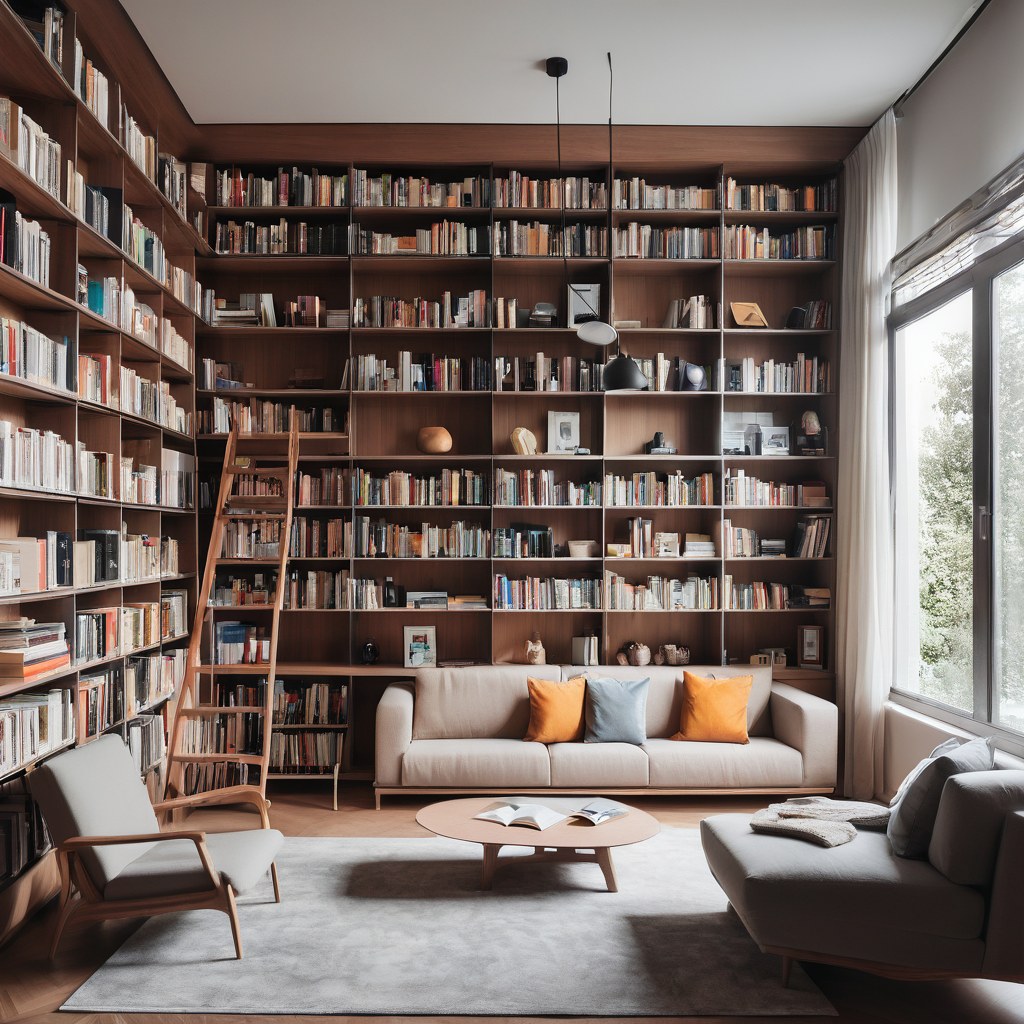
Whether you are converting a spare bedroom, claiming a corner of a living room, or building a dedicated reading room from scratch, the same three disciplines govern the result: shelving engineered for real books, lighting layered for day and night reading, and a layout that balances storage density with comfort. Get those right and the room practically designs itself. This guide covers all three, plus the details — climate, cataloging, seating, and budget — that separate a room with books in it from a true home library.
Planning the Space: Size, Location, and Honest Math
Start with the collection, not the room. Count your books — roughly, by the shelf-foot. A standard bookshelf holds about 20 to 30 books per linear foot of shelf, depending on book size, so a 1,000-book collection needs roughly 35 to 50 linear feet of shelving. A single 3-foot-wide bookcase with six shelves provides about 18 linear feet; do the division and you will know immediately whether you need two bookcases or a full wall. Plan for 15 to 20 percent growth — collections expand to fill available shelving, and a library with no empty shelf space feels oppressive rather than abundant.
Location matters more than square footage. The best home libraries sit where they will actually be used: near the living areas, not exiled to a damp basement or an unheated attic. Books and readers both dislike damp, cold, and direct sun, so avoid exterior walls with moisture problems and south-facing windows without shades. A spare bedroom of 100 to 150 square feet makes an ideal library; a 10-by-12-foot room can hold two full walls of shelving, a reading chair, and a small table with room to spare. Even a hallway alcove or an under-stair nook can work for a focused reading corner if the shelving and light are right — the library is defined by intention, not by square footage.
Before you buy a single shelf, check the floor. Books are astonishingly heavy: a fully loaded bookcase weighs 20 to 30 pounds per linear foot of shelf, and a wall of shelving can concentrate over a thousand pounds in a few square feet. On a ground-floor slab this is a non-issue; on an upper floor with wood joists, distribute the load along load-bearing walls rather than mid-span, and if you are planning floor-to-ceiling shelving across a whole room upstairs, a structural check is cheap insurance. Heavy is fine — heavy in the wrong place is not.
Shelving: The Engineering of Book Storage
Shelving is where home libraries succeed or fail, and the failure mode is always the same: sagging. A 36-inch shelf loaded with hardcovers carries 40 to 60 pounds, and particleboard or thin pine will bow visibly within a year. The rules are simple. Keep shelf spans under 36 inches for 3/4-inch material; use 1-inch-thick shelves or add a center support for wider spans. Solid wood, quality plywood with edge banding, and steel all work; cheap particleboard bookcases work only if the spans are short and the load is paperbacks. Adjustable shelves are worth the small premium — book heights vary, and fixed shelves waste the 4 inches above every paperback row.
Shelf depth and height follow the books. Most books need 8 to 10 inches of depth; art books and atlases need 12 to 14. Shelf spacing of 10 to 12 inches handles the vast majority of hardcovers; reserve one or two taller bays (14 to 16 inches) for oversized volumes. Leave the top shelf reachable — anything above 7 feet needs a library ladder or a step stool, which is charming in theory and annoying in practice if you use those books often. Put the rarely-touched reference volumes up high and the daily reads at eye level.
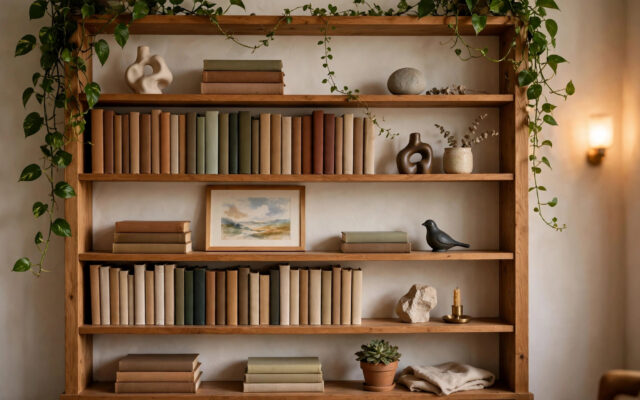
For the built-in look, you have three tiers. Freestanding bookcases are the flexible, renter-friendly option — buy solid ones, anchor tall units to the wall (a loaded bookcase is a tipping hazard, especially with children), and align their heights for a composed wall. Modular systems offer the middle path: consistent dimensions, add-on units, and a finished look that can grow with the collection. True built-ins — floor-to-ceiling shelving framed into the wall, often with a ladder rail — are the showpiece option, typically $200 to $500 per linear foot installed by a carpenter, and they add genuine resale value because buyers read them as architecture, not furniture. Whichever tier you choose, paint or finish the backs of the shelves: a dark backing (deep green, navy, charcoal) makes book spines pop and gives the wall a finished, intentional look.
Lighting: Three Layers for Day and Night
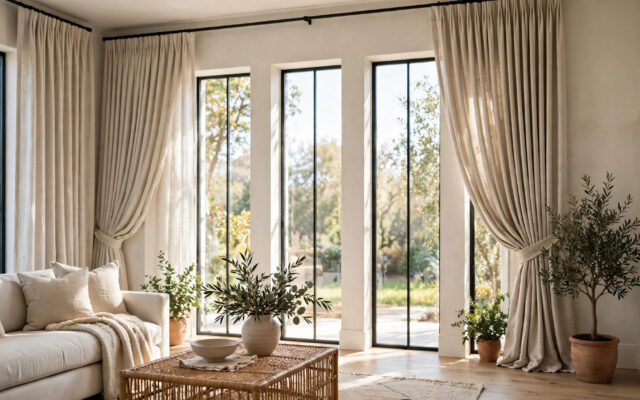
Reading light has one enemy — glare — and one requirement: enough of it, where the page is. Daylight is the best reading light ever made, so position the primary reading seat near a window if possible, with the light coming from the side or over the shoulder rather than from behind the reader (which silhouettes the page) or facing the reader (which glares). UV is the catch: direct sun fades book spines and dust jackets over the years, so south- and west-facing library windows need UV-filtering film or sheer curtains — an inexpensive fix that protects both books and furniture.
For evenings, layer three types of light. Ambient: a dimmable ceiling fixture or recessed lights on a dimmer, kept soft — the library should never feel like an office. Task: the reading lamp, and this is the piece to invest in. A good reading lamp puts 300 to 500 lumens on the page from over the reader’s shoulder, with an adjustable arm or shade, a warm color temperature (2700K to 3000K), and no visible bulb from the seated position. Floor lamps with adjustable heads, pharmacy-style table lamps, and wall-mounted swing-arm sconces beside the chair are the classic solutions. Accent: picture lights or LED strips above the shelving, which serve the room’s second purpose — making the books themselves visible and beautiful after dark. Shelf lighting at 2700K, dimmed low, turns a wall of books into the room’s artwork.
Avoid the two classic mistakes: a single bright overhead light (harsh, flattening, headache-inducing for long reads) and cool-white “daylight” bulbs in the evening (they fight the room’s calm and strain the eyes). Put the reading lamp and the shelf lights on separate switches or dimmers so the room can shift from bright browsing to low evening reading with one touch.
Layout: Balancing Storage Density With Comfort
A library that is all shelves feels like a warehouse; one that is all seating wastes its purpose. The working ratio for a dedicated room: devote 50 to 60 percent of wall space to shelving and keep the center of the room open for the reading zone. In a typical 12-by-12 room, that means shelving on two walls, the reading chair and a side table in a third corner near the window, and the fourth wall for the door, a piece of art, or a window seat. Leave at least 36 inches of clearance in front of shelving so a person can stand, pull a book, and step back comfortably; 30 inches is the cramped minimum.
The reading zone deserves the same care as the shelving. The chair is the most-used piece of furniture in the room — choose for long sits, not for looks. A proper reading chair supports the lower back, holds the head at a slight recline, and has arms at a height that supports a book without hunching the shoulders. Wing chairs, club chairs, and recliners all qualify; dining chairs and stiff modernist seating do not, no matter how beautiful. Add a side table within arm’s reach (for the book, the tea, the glasses), a footstool or ottoman, and a soft throw. A small rug under the reading zone defines the space acoustically and visually, and it does wonders for a room that would otherwise echo off hard shelves.
For larger rooms, consider zones: a desk for writing or cataloging near one window, the main reading chair near another, and perhaps a second chair for conversation — libraries are social rooms more often than people expect. A rolling library ladder is both functional and theatrical on tall built-ins; a simple step stool tucked beside the shelves is the honest alternative. And leave one surface — a table, a wide shelf, a desk corner — deliberately clear: it becomes the staging area for the books currently being read, the pile that makes a library feel alive.
Climate, Organization, and the Details That Matter
Books are archival objects, and they last centuries in the right conditions or decades in the wrong ones. The targets: temperature between 60 and 70°F, relative humidity between 30 and 50 percent. High humidity feeds mold and foxing (those brown spots on old pages); very dry air embrittles paper and cracks leather bindings. If your library shares a home with normal HVAC, you are probably fine — but keep books away from heating vents, fireplaces, and exterior walls that sweat in winter. A small hygrometer on the shelf ($15) tells you the truth; a dehumidifier or humidifier corrects it.
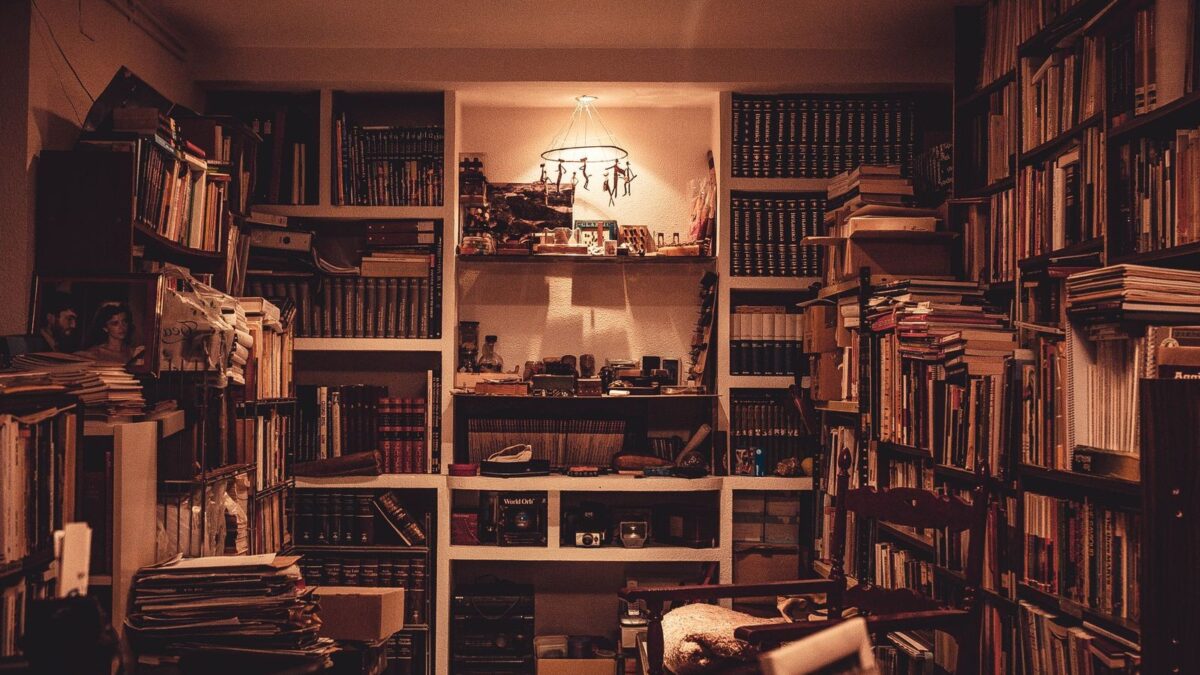
Organization is personal, but every system beats no system. The main options: by genre then author (the bookstore model, best for large and growing collections), by subject (best for nonfiction-heavy libraries), alphabetical by author across the whole collection (simplest to maintain), or the aesthetic arrangement — by color or size — which looks stunning in photographs and is nearly unusable in practice unless the collection is small enough to memorize. Whatever you choose, leave the promised 15 percent empty space, shelve books upright (leaning books warp; use bookends), and never pack shelves so tight that removing one book requires surgery.
Cataloging earns its keep once the collection passes a few hundred volumes. Free apps let you scan barcodes and build a searchable database in an afternoon — invaluable when you are standing in a bookstore wondering whether you already own a title, or when insurance needs an inventory after a disaster. Speaking of insurance: a serious collection is worth scheduling on your homeowner’s policy or documenting with photos and the catalog export. Replacing a thousand books costs far more than most people estimate.
- Dust: the eternal enemy. Books shelved tightly gather less dust; vacuum shelves with a brush attachment twice a year, top edges first.
- Pests: silverfish and booklice love damp, dark shelves. Keep humidity down, do not shelve books directly against cold exterior walls, and inspect any used-bookstore acquisitions before shelving them.
- Sun: UV film on library windows, as noted — it is the single highest-value preservation purchase in the room.
- Weight creep: re-check anchor screws and shelf sag annually. Tighten, shim, or redistribute before a failure, not after.
Small-Space Libraries: Corners, Hallways, and Nooks
No spare room? No problem — some of the best home libraries are carved from dead space. A hallway wall lined with shallow 8-inch bookcases becomes a gallery of books you pass daily; keep the shelves shallow so the hallway stays walkable, and add a picture light above for the evening effect. An under-stair nook fits a custom triangular bookcase, a cushion, and a wall sconce — the classic reading hideout, built from space that was storing nothing. A bedroom corner takes one tall bookcase, one chair, and one floor lamp to become a complete reading station; a living-room alcove or the wall beside a fireplace does the same work.
The small-space rules differ slightly. Go vertical — floor-to-ceiling shelving in a tight footprint stores more than a wide low bookcase and draws the eye up, making the nook feel larger. Use lighter shelf finishes in dark corners so the books do not disappear into shadow. And be ruthless about curation: a 200-book nook library that is perfectly organized and beautifully lit gets used more than a 2,000-book room that feels like storage. The library is not measured in volumes. It is measured in hours spent reading — and a well-designed corner can deliver those as faithfully as a dedicated room.
Budget: Three Tiers of Home Library
The room scales to nearly any budget, because the essentials — shelves, a chair, a lamp — are commodities. At the budget tier ($300 to $800), solid secondhand bookcases (solid wood or quality laminate, anchored to the wall), a comfortable used armchair, a decent floor lamp with a warm bulb, and a coat of paint on the walls produce a genuinely lovely reading room. Thrift stores and marketplace listings are full of solid-wood bookcases selling for a tenth of their new price; the library is the room where secondhand shopping is a strategy, not a compromise.
At the mid tier ($1,500 to $5,000), modular shelving systems give the wall a unified, built-in look without carpentry; a quality new reading chair and proper task lighting transform the comfort; UV window film, a rug, and real art on the non-shelf wall complete the room. This is the sweet spot for most homeowners — the room looks intentional and will serve for decades.
At the custom tier ($8,000 to $25,000+), a carpenter builds floor-to-ceiling built-ins with a ladder rail, integrated LED shelf lighting on dimmers, a window seat with storage, and millwork details that make the room feel original to the house. This is the forever-home investment, and it pays back in daily pleasure more reliably than in resale dollars — though buyers consistently rank a handsome library among the most memorable rooms in a listing. Whatever the tier, spend the money in this order: shelving structure first (it holds everything), the chair second (you live in it), lighting third (it defines the mood), and decoration last, if ever. A library needs very little decoration. It has books.
A home library is finished not when the shelves are full but when the chair is worn. Build the shelving to hold real weight, light the page instead of the ceiling, give the room a chair worth sitting in for three hours, and keep the air dry and the sun off the spines. Do those things — at any budget, in any size room — and the space will do what libraries have always done: slow time down, one chapter at a time, for everyone who walks through the door. The books were already waiting. Now they have a room — and you have somewhere worth going every evening.
This article was produced with the assistance of AI.