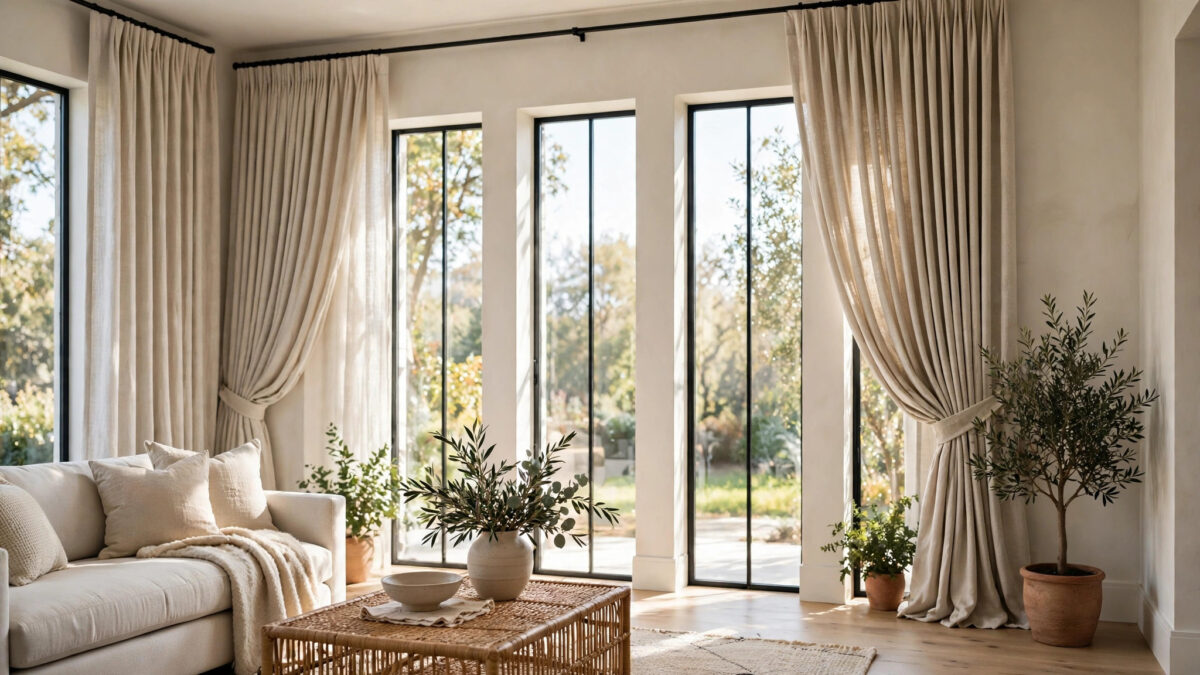
Curtains are one of the hardest-working elements in any room. They frame your windows, control light, add color and texture, soften hard architectural lines, and can make a space feel twice as expensive — or half as nice. Yet they are also one of the most commonly bungled details in home decor. Walk through almost any home and you will spot the telltale signs: panels that stop awkwardly mid-wall, rods mounted too low, skimpy fabric that barely covers the glass.
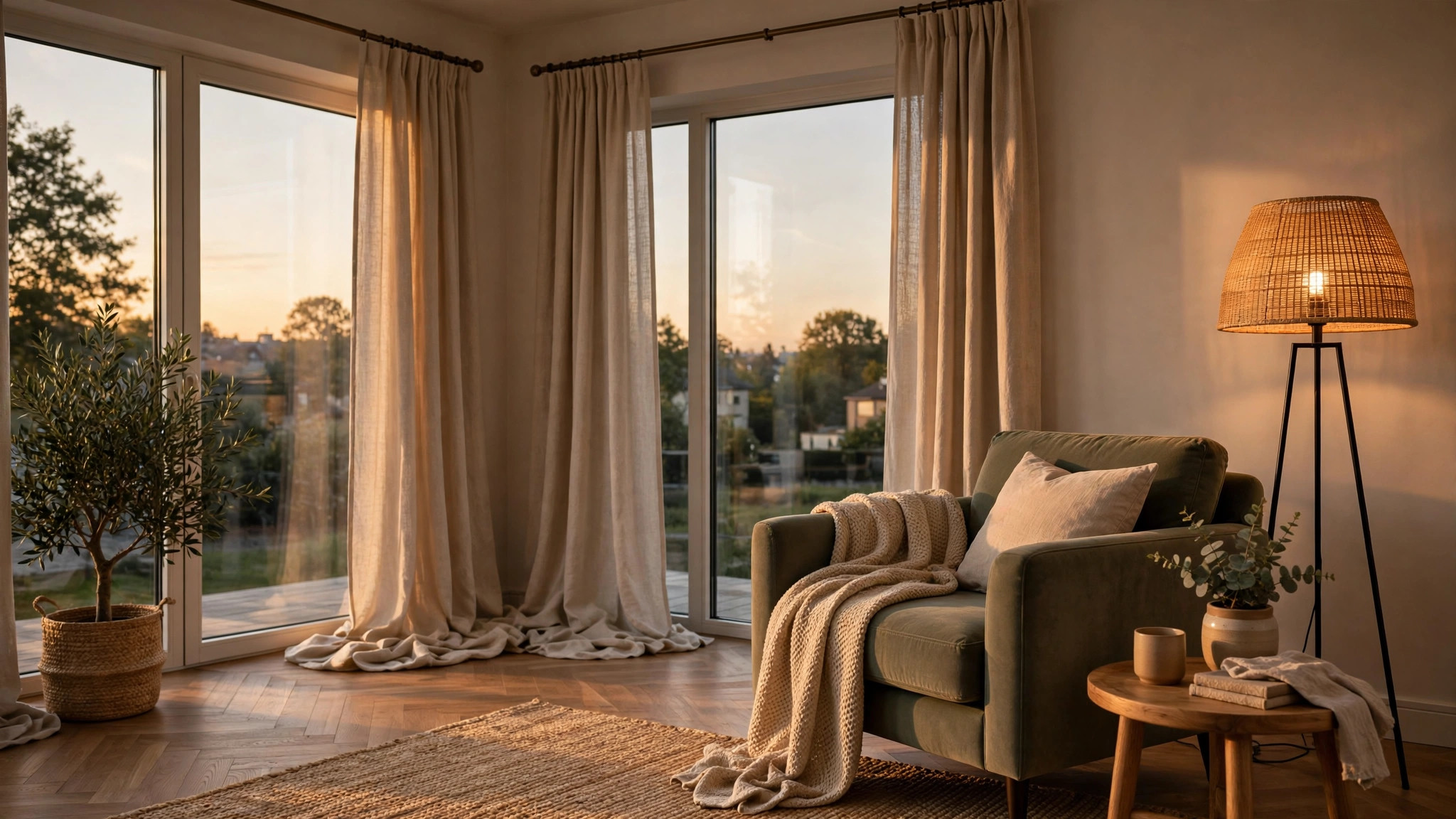
The frustrating part is that curtain mistakes are almost always cheap to fix. Unlike replacing flooring or furniture, correcting your window treatments usually costs little more than a Saturday afternoon and sometimes just a screwdriver. This guide covers the most common curtain mistakes that cheapen a home’s look, explains why each one matters visually, and gives you the exact fixes — including the measurements designers actually use.
Whether you own or rent, whether your style is modern, traditional, or somewhere in between, getting curtains right is one of the highest-return improvements you can make to any room.
Mistake 1: Hanging Curtains Too Low
This is the single most common curtain mistake, and the most damaging. Mounting the rod just above the window frame — which feels intuitive — visually chops the wall in half and makes both the window and the ceiling look lower than they are. The room feels squat and cramped, and no amount of expensive fabric fixes the proportions.
The fix: mount the rod 4 to 6 inches above the window frame, or halfway between the frame and the ceiling — whichever is higher. In rooms with standard 8-foot ceilings, that usually means placing the rod just a few inches below the ceiling. This single change draws the eye upward, makes windows look taller, and gives the whole room a sense of height and airiness. For a dramatic, designer look, you can mount the rod just 1 to 2 inches below the ceiling line.
The only exception is a room with genuinely low ceilings where the gap between frame and ceiling is tiny — in that case, mount as close to the ceiling as possible and let the panels run full height. Never mount the rod directly on the window frame trim unless you are going for a cafe-curtain style, which is a deliberate look with its own rules.
Mistake 2: Curtains That Are Too Short
Panels that end at the windowsill — or worse, hover awkwardly a few inches below it — instantly read as cheap and unfinished. Short curtains break the vertical line of the room, make windows look stumpy, and draw attention to the very thing you are trying to disguise. This mistake is so widespread it has its own nickname among designers: “high-water curtains.”
The fix: for full-length curtains, the panels should either just kiss the floor (about half an inch above it), break slightly on the floor (1 to 2 inches of fabric pooling), or puddle generously (3 to 4 inches of pooling for a romantic, formal look). “Kissing the floor” is the safest, most versatile choice — elegant without collecting dust, and forgiving if your floors are slightly uneven.
Measure from your rod position to the floor before buying, and buy longer rather than shorter — hemming is easy, stretching is impossible. Standard panel lengths are 84, 96, 108, and 120 inches; most rooms with rods mounted high need 96-inch panels. If you are between sizes, always size up.
The one place short curtains belong: kitchens and bathrooms, where full-length fabric near sinks, stoves, or tubs is impractical. There, a tailored Roman shade or a cafe curtain at sill length is the correct choice — deliberate, not accidental.
Mistake 3: Skimpy Panels That Barely Cover the Window
A single flat panel stretched taut across a wide window looks sad and cheap no matter how nice the fabric is. Curtains need fullness — gathered fabric that creates soft folds — to look luxurious. When panels are pulled open, skimpy curtains also fail functionally: they cannot stack back far enough to clear the glass, blocking light even when “open.”
The fix: follow the fullness rule — the combined width of your curtain panels should be 1.5 to 2 times the width of the window (2 to 2.5 times for sheers, which need more gathering to look intentional). For a 60-inch window, that means 90 to 120 inches of total panel width, typically two 60-inch-wide panels. When in doubt, buy an extra panel; you can always gather more, but you cannot manufacture width you do not have.
This is also why cheap curtain panels often disappoint: bargain panels tend to be narrow. Two inexpensive wide panels almost always look better than one expensive narrow one. Fullness is what separates custom-looking drapery from the bargain bin.
Mistake 4: Mounting the Rod Too Narrow
Even correctly hung curtains look wrong when the rod is exactly as wide as the window. Narrow rods force open panels to bunch over the glass, blocking natural light and making the window look smaller. The room loses both light and the illusion of spaciousness.
The fix: extend the rod 4 to 8 inches beyond the window frame on each side — 6 inches is the sweet spot for most windows. This lets open panels stack against the wall rather than the glass, maximizing light and making the window appear significantly wider. For very large windows or a dramatic look, extend up to 10 inches per side.
Combine this with the high mounting from Mistake 1, and you get the classic designer formula: rod high and wide, panels long and full. Those four adjustments together transform nearly any window.
Mistake 5: Choosing the Wrong Fabric for the Room
Fabric choice sets the entire mood, and mismatches are jarring. Heavy velvet in a sunny casual breakfast nook feels oppressive; flimsy unlined polyester in a formal dining room looks cheap and fails to block light. Shiny fabrics, in particular, tend to read as dated and low-quality in most contemporary rooms.
The fix: match fabric weight and texture to the room’s purpose and light. Linen and linen-look fabrics suit living rooms and bedrooms — relaxed, textured, and timeless. Velvet or heavy cotton duck works in formal dining rooms and cozy dens. For light control without heaviness, layer sheers under heavier panels: sheers for daytime privacy, opaque panels for evening. Avoid high-shine synthetics unless your style is deliberately glamorous; matte, textured fabrics photograph and live better.
Always consider lining. Unlined curtains fade faster, hang less crisply, and provide poor insulation and light control. A lined curtain in a mid-range fabric outperforms an unlined curtain in an expensive one. If you love the look of unlined linen sheers, embrace it deliberately as a breezy, casual choice — the mistake is unlined heavies that were supposed to look substantial.
Mistake 6: Ignoring the Hardware
Flimsy telescoping rods that sag in the middle, plastic finials, visible brackets in the wrong finish — bad hardware undermines good curtains the way cheap shoes undermine a good suit. Sagging rods are especially common with wide windows, where the span overwhelms a lightweight rod.
The fix: choose a rod diameter proportional to the window — at least 1 inch for standard windows, thicker for wide spans — and install a center support bracket for any rod over 48 inches wide. Match the finish to other metals in the room: matte black, brushed brass, and brushed nickel all work, but mixing three different metal finishes in one room looks chaotic. Keep it to one or two.
Finials should be simple and proportional. Oversized ornate finials on a minimalist rod (or vice versa) look mismatched. When in doubt, plain end caps or simple ball finials in the rod’s finish are timeless. And hide the mechanics: curtain rings or back-tab tops should glide smoothly — if panels stick, a little silicone spray on the rod works wonders.
Mistake 7: One Lonely Panel on a Wide Window
A single panel on a window wider than about 36 inches looks like a mistake — or like you ran out of money halfway through the project. It cannot provide fullness, it cannot close properly, and it creates visual asymmetry that reads as unfinished.
The fix: use pairs for anything wider than a narrow accent window. Single panels work only on genuinely narrow windows, or as a deliberate asymmetrical design statement in a modern room — and even then, the panel should be wide enough to look intentional. For standard windows, two panels are the default; for very wide windows or sliding doors, consider three or four panels for proper fullness.
Mistake 8: Clashing With the Room’s Style and Palette
Curtains in a color or pattern that fights everything else in the room become an eyesore rather than an asset. Common versions: busy patterns in an already-patterned room, cool gray curtains in a warm beige room (or vice versa), and trendy colors that date the whole space within two years.
The fix: when in doubt, choose curtains in a color close to your wall color but a shade deeper or lighter. This tone-on-tone approach is nearly foolproof — it adds texture and softness without introducing a competing color, and it makes rooms feel larger and calmer. If you want pattern, make the curtains the room’s single patterned element and keep everything else solid. And test fabric swatches in your actual light before committing; colors shift dramatically between store lighting and home lighting, morning and evening.
Mistake 9: Forgetting About Function
Beautiful curtains that do not do their job are just expensive wall decoration. Common functional failures: sheer-only curtains in a bedroom where streetlights blaze all night, unlined panels in a media room where glare ruins movie night, and curtains that cannot actually close because the rod is too short or the panels too narrow.
The fix: define each room’s needs before shopping. Bedrooms usually need blackout or room-darkening capability — look for blackout lining or dedicated blackout panels. Living rooms benefit from the sheer-plus-panel layering mentioned earlier. Ensure every functional curtain can actually traverse closed: test the full close before finalizing rod width and panel count. For sliding doors, consider traverse rods or wide panels on smooth-gliding rings.
Mistake 10: Neglecting Maintenance
Dusty, sun-faded, wrinkled curtains drag down a whole room, and the decline is so gradual that owners stop noticing. Yellowing sheers, in particular, silently cheapen windows year after year.
The fix: vacuum curtains with an upholstery attachment every few months, and wash or dry-clean according to the fabric’s care label at least annually. Rotate which panels get the most sun if possible, or add a protective lining to sun-blasted windows. Steam out wrinkles after washing — a handheld steamer is one of the best $30 investments in home upkeep. Replace sheers when they yellow beyond cleaning; they are inexpensive and the freshness payoff is immediate.
The Renter’s Playbook
Renters face the same mistakes with fewer options — but most fixes are still available. Tension rods inside the window frame cannot achieve the high-and-wide look, but removable adhesive-mounted brackets or a ceiling-mounted track (installed with landlord permission) can. If you cannot move the hardware at all, focus on what you control: full-length panels, proper fullness, good fabric, and tone-on-tone color. Even on a landlord’s sad mini-blinds, well-chosen panels hung as close to the ceiling as the existing hardware allows will transform the window. And keep the original hardware stored safely so you can restore it at move-out.
Curtain Length Cheat Sheet by Window Type
Different windows call for different treatments, and using the wrong one is a subtle but common way rooms look off. Standard windows in living rooms and bedrooms: full-length panels, rod mounted high and wide, panels kissing or slightly breaking on the floor. This is the default that works in 90 percent of rooms.
Short or awkward windows (high basement windows, small bathroom windows): a tailored Roman shade mounted inside or just outside the frame usually looks better than stubby curtains. If you use curtains, still mount the rod higher than the frame to fake height, and let panels run to the sill or just below — never mid-glass.
Sliding glass doors and wide patio doors: use extra-wide panels (three or four) on a sturdy rod with a center support, mounted high and extended well beyond the frame on both sides. Panels must stack fully clear of the glass when open or the door becomes a daily frustration. Consider a traverse rod for the smoothest operation.
Bay and bow windows: flexible bay window rods exist and are worth the investment — trying to force straight rods across angled bays always looks wrong. Alternatively, dress each window section with its own Roman shade for a clean, tailored look.
Arched or unusually shaped windows: mount a straight rod above the arch and let full-length panels frame the shape, or use an inside-mounted shade that follows the window’s lines. Never try to curtain the arch itself — it fights the architecture instead of complementing it.
Frequently Asked Questions
How high should I hang curtains?
Mount the rod 4 to 6 inches above the window frame, or halfway between the frame and the ceiling — whichever is higher. In rooms with 8-foot ceilings, this usually means just a few inches below the ceiling. Higher mounting makes windows and ceilings look taller.
How wide should curtain panels be?
The combined width of your panels should be 1.5 to 2 times the window width (2 to 2.5 times for sheers). For a 60-inch window, use two panels totaling 90 to 120 inches wide. More fullness looks more luxurious; skimpy panels always look cheap.
Should curtains touch the floor?
For full-length curtains, yes — they should just kiss the floor, break slightly (1 to 2 inches of pooling), or puddle for a formal look. Avoid panels that hover above the floor or stop at the sill, which look unfinished. In kitchens and bathrooms, sill-length shades or cafe curtains are the correct exception.
Can I mix curtain styles in one home?
Yes, if you keep a unifying element — the same fabric, the same color family, or the same hardware finish throughout. Different rooms have different functional needs, so variety is fine as long as there is visual cohesion. Avoid introducing a completely different style in every room.
Are expensive curtains worth it?
Properly hung mid-range curtains beat poorly hung expensive ones every time. Spend your money on correct sizing, fullness, and lining rather than designer labels. The highest-impact upgrades are free (mounting height and width) or cheap (an extra panel for fullness).
What is the biggest curtain mistake in small rooms?
Mounting rods low and narrow, which makes windows — and the room — feel smaller. In small rooms especially, hang rods high and wide, use tone-on-tone colors close to the wall color, and keep panels light in weight. These tricks visually expand the space.
Final Thoughts
Curtains are a rare home improvement where the biggest gains are free: hang the rod higher, extend it wider, buy panels long and full, and choose fabric that suits the room. None of these fixes requires a designer or a big budget — just a tape measure, a Saturday afternoon, and the willingness to question where the last person put the brackets. Get your window treatments right and every room in your home will look more considered, more spacious, and more expensive than it is. That is the quiet power of doing the simple things correctly.