A small bedroom isn’t a design problem to solve — it’s a set of visual tricks to deploy. The room won’t get bigger, but it can feel twice the size. Every strategy below works on the same principle: reduce visual clutter, keep sightlines open, and let light move freely.
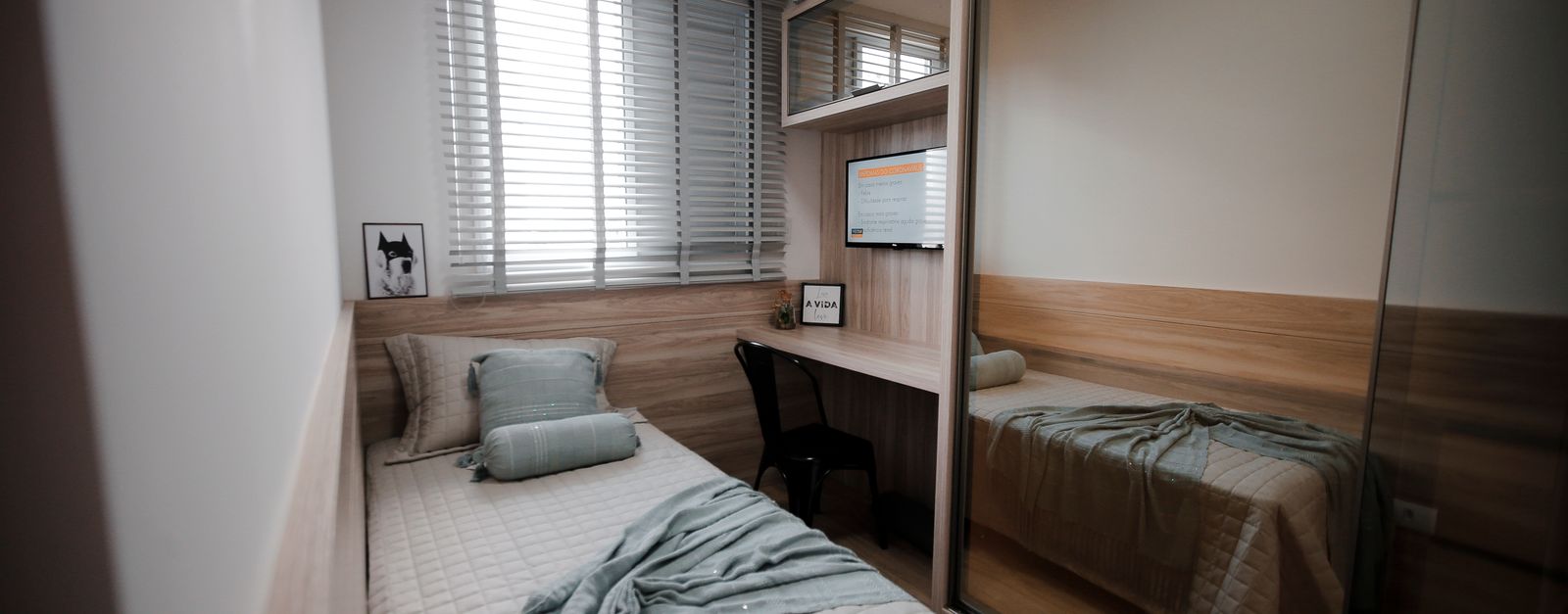
Start With the Bed — It’s Half the Room
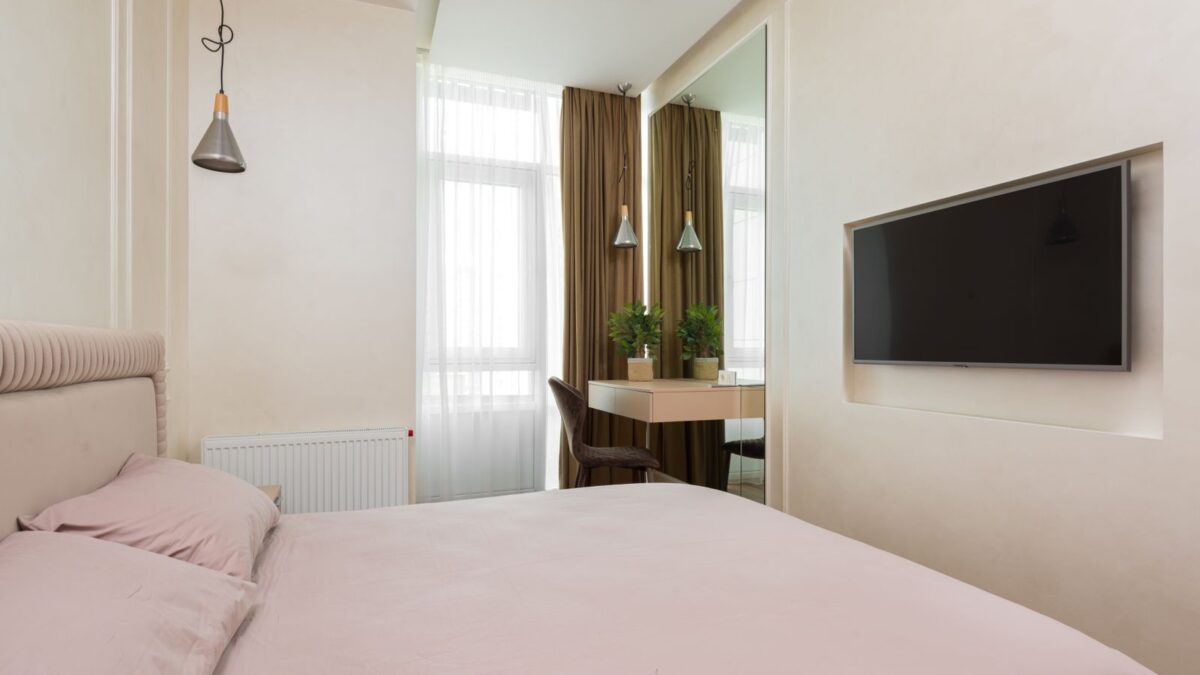
In a 10-by-12 bedroom, a queen bed occupies roughly 35 square feet of the 120 available — nearly a third. That math forces decisions. First, the frame: choose one with visible legs rather than a solid platform base. Seeing floor underneath the bed creates the illusion of continuous space; a bed that sits flush to the floor reads as one massive block. Second, the headboard: a tall, upholstered headboard draws the eye up and makes ceilings feel higher, while no headboard at all lets the eye slide off into nothing. Third, the bedding: a duvet in one light, solid color with texture (linen, waffle weave) looks calm and expansive; busy patterns chop the bed — the room’s largest surface — into visual fragments. And skip the mountain of throw pillows. Two sleeping pillows plus one lumbar cushion is the most a small bed can carry before it starts looking like it’s wearing the room.
Color: Go Light, But Not Necessarily White
Light colors reflect more light, and reflected light is what makes walls feel farther away. But stark white in a small bedroom can feel clinical, especially with little natural light. Better: warm off-whites, pale greige, soft sage, or a whisper of blue-gray — colors with a Light Reflectance Value (LRV) above 60. Paint the ceiling the same color as the walls, or at most one shade lighter in the same family; a contrasting white ceiling creates a hard line that visually lowers the ceiling. The boldest small-room move is actually painting everything — walls, trim, even the ceiling — one enveloping color. It sounds counterintuitive, but eliminating contrast removes the visual “edges” your brain uses to measure a room, and the space feels larger for it. If one color everywhere feels like too much, keep the walls light and put the depth in the textiles: a darker duvet or curtains ground the room without shrinking it.
Mirrors: Placement Matters More Than Size
A mirror doubles whatever it reflects, so aim it at something worth doubling. The highest-impact spot is directly across from the window: it bounces daylight deep into the room and creates the illusion of a second window. A full-length mirror leaned against the wall (about 65 inches tall) in a corner does more for spaciousness than a small mirror hung high — leaning reads as casual and the reflection includes the floor, extending the sightline. Mirrored closet doors are the classic small-bedroom hack for a reason: they erase an entire wall of visual weight. One caution: don’t place a mirror where it reflects clutter — a mirror facing an open closet or a messy desk doubles the mess and makes the room feel more chaotic, not bigger. And keep mirrors out of direct alignment with the bed if the reflected movement (you, getting up at night) will bother you.
Furniture Scale and the Two-Foot Rule
Oversized furniture in a small room is like wearing shoes two sizes too big — everything looks wrong. Measure before you buy: you need a minimum of 24 inches of walkway on at least one side of the bed and in front of the closet or dresser. A nightstand should be within 2 inches of the mattress height and no wider than necessary — a 16-inch-wide table or even a wall-mounted shelf works. Choose pieces with legs over skirted or blocky bases, and favor one larger dresser over three small chests; multiple small pieces create more visual edges and more clutter. The single most transformative furniture swap in a small bedroom is replacing a bulky dresser with a tall, narrow one: same storage volume, half the wall width, and the vertical line lifts the eye. If the room must double as an office, a wall-mounted drop-leaf desk that folds flat when not in use beats a permanent desk that eats 8 square feet around the clock.
Light It in Layers, Not From One Bulb
A single ceiling light in a small bedroom creates harsh shadows in the corners — and dark corners are where the room visually ends. Three light sources minimum: an overhead (a flush-mount or semi-flush fixture, since pendants hang into precious headspace), a bedside lamp or wall sconce, and one accent — a small lamp on the dresser, LED strip behind the headboard, or a floor lamp in the darkest corner. Wall-mounted sconces or pendant lights hung beside the bed free the nightstand surface entirely, which is worth more than the fixture costs. Keep all bulbs the same color temperature (2700K warm white throughout); mixed temperatures — a daylight bulb overhead and warm lamps — make the room feel disjointed and smaller. Dimmers on the overhead are a 15-dollar upgrade that changes the room’s mood from “interrogation” to “evening” with one slide.
Storage That Disappears
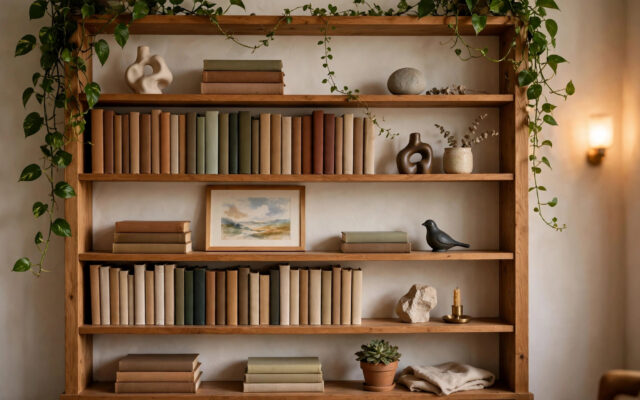
Clutter shrinks rooms faster than small dimensions do. Under-bed storage is the obvious win: flat bins or drawers built into the frame hold off-season clothes and spare linens in space that was doing nothing. Go vertical everywhere else — a bookshelf that reaches the ceiling stores twice what a low wide one does in the same footprint, and the upward line adds height. Inside the closet, a second hanging rod doubles shirt space, and shelf dividers keep stacks from avalanching. The 80/20 declutter is worth doing before any decorating: remove everything from the room, then bring back only what earns its place. Most small bedrooms are carrying 20 percent more stuff than they need, and no paint color compensates for surfaces covered in things without homes. Every item left should have a designated spot — open surfaces stay clear, and the room breathes.
Curtains, Rugs, and the Finishing Illusions
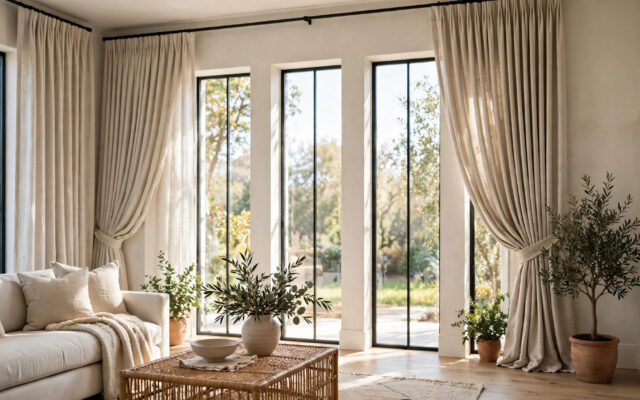
Hang curtains high and wide: mount the rod 4 to 6 inches above the window frame and extend it 6 to 10 inches beyond each side, with panels that just kiss the floor. This makes the window — and the wall — look substantially larger, and the long vertical lines stretch the room. Sheer or light-filtering panels keep daylight flowing; heavy dark curtains in a small room eat light and wall. For rugs, the common mistake is too small: a rug that floats in the middle of the floor chops the room into pieces. In a bedroom, the rug should extend at least 18 inches beyond the bed on the sides — for a queen, that’s roughly an 8-by-10 rug. One large rug unifies the floor plane; two small rugs divide it. Finally, keep the walls edited: one larger piece of art beats a gallery wall of small frames in a tight room, because a single focal point gives the eye somewhere to rest instead of bouncing between a dozen competing edges.
None of this requires knocking down walls. Light color, right-sized furniture, mirrors aimed at windows, layered light, and ruthless storage — stack three or four of these and the room you wake up in will feel like it gained fifty square feet overnight.