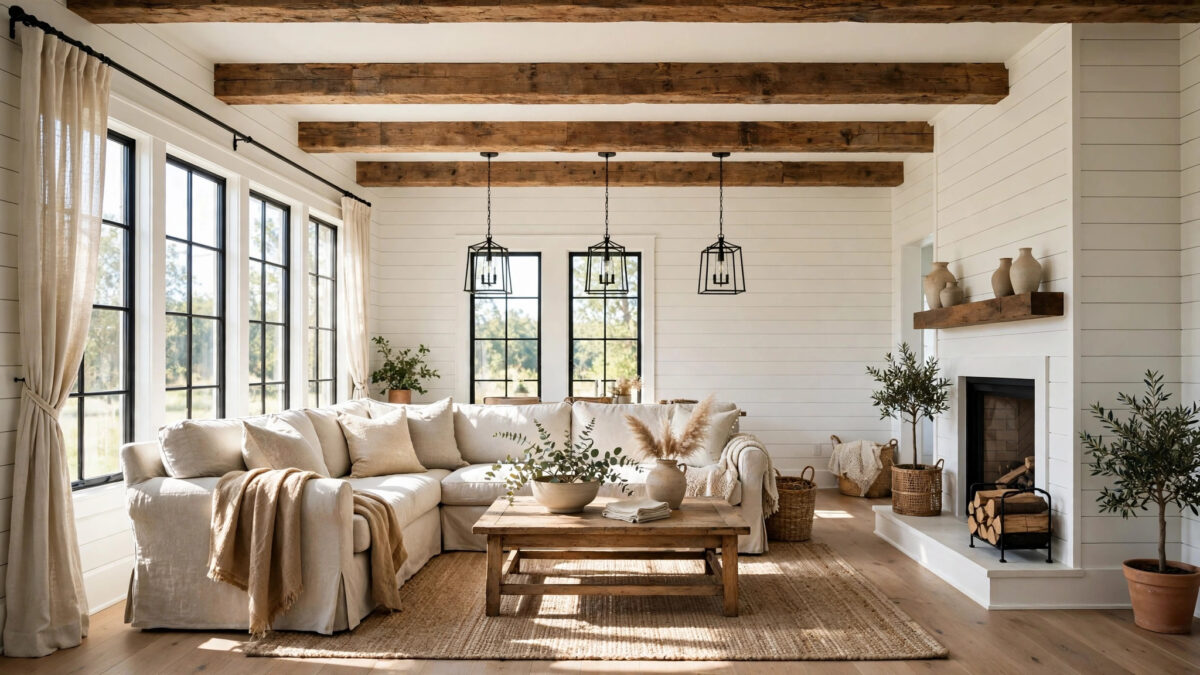
Few design styles have captured the modern imagination quite like modern farmhouse. It is the look of shiplap walls and matte-black fixtures, of reclaimed wood beams over crisp white kitchens, of spaces that feel simultaneously fresh and lived-in. Born from a love of rustic simplicity and refined through a contemporary lens, modern farmhouse has evolved from trend to enduring classic — and for good reason. It is warm without being cluttered, stylish without being precious, and remarkably livable for real families.
But “modern farmhouse” has also become one of the most misunderstood labels in interior design. Slap a “gather” sign and some galvanized metal on a wall and call it farmhouse? That is the cliché version — and it is what gives the style a dated reputation in the wrong hands. Done well, modern farmhouse is about balance: the tension between old and new, rough and smooth, cozy and clean. This guide breaks down the essential elements, room by room, so you can get the look with confidence — whether you are decorating a single room or an entire home.
What Modern Farmhouse Actually Is
At its core, modern farmhouse is a hybrid. The “farmhouse” half brings natural materials, vintage character, and a sense of history — think wood, stone, linen, and pieces that look like they have a story. The “modern” half brings clean lines, restrained color palettes, and uncluttered spaces — the discipline that keeps the rustic elements from tipping into theme-park territory.
The style’s signature is contrast. Smooth white walls against rough-hewn beams. A sleek black faucet against a handmade-look tile backsplash. Linen slipcovers on a sofa with tailored, modern proportions. Every room should contain both halves of the equation; when one side dominates, the style falls apart — all-rustic reads as country-kitsch, all-modern reads as cold.
It helps to distinguish modern farmhouse from its cousins. Traditional farmhouse leans harder into antiques, floral patterns, and a collected-over-decades feel. Industrial farmhouse adds raw metal, Edison bulbs, and factory-inspired pieces. French farmhouse brings in curves, ornate details, and a softer palette. Modern farmhouse is the most streamlined of the family — the one that works best in new-build homes and open floor plans.
The Foundation: Color Palette
Color is where modern farmhouse discipline shows most clearly. The palette is anchored in whites, creams, and warm neutrals, with black used as a crisp accent and natural wood tones providing warmth. That is the formula: light + dark + wood, in roughly that order of dominance.
Walls: white, but the right white
White walls are the style’s canvas, but not all whites are equal. Cool, blue-undertoned whites can feel sterile; the farmhouse look wants warm whites with subtle creamy or greige undertones — whites that glow rather than glare. Popular choices in this family include soft, warm whites that read as clean in daylight and cozy under lamplight. Test large swatches on the wall and observe them at different times of day before committing; undertones shift dramatically with light.
The black accent
Black is modern farmhouse’s secret weapon. Used sparingly — window frames, light fixtures, cabinet hardware, a front door, stair railings — it gives the soft neutral palette definition and a contemporary edge. Matte black finishes work best; glossy black can read as too formal. The rule of thumb: black should appear in every room in small doses, like punctuation in a sentence.
Wood tones: warm and varied
Natural wood is the third pillar. Oak, pine, walnut, and reclaimed woods all belong, and mixing wood tones is not only allowed but encouraged — a walnut dining table with oak floors and pine ceiling beams looks layered rather than mismatched, as long as the undertones are consistently warm. Avoid orange-toned stains, which fight the palette; aim for honey, natural, weathered gray, or deep espresso finishes.
Key Materials and Textures
If color is the discipline of modern farmhouse, texture is its soul. Because the palette is restrained, visual interest comes from layering tactile materials. A successful modern farmhouse room typically combines at least four or five of these:
- Shiplap and board-and-batten: the style’s most recognizable wall treatment. Use it on an accent wall, a kitchen island, a mudroom, or a ceiling — but resist covering every surface. One shiplap moment per room is plenty.
- Reclaimed and distressed wood: beams, mantels, open shelving, and furniture with visible grain and patina. New wood with a weathered finish works when genuine reclaimed pieces are out of budget.
- Natural stone: a stone fireplace surround, a slate floor in the mudroom, or marble-look counters in the kitchen.
- Linen and cotton: slipcovers, curtains, throw pillows, and bedding in natural fibers. Wrinkle-friendly fabrics are a feature, not a flaw — they signal comfort.
- Woven textures: jute and sisal rugs, rattan and wicker baskets, woven pendant shades. These add the organic warmth that keeps neutrals from feeling flat.
- Metals with matte finishes: blackened steel, aged bronze, galvanized zinc, and brushed brass (used sparingly). Mixed metals are fine when the finishes are muted.
Furniture: Shapes and Selection
Modern farmhouse furniture sits at the intersection of comfortable and tailored. Look for:
- Clean-lined case goods — dressers, consoles, and hutches with simple shaker-style fronts rather than ornate carving.
- Upholstery with relaxed structure — slipcovered sofas, linen armchairs, benches with cushions. Comfort is non-negotiable; stiffness is the enemy.
- Farmhouse tables — the trestle or turned-leg dining table is the style’s icon. Pair it with mixed seating: benches on one side, different-but-coordinated chairs on the other.
- Vintage accents — one or two genuinely old pieces per room (a crock, a ladder-back chair, an antique mirror) add the authenticity reproductions cannot fake.
Scale matters enormously in open-plan spaces, where modern farmhouse most often lives. Do not undersize furniture — a too-small rug or a loveseat floating in a great room undermines the cozy-gathering feeling the style promises. When in doubt, go one size up on rugs and anchor seating groups firmly within them.
Lighting: The Jewelry of the Room
Lighting does more visual work per dollar than almost any other element. Modern farmhouse lighting favors oversized, sculptural fixtures in black metal, natural wood, or woven materials:
- A large black or wood-bead chandelier over the dining table
- Industrial-style pendants with clear or seeded glass over the kitchen island
- Woven rattan pendants in bedrooms and living areas for organic warmth
- Wall sconces with simple linen shades flanking a bed or fireplace
Layer three types of light in every main room — ambient (overhead), task (reading lamps, under-cabinet strips), and accent (picture lights, candles). And put dimmers on everything you can; the difference between a farmhouse kitchen at full brightness and at a warm dim is the difference between a showroom and a home.
Room-by-Room Guide
The kitchen
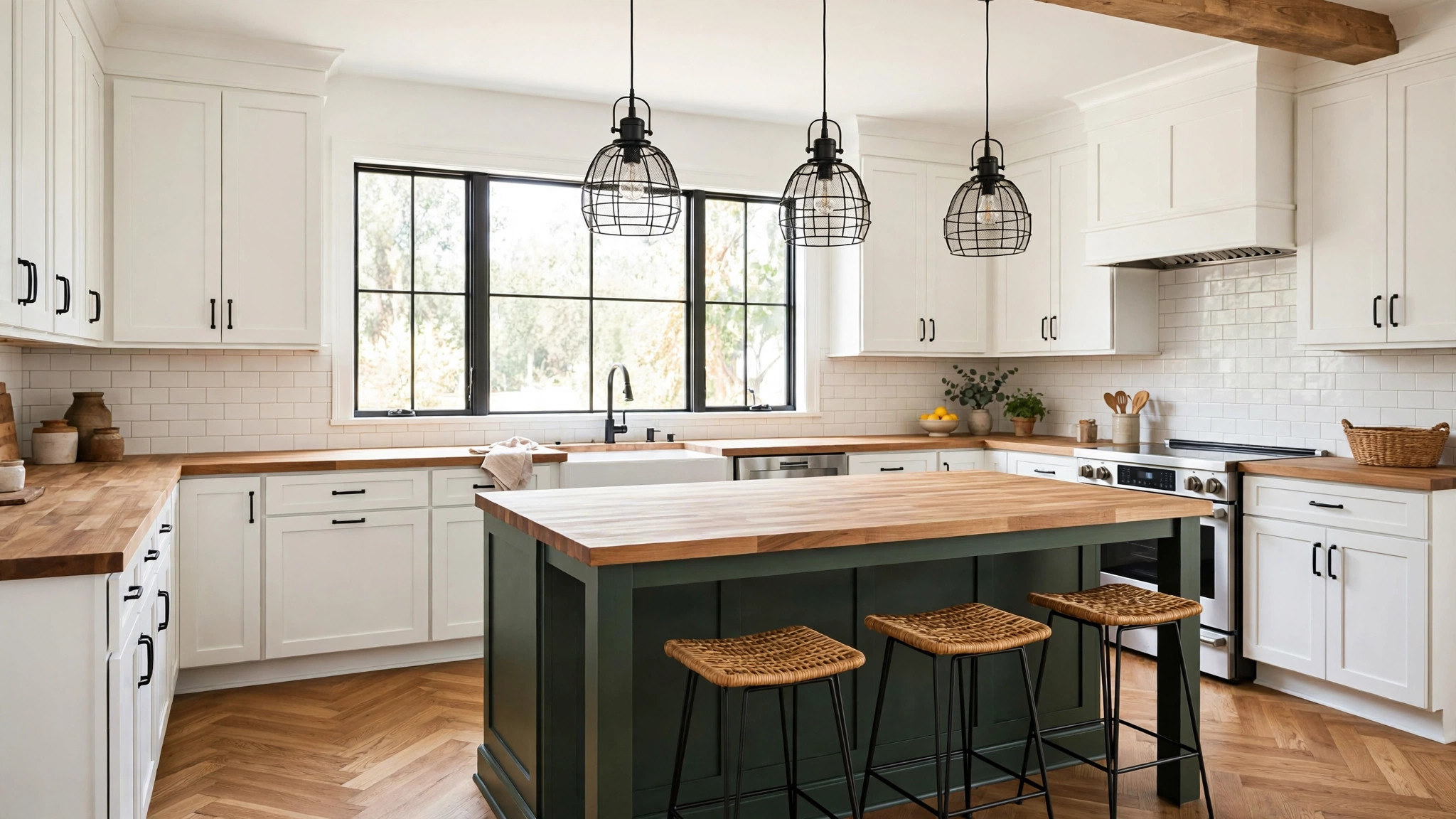
The modern farmhouse kitchen is the style’s flagship room. Key moves: white shaker cabinets (the style’s workhorse), a contrasting island (deep green, navy, or black are classic choices), butcher-block or marble-look counters, a farmhouse apron-front sink, matte black or aged-brass hardware, and open shelving styled with everyday dishes in a restrained palette. A patterned cement-look tile floor or a simple runner adds character without chaos.
The living room
Anchor with a large neutral rug (jute layered under a patterned wool rug is a signature move), a comfortable slipcovered sofa, and a mix of wood and upholstered seating. Style the mantel or console with restraint: a large mirror or piece of art, a stack of books, a vase of stems, one vintage object. Edit ruthlessly — farmhouse warmth comes from texture, not from the number of objects.
Bedrooms
Bedrooms lean softer: layered white and cream bedding with linen duvets, quilts folded at the foot, and an assortment of pillows in natural textures. A wood or upholstered headboard, black sconces or simple table lamps, and one vintage piece (a trunk at the foot of the bed, an antique dresser) complete the look. Keep the palette here the calmest in the house.
Bathrooms
Small bathrooms are where farmhouse charm concentrates beautifully: a wood vanity (or a repurposed dresser converted to a vanity), a white vessel or apron sink, black fixtures, a large simple mirror, shiplap or beadboard on the walls, and a patterned floor tile for personality. Good lighting at the mirror is essential — sconces at eye level beat a single overhead bar.
Entryway and mudroom
The mudroom is farmhouse’s natural habitat: built-in cubbies or lockers, hooks for coats, baskets for shoes, a durable rug or tile floor, and beadboard walls. It is the hardest-working room in a family home, so prioritize function — closed storage for the visual calm the style demands.
Styling Without the Clichés
The fastest way to cheapen modern farmhouse is word art — the mass-produced “Live Laugh Love,” “Gather,” and “Farmhouse” signs that turned a design style into a punchline. A home styled with restraint needs none of it. Instead, bring personality through:
- Real greenery: eucalyptus stems, olive branches, potted herbs, a fiddle-leaf fig. Plants add life that no sign can.
- Functional vintage: cutting boards leaned against a backsplash, a crock holding utensils, a ladder holding throw blankets. Objects that do something earn their place.
- Art with landscape or botanical subjects: large-scale, simply framed. Vintage oil-painting looks (even prints) add the sense of history the style craves.
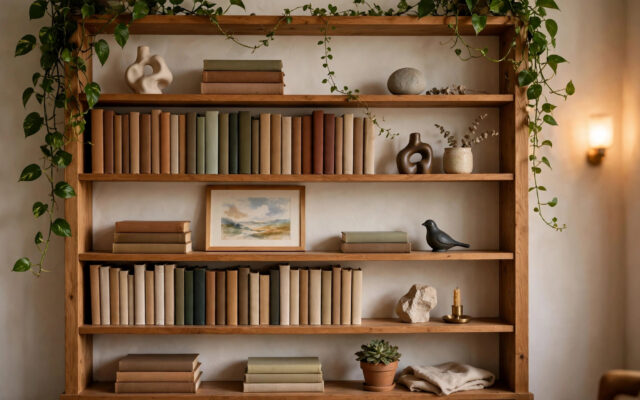
- Books and collections: a stack of beautiful books, a collected set of ironstone dishes, handmade pottery. Collections signal a life lived, which is the entire point.
The guiding question for every accessory: would this object exist in a beautiful home that was never trying to look “farmhouse”? If yes, it belongs. If it only exists to announce the style, it does not.
Common Mistakes to Avoid
- Too much shiplap: one feature wall or ceiling per room. Whole-house shiplap reads as a set, not a home.
- All gray everything: the gray-everything phase of farmhouse is over. Warm whites and wood tones have replaced cool grays; an all-gray room now reads dated.
- Ignoring scale: small rugs, tiny art, and undersized light fixtures are the most common reason a farmhouse room feels “off.”
- Matchy-matchy furniture sets: the bedroom-suite-in-a-box look kills the collected character. Mix pieces with a unifying palette instead.
- Forgetting the “modern”: without clean lines and edited styling, farmhouse collapses into country clutter. Every room needs at least one crisp, contemporary note.
Bringing It Together: A Starter Shopping List
If you are starting from a blank room, here is a prioritized order of purchases that builds the look layer by layer without waste:
- Paint and lighting first. Warm white walls and one great fixture establish the palette and the mood — everything else layers onto this foundation.
- The rug. Size it generously (front legs of all seating on the rug, minimum) in jute, wool, or a layered combination. The rug defines the seating zone in open plans.
- Core seating. A comfortable slipcovered or linen sofa in a neutral tone, plus one or two accent chairs in wood or complementary upholstery.
- The wood anchor. A coffee table, console, or dining table in warm wood — this is where the farmhouse character concentrates.
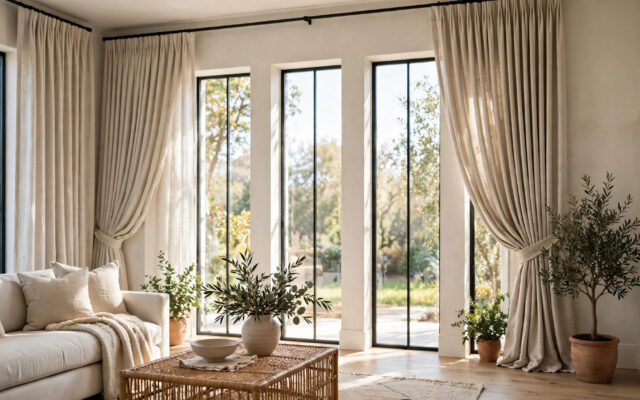
- Window treatments. Simple linen curtains, hung high and wide, soften the architecture and add the textile layer the style needs.
- Black accents. Hardware, a mirror frame, curtain rods, or a floor lamp — distribute small black moments around the room for definition.
- Greenery and styling. Last, always last: plants, art, books, and the few vintage pieces that make it yours. Styling a finished room is joyful; styling around missing furniture is frustrating.
Buy in this order and each purchase will make sense against what is already there. Buy out of order — art before the sofa, accessories before the rug — and you will end up with beautiful objects that do not cohere. Patience is the cheapest design tool there is.
Frequently Asked Questions
Is modern farmhouse going out of style?
A: The clichéd version — word signs, excessive shiplap, all-gray palettes — has faded. But the underlying formula (natural materials, warm neutrals, clean lines, comfortable furniture) is essentially timeless; it is close to how humans have always wanted homes to feel. Done with restraint and quality materials, it will look good for decades.
Can I do modern farmhouse in a small apartment?
A: Absolutely — in fact, restraint suits small spaces. Focus on the palette (warm whites, black accents, wood tones), one or two textured pieces (a jute rug, linen curtains), and warm lighting. Skip the oversized chandeliers and beams; keep the furniture scaled to the room.
What is the difference between modern farmhouse and cottagecore?
A: Cottagecore leans romantic, maximalist, and nostalgic — florals, ruffles, dense collections, a storybook feel. Modern farmhouse is its disciplined sibling: cleaner lines, a tighter palette, less stuff. They share a love of natural materials but diverge sharply on clutter tolerance.
How do I mix modern farmhouse with my existing furniture?
A: Start with the palette and textiles, which are the cheapest to change: warm white walls or bedding, a jute rug, linen pillows. Then swap lighting and hardware — high-impact, renter-friendly changes. Keep existing furniture that fits the color story; a mid-century dresser in warm wood, for example, sits comfortably in a farmhouse room.
What paint colors work best for modern farmhouse?
A: Warm whites for main walls, soft greiges or warm taupes for secondary spaces, and one deep accent color (charcoal, deep green, or navy) for islands, doors, or a single wall. Always test swatches in your own light — undertones make or break the result.
Is shiplap still okay, or is it over?
A: Shiplap as an everywhere-default is over. Shiplap used deliberately — a bedroom accent wall, a kitchen island wrap, a mudroom — remains a legitimate farmhouse element. The test is intention: if it is highlighting architecture, keep it; if it is wallpapering over a lack of ideas, skip it.
How can I get the look on a budget?
A: Prioritize in this order: (1) paint — the highest impact per dollar; (2) textiles — rugs, curtains, bedding in natural fibers; (3) lighting — one statement fixture transforms a room; (4) hardware — swapping cabinet pulls and faucets is cheap and transformative. Hunt vintage and secondhand for character pieces; patina cannot be bought new at any price.
Conclusion
Modern farmhouse endures because it answers a real human desire: a home that feels warm and welcoming without sacrificing calm and order. The formula is simple to state and requires discipline to execute — warm whites, black accents, natural wood, layered textures, comfortable furniture, and styling that favors the functional and the collected over the decorative and the announced.
Start with one room. Get the palette right, layer the textures, hang one great light fixture, and edit until every object earns its place. Do that, and you will have the look — not the cliché of it, but the real thing: a home that feels like it has always been yours. Trends will keep cycling, but a house built on natural materials, honest comfort, and careful restraint never needs to chase them.