The mantel is the only shelf in your house that everyone looks at. It’s at eye level, it’s centered in the room’s main sightline, and it sits above the fireplace — the architectural stand-in for the ancient hearth, the gathering point humans have oriented rooms around for about 400,000 years. That’s why a bare mantel feels wrong in a way a bare bookshelf never does: the room is presenting an empty stage. And that’s also why mantel styling rewards a seasonal rhythm more than any other surface in the home. Change it four times a year and the whole living room feels renewed each time, for the cost of rearranging objects you mostly already own.
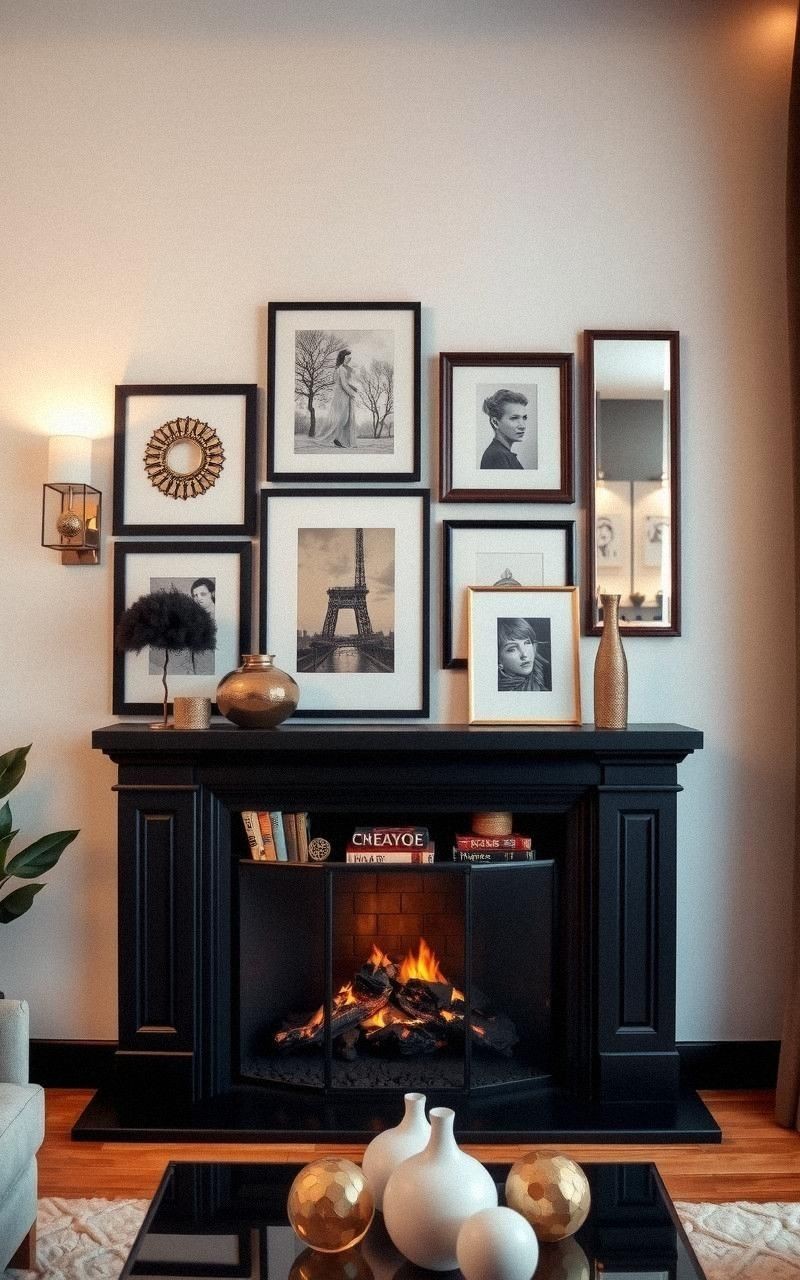
This guide gives you a repeatable system, not just pretty pictures: the five-layer formula professionals use, the proportion rules that keep arrangements from looking cluttered or sparse, and four complete seasonal playbooks — spring, summer, fall, winter — with specific objects, colors, and the one common mistake per season that ruins otherwise good styling. Once you learn the formula, a full seasonal mantel refresh takes about 45 minutes, most of it spent deciding which of your candlesticks to use.
The Five-Layer Formula: Anchor, Art, Height, Fill, Life
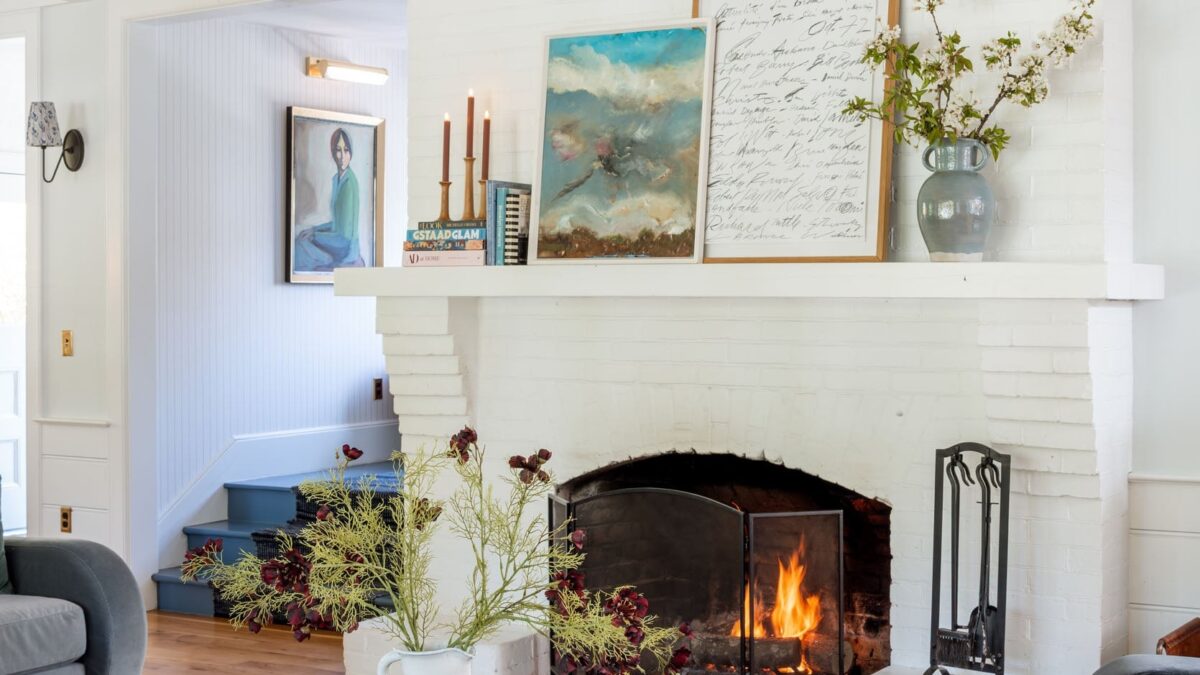
Every well-styled mantel, from farmhouse to minimalist, follows the same underlying structure. Learn the five layers and you can improvise in any style. Layer 1 — the anchor: one large piece centered above the mantel, usually art or a mirror, 2/3 to 3/4 the width of the mantel itself. A 60-inch mantel wants a 40-to-45-inch anchor. Smaller reads timid; larger crowds the wall. Layer 2 — height: tall objects at one or both ends that draw the eye up and frame the composition — candlesticks, branches in a vase, a sculptural object. The classic rule: tallest pieces at the ends, descending toward the center, or an asymmetric version with height on one side only.
Layer 3 — the fill: medium objects that occupy the middle ground — stacked books, small boxes, a bowl, framed photos in the 5-by-7 to 8-by-10 range. Layer 4 — life: something organic, always. A plant, fresh or faux stems, a garland, a bowl of seasonal fruit or pinecones. The organic layer is what separates “styled” from “store display” — it introduces irregularity, and irregularity reads as alive. Layer 5 — the base: a runner, garland, or row of small objects (votive candles, small pumpkins, shells) that sits directly on the mantel shelf and ties the vertical composition to the horizontal surface. Skip the base layer and arrangements look like they’re floating.
Two proportion rules govern everything. First, odd numbers: group objects in threes and fives, never pairs flanking the center like bookends — symmetry at the mantel reads stiff and formal, while asymmetry reads collected and personal. (The one exception: a pair of identical candlesticks at the two ends is a traditional look that works precisely because it’s deliberately formal.) Second, the triangle: the overall silhouette should form a loose triangle or asymmetrical peak — tall in the middle or at one end, stepping down. If you squint and the arrangement looks like a flat skyline, add height somewhere.
Spring: Clearing Out and Letting Light In
Spring styling is subtraction. After winter’s heavy greens and metallics, the spring mantel should feel like the room exhaled. Pull everything off — yes, everything — and wipe the shelf. This full reset, done once a year in March, is the single highest-value styling habit: it breaks the “I’ll just add one thing” accumulation that makes mantels look cluttered by February.
The spring palette is pale and botanical: whites, soft greens, pale yellows, clear glass, light woods. Anchor with a landscape print, a botanical study, or a round mirror (round softens the mantel’s hard horizontal line, and spring is the season for softness). Height comes from budding branches — forsythia, cherry blossom, pussy willow — in a tall clear vase at one end; buy them as cut branches for $12 to $20 at a florist or grocery store and they’ll last two to three weeks, opening gradually. Fill with small potted plants or a stack of two art books topped with a small ceramic bird or egg. The base layer: a simple eucalyptus or olive-branch garland ($25–$40 faux, reusable for years) laid loosely along the shelf, or a row of five small white votives.
Spring’s common mistake is Easter literalism — going all-in on bunnies, pastel eggs, and themed signage. A few seasonal nods are charming; a mantel that reads as a holiday display in May is not. Keep themed objects to three or fewer, mixed among the year-round pieces, and the mantel stays springlike without becoming a diorama.
Summer: The Minimalist Season (and the Heat Problem)
Summer mantels should be the sparsest of the year — the visual equivalent of an open window. Heat makes heavy styling feel oppressive, and summer light is strong enough that fewer, bolder objects read better than many small ones. This is the season for the statement piece you love most: the large abstract painting, the oversized mirror, the sculptural object that gets lost among winter’s layers.
The summer formula compresses to three moves. Anchor: one bold piece, larger than usual — go to 3/4 of the mantel width or slightly beyond. Height: a single dramatic element at one end, like a tall vase with dried pampas grass or a sculptural branch. Life: something that evokes the season without wilting in the heat — a bowl of lemons or limes (cheap, fragrant, lasts two weeks), a collection of shells or sea glass in a low glass bowl, or a trailing pothos that loves the bright summer light. That’s it. Three moves, and the restraint is the style.
Summer’s practical problem is heat damage, and it’s real: mantels above working fireplaces can reach 100°F+ on the shelf surface, which melts cheap candles into modern art and fades artwork. If you use the fireplace in summer (or live where “summer” is a rumor and the fireplace runs year-round), keep candles unlit and decorative only, hang art rather than leaning it (leaning pieces trap heat behind them), and avoid anything wax, vinyl, or glued within 12 inches of the firebox opening. The common styling mistake is the opposite: leaving the full winter display up through August out of inertia. Take the 45 minutes. The room will feel ten degrees cooler.
Fall: Texture Season and the Harvest Palette
Fall is the mantel’s natural high season — the palette of amber, rust, ochre, deep green, and warm brown flatters wood tones, firelight, and lamplight simultaneously. This is when the five-layer formula gets its fullest expression, and when texture matters more than color. Dried hydrangeas, wheat stalks, preserved eucalyptus, pinecones, miniature pumpkins, nubby wool throws draped nearby — fall styling is tactile, and the eye reads that tactility as coziness.
A classic fall arrangement: anchor with a landscape painting in warm tones or a large arched mirror (the arch echoes harvest-wreath roundness). Height with two tall amber-glass vases holding dried branches at the left end, asymmetric. Fill with a stack of vintage-look books, a small brass bowl of acorns or chestnuts, and a framed fall botanical print. Life with a eucalyptus-and-berry garland along the base and three to five small pumpkins or gourds in varied sizes marching along the shelf — odd numbers, remember, in a loose cluster rather than a straight line. Candlelight is non-negotiable in fall: five to seven votives or pillar candles in varied heights, lit in the evening, transform the whole composition.
Fall’s common mistake is the pumpkin monoculture — a mantel covered exclusively in orange pumpkins of descending size, which reads as a grocery display. Pumpkins are an accent, not a system. Limit them to a cluster of three to five, and let branches, books, candles, and art do the structural work. The other fall trap is scented-candle overload: one spiced candle is atmosphere; four competing fragrances is a headache. Choose one scent for the room per season.
Winter: Going Big for the Holidays (and After)
Winter mantels have two phases, and conflating them is the season’s central error. Phase one — the holiday display, roughly Thanksgiving through New Year’s — can be maximalist: full garland (fresh cedar or pine, $40–$80 for a 9-foot strand, or high-quality faux at $60–$120 that lasts a decade), stockings hung from proper stocking holders (weighted, $15–$30 each — never nailed into the mantel face), ornaments tucked into the garland, fairy lights woven through (warm white, 2700K, on a timer). The holiday mantel is the one time of year when “more” is the correct answer, and a good garland installation takes about an hour.
Phase two — January through February — is where most people fail by leaving the holiday display up until it looks tired, then stripping the mantel bare in a fit of decluttering and living with an empty shelf until spring. The winter-after-holidays mantel should be serene, not empty: keep the fairy lights (they’re magic against early darkness), swap the cedar garland for a simple eucalyptus or olive garland, replace ornaments with pinecones and white candles, and hang the stockings’ hooks empty or remove them. The palette shifts from red-green-gold to white-wood-greenery — winter, not Christmas. This transitional styling takes 30 minutes in early January and carries the room until the March reset.
Winter’s practical notes: fresh garlands need water — mist every two to three days or lay the garland with the cut ends wrapped in damp floral foam; a dried-out cedar garland by December 20th is a fire hazard above a working fireplace (keep all fresh greenery 12+ inches from the firebox, and never drape it into the opening). Stocking holders must be weighted for the load — a stocking full of gifts weighs 3 to 5 pounds, and a tipping holder takes the whole garland with it. Test with the actual weight before Christmas Eve.
Year-Round Foundations: What Never Changes
Four seasonal refreshes a year work because most of the mantel’s structure stays constant. Invest once in the permanent bones and the seasonal swaps become quick and cheap. The permanent kit: one great anchor piece (art or mirror) you love in every season — this is worth spending on, $150 to $500 for something that anchors the room year-round. Two to three candlesticks or pillar holders in a finish that works across palettes (brass, black, or clear glass — not seasonal colors). A set of five to seven votive holders. Two vases, one tall and one low. A neutral garland base (eucalyptus or olive faux garland) that takes seasonal additions. With these bones in place, each seasonal refresh costs $20 to $50 in fresh branches, a few pumpkins, or new candles — not a full redecoration.
Storage is the unglamorous half of seasonal styling. One 30-gallon tote per season, labeled, stored in the garage or attic, holds the entire off-season kit. The January mistake is shoving holiday decor into random bags; the March frustration is not finding the spring branches you know you bought. Totes, labels, one shelf. Future you says thanks.
No Fireplace? Styling the Faux Mantel and the Empty Firebox
Millions of homes have a mantel shelf with no working fireplace behind it — a decorative surround, a sealed firebox, or just a shelf mounted at mantel height on a feature wall. The styling system doesn’t change, but the constraints do, and they’re mostly liberating. Without heat, you can use real candles freely (the glow of actual flame beats LED for atmosphere, and there’s no soot risk to the art above), lean large art directly on the shelf, and drape garlands into the firebox opening without fire-safety math.
The empty firebox itself is a styling opportunity most people waste. Fill it intentionally rather than leaving a black hole: a cluster of pillar candles at varying heights (unlit or lit — this is the one place candles inside a fireplace are safe, since there’s no fire), a stack of birch logs for texture, a large basket, or a potted fern that loves the sheltered microclimate. What doesn’t work is using the firebox as hidden storage — stacked board games and old magazines visible through the opening undo every bit of mantel styling above. If you must store there, a fitted firebox cover ($30–$60) hides it cleanly.
A floating mantel shelf with no surround at all — just a beam on the wall — follows the same five-layer formula with one adjustment: the anchor piece matters more, because there’s no fireplace architecture framing the composition. Go bigger on the art (full 3/4 mantel width minimum) and ground the shelf visually with taller end pieces. Without the firebox’s visual weight below, a sparse floating shelf floats away; density is your friend. Consider flanking the shelf with a pair of wall sconces or small framed prints to widen the composition and give the eye a complete vignette rather than a lonely plank.
Styling Around Kids, Pets, and Real Life
The mantel’s great advantage for families is height — it’s naturally out of reach of toddlers and tail-wagging dogs, which makes it the safest display surface in a house with small chaos agents. Lean into that: the mantel is where the breakables live. But “out of reach” has limits. By age four, children climb; by six, they’re throwing balls indoors. Secure tall vases and heavy objects with museum putty ($8 a pack) — the invisible adhesive that keeps a $200 vase from becoming a physics lesson. It’s removable, wall-safe, and the single best investment in display safety.
For the base layer in kid-and-pet households, choose shatterproof: wood, metal, and fabric objects instead of glass and ceramic at the shelf’s edge. A row of small pumpkins, a wooden bead garland, cloth pumpkins or felt ball garlands — all survive a glancing collision. Keep the genuinely fragile pieces (crystal candlesticks, heirloom ceramics) toward the back of the deep mantel shelf, 4+ inches from the edge, where even a jumping dog can’t reach, and reserve the front edge for sturdy, replaceable accents.
Cats deserve a special mention, because a mantel at cat-jumping height with dangling garlands is an irresistible invitation. If your cat treats the mantel as a highway, skip trailing garlands and hanging elements, secure everything with museum putty, and provide an alternative high perch nearby — a cat shelf on an adjacent wall redirects the instinct. Fighting a cat’s vertical nature is a losing battle; rerouting it works.
Finally, photograph each season’s mantel when you finish it. Not for social media — for yourself, next year. The photo answers “what did I do last fall?” in five seconds and turns each year’s refresh from a reinvention into a refinement. After two years you’ll have a personal lookbook, and the 45-minute seasonal reset will drop to 25. The mantel is a stage, the seasons are the repertoire, and you’re the director. Change the set four times a year, and the oldest room in the house never gets old.
This article was produced with the assistance of AI.