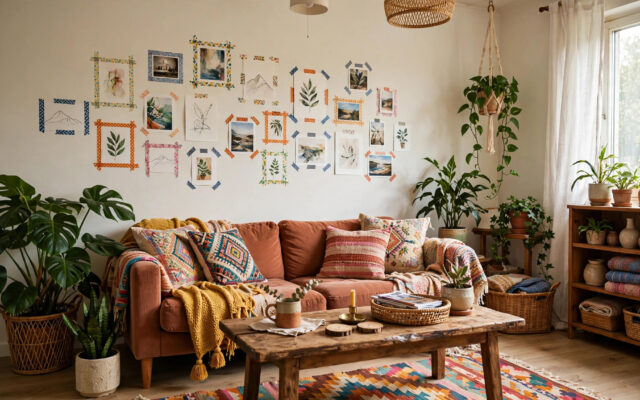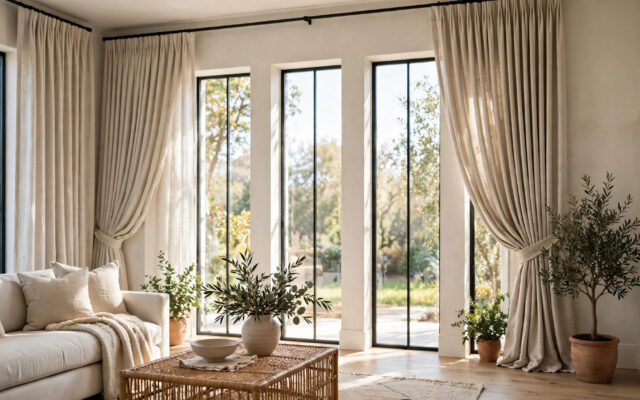
Of all the design decisions in a home, rug size is the one people get wrong most often — and it is absolutely the one that changes a room most dramatically when fixed. A rug that is too small makes furniture look like it is floating in space, shrinks the perceived size of the room, and throws every proportion off. Interior designers have a saying: when in doubt, always go bigger. It is the closest thing the design world has to a universal rule.
This guide gives you exact rug sizes for every room — living room, dining room, bedroom, kitchen, hallway, and home office — plus the measuring method professionals use, the placement rules that make furniture groupings look intentional, and the mistakes that make even expensive rugs look cheap. Grab a tape measure; by the end, you will know precisely what size to buy.
The Golden Rules of Rug Sizing
Before room-by-room specifics, four principles apply everywhere:
- Bigger is almost always better. The number-one rug mistake is buying too small. A rug should anchor the furniture, not sit isolated beneath a coffee table like a postage stamp.
- Front legs on the rug, minimum. In seating areas, at least the front legs of every major piece of furniture (sofa, chairs) should rest on the rug. All legs on is even better for large rooms.
- Leave a border of bare floor. Aim for 8 to 24 inches of visible flooring between the rug’s edge and the walls — enough to frame the rug, not so much that it floats. In small rooms, 8–12 inches; in large rooms, up to 24.
- Measure the furniture grouping, not the room. The rug serves the conversation area or the bed zone — measure that footprint, then choose the rug size that covers it.
Living Room Rug Size
The living room is where rug sizing matters most, because it typically holds the largest furniture grouping. Standard rug sizes and when to use them:
- 5′ x 8′: works for small living rooms or apartments — anchors a loveseat and one chair, or a small sofa with the coffee table.
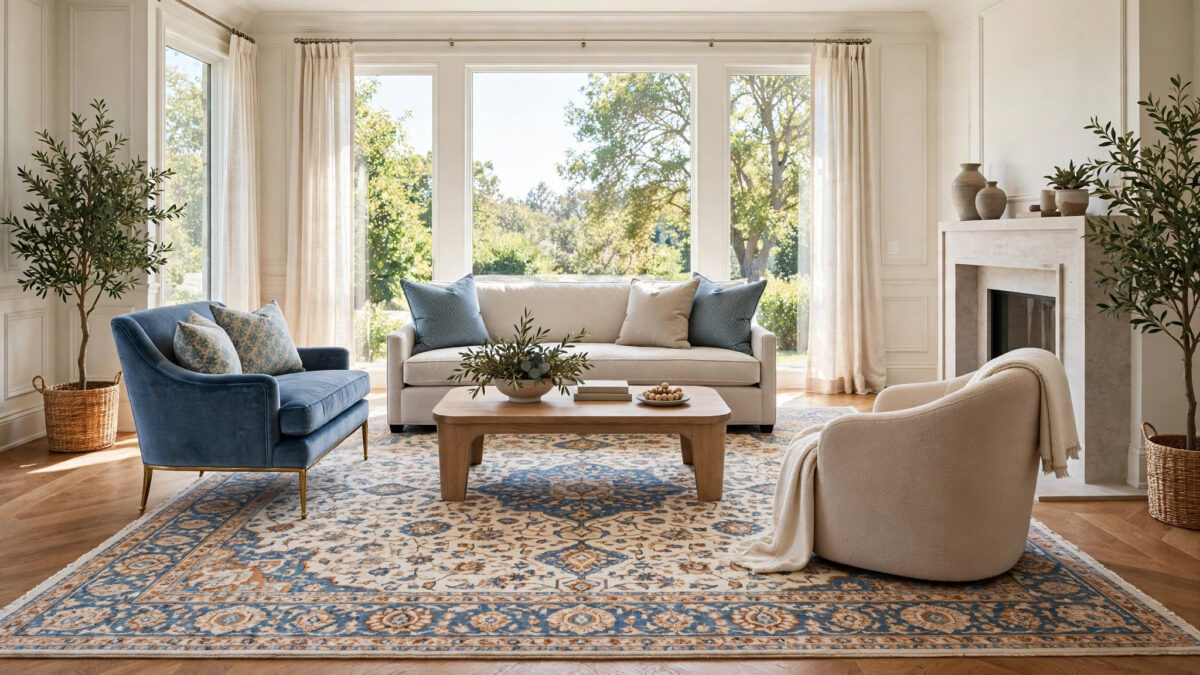
- 8′ x 10′: the most popular living-room size. Fits a standard three-seat sofa plus two chairs with front legs on the rug, in an average living room.
- 9′ x 12′: for larger living rooms and sectionals. Allows all furniture legs on the rug with room to spare.
- 10′ x 14′ and up: great rooms and open-plan spaces where the rug must define the seating zone within a much larger area.
Placement rules
You have three legitimate options, in order of designer preference:
- All legs on: the entire furniture grouping sits fully on the rug. Best for large rooms; looks the most luxurious and intentional.
- Front legs on: sofas and chairs sit with front legs on the rug, back legs on the floor. The versatile standard for most living rooms.
- Coffee table only: only acceptable in very small spaces — and even then, size up if you possibly can. A rug under just the coffee table with all seating off it looks disconnected.
Center the rug on the room’s focal point — usually the fireplace or the main sofa wall — not necessarily the geometric center of the room. And in open-plan spaces, the rug is what defines the “room”: its edges draw the boundary of the seating area, so size it to include everything that belongs to the conversation.
Dining Room Rug Size
Dining rooms have the strictest sizing rule in the house, because chairs move: the rug must extend at least 24 inches beyond the table on all sides, so that chairs remain on the rug even when pulled out. A chair leg catching on the rug’s edge every time someone sits down is the telltale sign of a too-small dining rug.
- Table seats 4–6 (approx. 36″ x 60″ table): 8′ x 10′ rug.
- Table seats 6–8 (approx. 42″ x 72″ table): 9′ x 12′ rug.
- Table seats 8–10+ (approx. 48″ x 96″+ table): 10′ x 14′ or larger.
- Round table (48″–60″ diameter): 8′ round rug for a 48″ table; 9’–10′ round for a 60″ table.
Practical notes: choose a low-pile or flatweave rug for dining — chairs glide easily and crumbs vacuum out. Patterned rugs hide the inevitable food evidence far better than solid light colors. And if your dining area is open to the living room, leave clear floor space between the two rugs so each zone reads distinctly.
Bedroom Rug Size
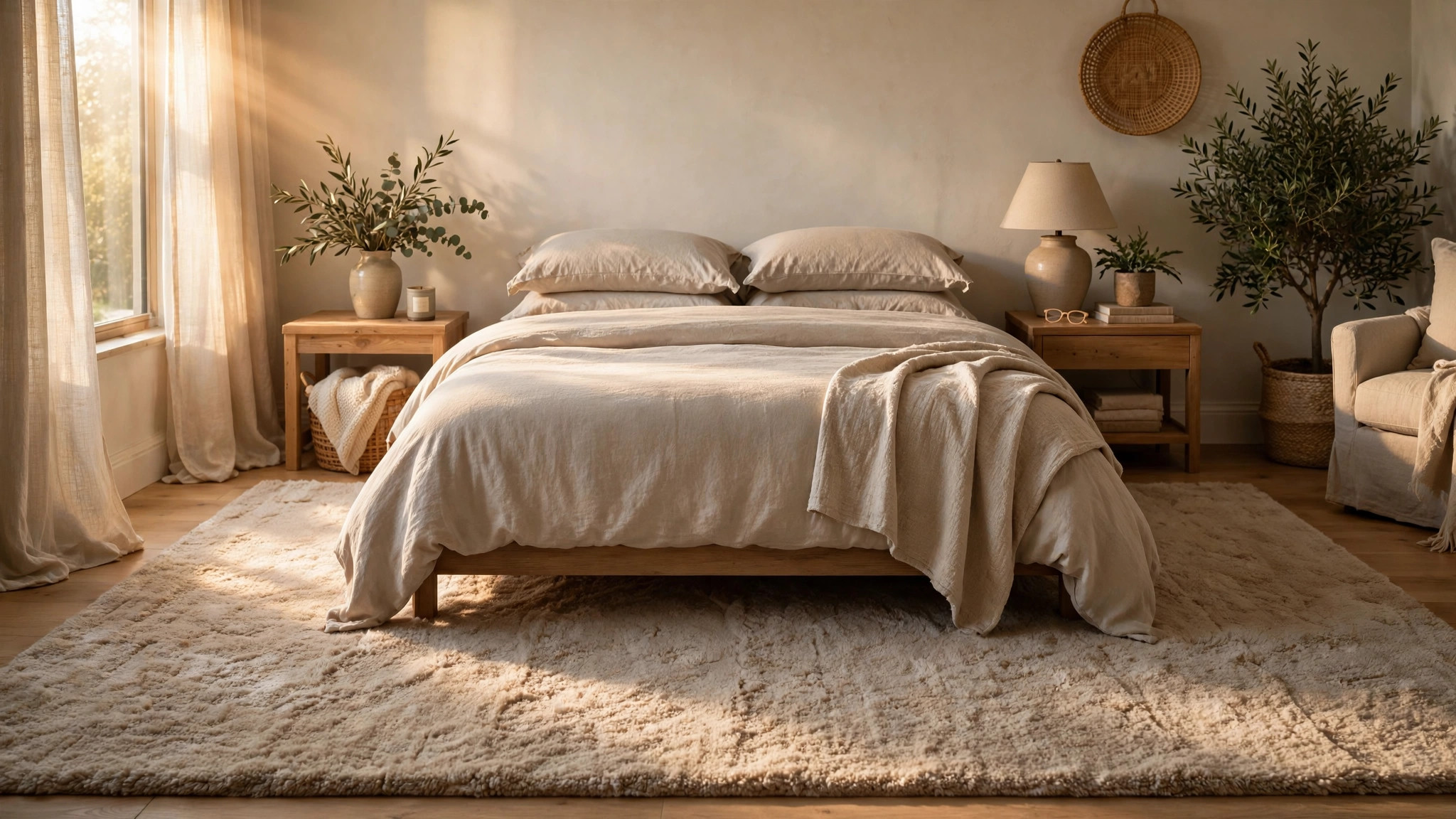
Bedrooms follow a different logic: the rug’s job is to give your feet a soft landing and to ground the bed visually. The standard approach is a rug that extends 18–24 inches beyond the bed on the sides and foot — you do not need rug under the headboard area (it is unseen and wasted).
- Queen bed: 8′ x 10′ rug placed with the top third under the bed (starting roughly where the nightstands end).
- King bed: 9′ x 12′ rug, same placement.
- Twin / full bed: 5′ x 8′ or 6′ x 9′.
- Small bedroom alternative: two runners (2.5′ x 8′) flanking the bed — a classic, budget-friendly move that delivers the soft-landing effect.
Position the rug so it starts about two-thirds of the way down the bed — roughly 18–24 inches from the headboard. The nightstands can sit partially on the rug or fully off it; either works, but keep them level (a wobbly nightstand half-on a thick rug is annoying). For maximum coziness, choose a plush, high-pile rug for bedrooms — this is the room where softness matters most.
Kitchen Rug Size
Kitchens need rugs that work hard: comfort underfoot at the sink and stove, easy cleaning, and safe footing. Forget one giant rug — kitchens use targeted runners and mats:
- In front of the sink: a 2′ x 3′ or 2.5′ x 4′ washable mat or rug.
- Galley kitchens: a runner (2.5′ wide x 6’–8′ long) down the center walkway.
- In front of the range: a matching small rug or a second runner segment.
- Eat-in kitchens: follow dining-room rules for the table zone.
Material is critical here: choose washable, low-pile rugs (indoor/outdoor rugs and machine-washable options are ideal for kitchens). Avoid anything with a latex backing that traps moisture against hard floors, and always use a non-slip rug pad — a sliding rug in front of a hot stove is a safety hazard, not a decor choice.
Hallway and Entryway Rug Size
- Hallway runners: standard width is 2.5 to 3 feet; length should cover most of the hallway while leaving 4–6 inches of bare floor at each end and a few inches on each side. For long hallways, one continuous runner looks better than several small rugs chopped together.
- Entryway: a 3′ x 5′ or 4′ x 6′ rug (or a runner for narrow entries) that fits the door swing — the door must clear the rug. Durable, easy-clean materials are non-negotiable here; this rug takes the most abuse in the house.
- Stairs: if running a stair runner, it should be centered with a few inches of wood visible on each side — typically a 27″–32″ wide runner.
Home Office Rug Size
The home office has one special requirement: the desk chair must roll on the rug, not catch on its edge. Measure the full range of chair movement — scoot the chair back as far as you go — and size the rug to contain it:
- Standard desk setup: 5′ x 8′ rug under desk and chair.
- L-shaped or double desk: 8′ x 10′ to cover the full work zone.
- Chair-mat alternative: if you prefer hard-floor rolling, skip the under-desk rug and use a rug in the seating/reading corner instead.
Choose low-pile rugs for offices — chair wheels sink into plush pile and make rolling miserable. A rug pad adds cushioning without the rolling resistance of thick pile.
How to Measure Like a Professional
Do not guess from a product photo. Use this method:
- Tape out the size on the floor with painter’s tape before buying. Mark the rectangle, live with it for a day, and check: do the front legs land on it? Is the border of bare floor even? Does the door clear it?
- Measure twice: once for the furniture footprint, once for the wall-to-wall room dimension to confirm the 8–24 inch border.
- Account for doors: every door that swings over the rug area must clear the rug plus pad height. Measure door clearance with the pad included.
- Photograph the taped outline and bring it (with measurements) when shopping — it eliminates guesswork in the store.
The painter’s-tape trick takes ten minutes and has saved more rug purchases than any other single technique. Professionals do it on every job; there is no reason you should not. If you are shopping online, most retailers list exact dimensions — compare them against your taped outline rather than trusting the product photo, where a 5′ x 8′ and a 9′ x 12′ can look deceptively similar.
Rug Pads: The Unseen Essential
A rug without a pad is a rug at half its potential. Pads prevent slipping, add cushioning, protect floors, extend rug life, and improve sound absorption. Match the pad to the floor: felt or felt-rubber pads for hard floors, and appropriate grip pads for carpet (or skip the rug-on-carpet entirely in most cases — it rarely looks right).
Size the pad 1–2 inches smaller than the rug on all sides so it stays invisible. Expect to spend roughly 10–20% of the rug’s cost on a good pad — it is the highest-ROI accessory in the rug equation.
Common Rug Mistakes to Avoid
- The postage stamp: a small rug floating under a coffee table with all furniture off it. Size up until front legs land on the rug.
- Rug-on-rug chaos: layering can look great (jute under a patterned rug is a classic), but the rugs must differ clearly in texture — two similar patterned rugs layered just looks like a mistake.
- Ignoring the door swing: a beautiful entryway rug that the front door drags across will be ruined in months.
- Matching the rug to the wall color: match the rug to the furniture and art, not the paint. A rug that blends into the walls disappears; a rug that converses with the upholstery anchors.
- Skipping the pad: wrinkles, slipping, and premature wear — all preventable for the cost of a pad.
- One rug per room, always: large open spaces often need two rugs to define two zones. Do not stretch one rug across two functions.
Rug Materials: A Quick Guide
Size gets the geometry right; material gets the feel right. Match the fiber to the room’s demands:
- Wool: the gold standard — durable, naturally stain-resistant, soft underfoot, and long-lived. Best for living rooms and bedrooms. Higher cost, worth it in high-visibility spaces.
- Cotton and flatweave (dhurrie, kilim): affordable, lightweight, easy to clean, great for layering. Less plush; best for casual spaces and rentals.
- Jute and sisal: hard-wearing natural fibers with beautiful texture. Great for entryways and layered looks. Not soft underfoot and they shed initially — know what you are buying.
- Synthetic (polypropylene, nylon, polyester): the practical choice for dining rooms, kitchens, kids’ rooms, and pet households — stain-resistant, affordable, and increasingly good-looking. Nylon is the most durable synthetic; polypropylene the most budget-friendly.
- Silk and viscose: luxurious sheen, beautiful in formal living rooms and bedrooms — but delicate, hard to clean, and poor choices for high-traffic or pet areas.
- Machine-washable rugs: a category unto themselves now — thin, practical, and ideal for anywhere messes happen. Keep expectations realistic on plushness.
The material rule of thumb: spend on wool where you live (living room, bedroom), save with synthetics where life happens (dining, kids, pets, entries). And whatever the fiber, the pad underneath matters as much as the rug itself — never skip it.
Frequently Asked Questions
What is the most common rug size for a living room?
A: 8′ x 10′ is the best-selling living-room rug size and suits most average living rooms with a standard sofa and two chairs. If your room is large or you have a sectional, step up to 9′ x 12′.
Should the rug go under the sofa or in front of it?
A: Under — at least the front legs of the sofa should rest on the rug. A rug that sits entirely in front of the sofa, touching none of the furniture, looks disconnected and makes the seating area feel smaller.
How far should a rug extend beyond a dining table?
A: At least 24 inches on all sides, so chairs stay on the rug when pulled out. Measure your table, add 48 inches to both length and width, and buy the standard rug size closest to (but not smaller than) that number.
Can you put a rug on carpet?
A: You can, but it rarely looks as good as rug-on-hard-floor — the layered textures can read as lumpy. If you do it (common in rentals), use a low-pile rug, a thin pad designed for carpet, and keep the top rug large enough to look deliberate rather than apologetic.
What rug size for a king bed?
A: 9′ x 12′, positioned with the top third under the bed so it extends 18–24 inches beyond the sides and foot. In a tight room where 9′ x 12′ will not fit, use two runners flanking the bed instead.
Are washable rugs worth it?
A: For kitchens, dining rooms, entryways, and homes with kids or pets — absolutely. Modern machine-washable rugs have improved enormously in look and feel. For formal living rooms and low-traffic bedrooms, a quality traditional rug with a good pad will look richer and last longer.
How do I choose between round and rectangular rugs?
A: Match the rug shape to the furniture grouping and the room’s architecture: round rugs suit round tables, curved seating arrangements, and square rooms or foyers; rectangular rugs suit the vast majority of sofas, beds, and rectangular rooms. When in doubt, rectangular is the safer default.
Conclusion
Rug sizing is one of those rare design topics where the rules are clear, the method is simple, and the payoff is immediate. Measure the furniture grouping, tape it out, buy the size that puts front legs on the rug, and leave a dignified border of floor. Twenty-four inches beyond the dining table. Eighteen to twenty-four beyond the bed. Chair contained in the office. Pad underneath, always.
Get the size right and even a modest rug looks expensive; get it wrong and even an expensive rug looks lost. The tape measure is the most powerful decorating tool you own — use it before you buy, and your rooms will look like someone planned them. Because someone did: you. And the next time you walk into a room that just feels right — grounded, proportioned, intentional — check the floor. There is a very good chance the rug is exactly the size it should be.