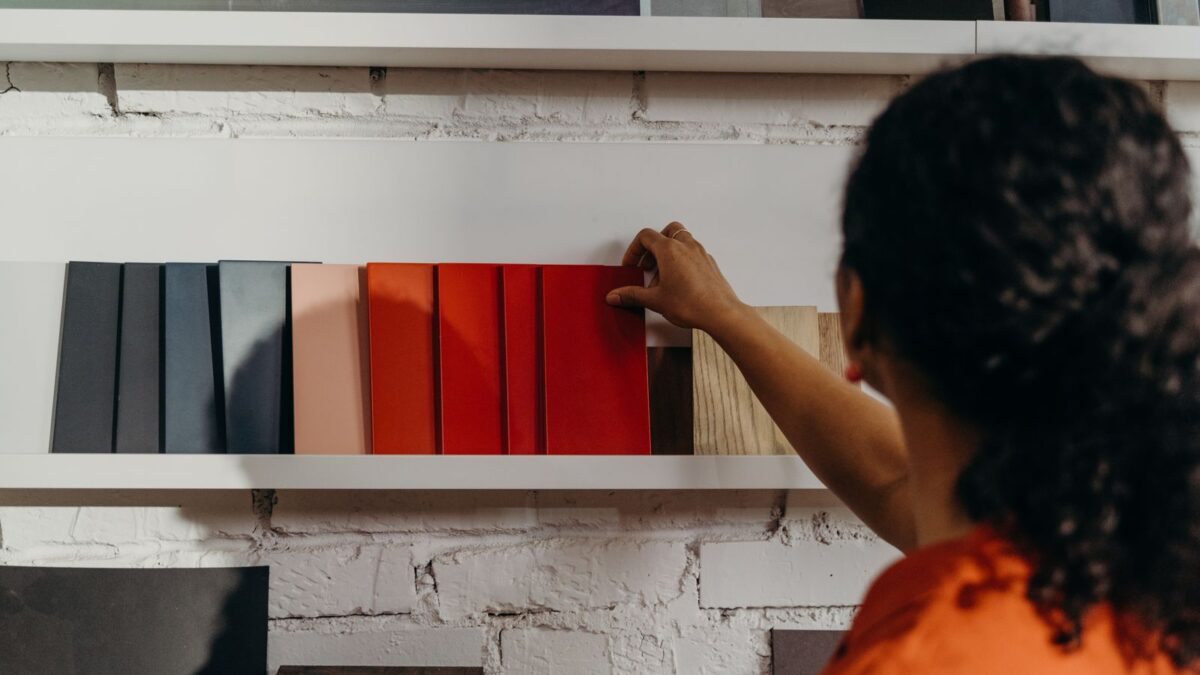
Two walls painted the exact same color can look completely different — one velvety and rich, the other plasticky and harsh. The difference is sheen: how much light the paint reflects. Get the finish right and the color sings; get it wrong and even a perfect color choice looks cheap.

What Sheen Actually Does to a Wall
Paint sheen is measured in gloss units, but what you need to know is practical: flat paint (0–5% sheen) absorbs light, hides surface flaws, and can’t be scrubbed. Eggshell (10–25%) has a soft glow, wipes clean gently, and is the default for most walls. Satin (25–35%) reflects noticeably, stands up to scrubbing, and shows every bump in the drywall. Semi-gloss (35–70%) is shiny, nearly waterproof, and merciless about imperfections — which is why it belongs on trim, not broad walls. High-gloss (70%+) is a specialty finish for doors and furniture. The trade-off is always the same: more sheen means more durability and washability, but less forgiveness. A wall with wavy drywall seams painted in satin will show every wave; the same wall in flat will look smooth.
Living Room and Bedrooms: Eggshell Territory
Eggshell is the workhorse finish for a reason. In living rooms, dining rooms, and adult bedrooms it gives just enough light reflection to keep the color lively without spotlighting the wall texture. It handles the occasional scuff — a damp sponge takes off most marks — though it’s not made for repeated scrubbing. One nuance: in rooms with strong side light (a big window raking across the wall at an angle), even eggshell can reveal roller texture and patched spots. If your walls have a lot of repairs, drop to a matte finish — modern matte paints (sometimes labeled “matte” rather than “flat”) offer nearly the washability of eggshell with the flaw-hiding of flat, and they’re the best choice for imperfect older walls. For kids’ bedrooms, step up to satin or a scrubbable matte: crayon, fingerprints, and mystery smudges are a matter of when, not if.
Kitchens, Bathrooms, and Laundry Rooms: Satin or Semi-Gloss
Wet rooms need moisture resistance, and that means sheen. Satin is the minimum for bathroom and kitchen walls — it sheds steam and wipes clean without burnishing (that shiny spot you get from scrubbing a lower-sheen paint). Behind the stove and around the sink, where grease and splatter are constant, semi-gloss is worth it despite showing more wall texture. Use a paint specifically formulated for kitchens and baths; the mildewcide additives matter in a room that steams up daily. Ceilings in bathrooms deserve attention too: a satin or semi-gloss ceiling paint resists the moisture that makes flat ceiling paint peel and spot. One caution — in a bathroom with poor ventilation, no paint finish compensates for an absent or weak exhaust fan. If the mirror fogs for twenty minutes after a shower, fix the ventilation before you repaint.
Trim, Doors, and Cabinets: Where Gloss Earns Its Keep
Trim is the jewelry of a room, and semi-gloss is its standard finish: it creates a crisp contrast against eggshell walls, takes abuse from vacuum cleaners and shoes, and wipes clean. For interior doors, satin or semi-gloss both work — satin for a softer modern look, semi-gloss for traditional crispness. Kitchen cabinets are a special case: use a dedicated cabinet enamel (often labeled “alkyd” or “urethane-trim enamel”) in satin or semi-gloss, applied over a bonding primer. Regular wall paint on cabinets chips within months because it never cures hard enough; cabinet enamel cures to a furniture-like shell in about 30 days. Whatever you choose, keep trim one to two sheen levels above the walls — eggshell walls with satin trim, or satin walls with semi-gloss trim. That contrast is what makes millwork look intentional instead of accidental.
Ceilings: Flat, Always (With One Exception)
Ceilings get flat paint — full stop. Any sheen on a ceiling turns it into a mirror for every drywall seam, roller mark, and patch, because you’re viewing it at a grazing angle under direct light. Ceiling-specific flat paint is formulated extra-flat and spatter-resistant for overhead rolling. The one exception is the bathroom, where moisture demands at least a satin ceiling paint as noted above. If your ceiling has a popcorn or textured finish, flat is even more important — sheen on texture looks dirty within a year as the raised points catch light unevenly. And never use wall paint on a ceiling to “save a can”: wall paints have more sheen than you think, and the difference shows the moment the sun hits it.
Testing and Touch-Up Strategy
Sheen changes how color reads: the same color in semi-gloss looks darker and more saturated than in flat, because reflected light deepens the tone. So test your color in the actual sheen you’ll use — a flat sample chip won’t predict a satin wall. Buy sample pints in the right finish, paint 2-foot squares on the wall, and check them morning, noon, and evening. For touch-ups later, keep in mind that higher sheens flash more: a touched-up spot in satin will show as a slightly different texture even with the same can of paint, because the original was rolled and the touch-up was brushed. Flat and matte touch up invisibly; satin and above, plan on repainting the full wall corner to corner for a truly invisible repair. Label every leftover can with room, color, and sheen — “Guest bath, Sea Salt, satin” — because two years from now you won’t remember, and the wrong sheen on a touch-up is worse than no touch-up at all.
Special Cases: Radiators, Exteriors, and High-Traffic Halls
A few surfaces break the standard rules. Radiators and metal railings need a heat-resistant metal paint or a direct-to-metal enamel — regular latex peels off hot metal within a season, and the prep (wire-brush the rust, prime bare spots with a rust-inhibiting primer) matters more than the topcoat. Exterior siding follows the same sheen logic as interiors but one step glossier across the board, because weather is the ultimate scrub test: satin body, semi-gloss trim is the classic combination. Hallways and stairwells — the highest-traffic walls in the house — deserve satin even though they’re “living space,” because shoulders, bags, and hands hit those walls daily; flat paint in a hallway looks tired within a year. And for a front door, a high-gloss or semi-gloss exterior enamel in a bold color is the traditional choice: it stands up to sun and rain and gives the entrance the crisp, deliberate look that flat paint never can.
How Lighting Changes Your Sheen Choice
Sheen doesn’t exist in a vacuum — it interacts with the light in the room, and the same finish behaves differently under different conditions. In a south-facing room flooded with direct sun, even eggshell can look shiny where the light rakes across the wall; if your walls have texture or repairs, consider dropping to matte in sun-drenched rooms. North-facing rooms get cool, indirect light that flattens everything — here a satin finish can add welcome luminosity and keep colors from going dead. Artificial light matters too: under warm 2700K bulbs, sheen differences are subtle; under cool 4000K+ LEDs, every gloss level is exaggerated. The practical test: paint your sample boards in the actual sheen, tape them to the wall, and check them at three times of day — morning, midday with sun, and evening under lamps. A finish that looks perfect at noon can look plasticky at 8 p.m. under overheads. When a room has mixed lighting (big windows plus overhead cans), eggshell or matte is the safer middle ground, because it stays consistent while satin swings between dull and glossy as the light changes.
One more lighting-driven rule: the darker the color, the more the sheen shows. A deep navy in satin looks almost lacquered — dramatic and gorgeous if intentional, harsh if not. Dark colors in flat or matte look velvety and rich. So when you go dark, drop the sheen one level from what you’d choose in a light color: where you’d use eggshell in a pale gray, use matte in charcoal. This single adjustment is what separates moody-elegant dark rooms from ones that look like they were painted with a plastic coating.
The rule to carry into the paint aisle: match the sheen to the room’s job, not your taste. Durability where hands and water go, forgiveness where eyes go. Get that right and the color almost picks itself.