The first bathroom quote I ever got made me laugh out loud. $14,000 for a bathroom the size of a closet, to rip out a stained fiberglass tub and put in a new tile shower. I laughed because it seemed insane. Six weeks later, after three more quotes and one very expensive lesson about what goes on behind bathroom walls, I wasn’t laughing — but I did know exactly where every dollar was going. That’s what this guide is: the numbers nobody gives you upfront, and the reasons the bill is what it is.
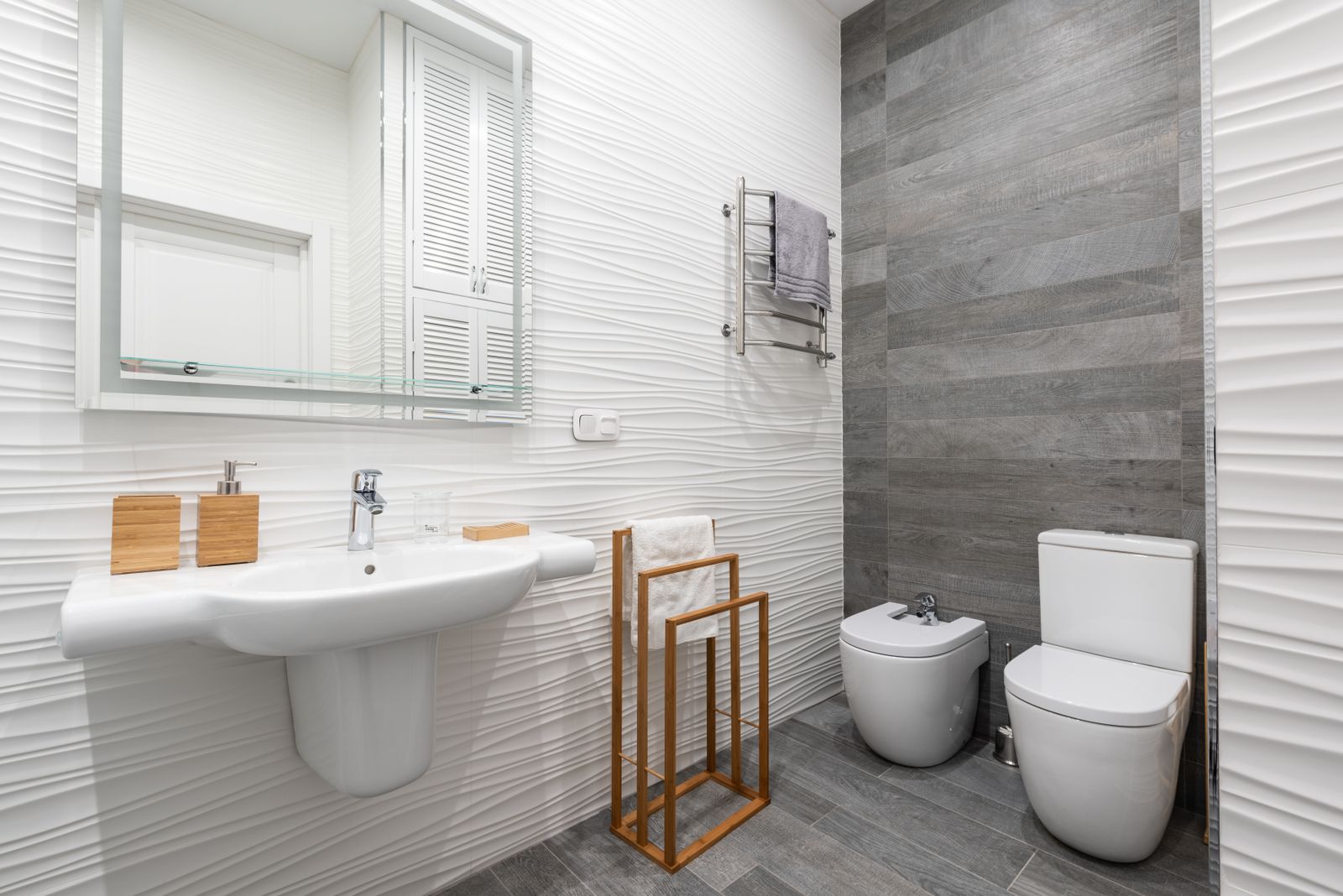
If you’re standing in a dated bathroom right now trying to figure out what a remodel will actually cost you, forget the averages you see on those contractor lead-gen sites. Most of them exist to sell your phone number to remodelers, and their “averages” are built to sound either cheap enough to click or expensive enough to make you call a pro. I’ll give you the real ranges, what’s driving each line item, where people waste money, and where I’d never cut corners. No fluff.
What a Bathroom Remodel Actually Costs
Here are the honest ranges for a full gut remodel in most U.S. markets, as of 2026. (Prices vary a lot by city — expect to pay 20 to 30 percent more in places like San Francisco, New York, or Boston, and 10 to 20 percent less in much of the Midwest and South.)
Small guest bath or powder room (25–40 sq ft): $8,000–$15,000. You’re replacing everything — tile, vanity, toilet, fixtures — but keeping the layout. The small footprint keeps material costs down, but labor barely drops, because a plumber and tile setter still have to show up and do the same sequence of work.
Standard full bath (40–60 sq ft): $15,000–$30,000. This is the most common remodel. New tub or shower, new vanity, new tile floor and shower surround, new fixtures, maybe a new window. Keep the toilet and shower where they are and you’ll land in the lower half. Move the plumbing and you’re in the upper half.
Primary bath (60+ sq ft, walk-in shower, double vanity): $30,000–$60,000+. Once you start talking curbless showers, frameless glass, heated floors, and freestanding tubs, the sky is the limit. I’ve seen primary baths hit $80,000 with custom cabinetry and stone. That doesn’t mean you need to spend that — but it means the ceiling is very high.
Surface-level refresh (no gut): $3,000–$8,000. New vanity, new mirror, new fixtures, paint, maybe new toilet and a prefabricated tub surround. You’re not touching tile or plumbing. This is the move when the bones are fine but everything looks tired.
Those are full-project numbers with a contractor doing most of the work. Doing it yourself changes the math dramatically — labor is usually 40 to 50 percent of a bathroom bill, so a skilled DIYer can cut a $20,000 remodel down to $8,000–$10,000 in materials. But “skilled” is doing a lot of work in that sentence, and we’ll get to that.
The Lesson My First Remodel Taught Me
Here’s my anecdote, and it still stings. The first bathroom I ever redid was in a house I’d just bought. I got three quotes, picked the cheapest one (mistake number one), and was thrilled when the contractor said he could start Monday and be done in two weeks. He was not done in two weeks. He was done in six, and the tile grout started crumbling within a year because he skipped the waterproofing membrane behind the shower tile.
The fix cost me $4,500 — nearly a third of the original job — because a proper tile setter had to rip out the entire shower surround and redo it with actual waterproofing. The original contractor had vanished. What I learned wasn’t that cheap contractors are always bad. It was that I had no idea what the right way to build a shower even looked like, so I couldn’t tell the difference between a good bid and a cheap one. The cheapest quote wasn’t cheaper. It was just incomplete.
That’s why this guide exists. Not so you can pick the most expensive contractor, but so you can look at any quote and know whether it’s real.
Why Labor Eats Half Your Budget
The single biggest shock for first-time remodelers is the labor share. On a typical $20,000 bathroom remodel, roughly $8,000 to $10,000 goes to people, not products. And there’s a reason for it: a bathroom is the most trade-dense room in your house.
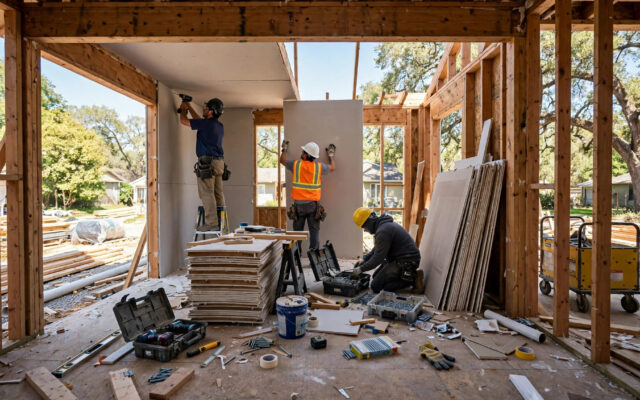
A standard gut remodel needs, at minimum: a demo crew, a plumber, an electrician, a tile setter, a drywall finisher, a painter, and someone to do the finish carpentry. That’s seven different skill sets, and they have to show up in the right order. The plumber can’t rough in until demo is done. The tile setter can’t start until the waterproofing and backer board are in. The electrician needs to be there before the drywall goes up for the new light fixtures, and again after for the final connections. Every one of those visits costs money, and the general contractor’s job is to sequence them so nobody is standing around.
This is also why a tiny bathroom doesn’t cost proportionally less. A tile setter still needs a full day or more to waterproof and tile a small shower. The plumber still charges for the rough-in and the fixture set. The fixed costs of showing up — trip charges, minimums, the sheer overhead of scheduling — don’t shrink just because your bathroom is 35 square feet instead of 60. Labor has a floor, and in most markets that floor is around $6,000 to $8,000 for any full bathroom, no matter how small.
A Real Line-Item Breakdown
Let’s take a typical $22,000 standard full-bath remodel and see where the money goes. These are mid-range selections in a mid-cost market — not builder-grade, not luxury.
- Demolition and disposal: $1,000–$2,000. Tearing out tile, the tub, the vanity, hauling it away. Includes the dumpster or dump fees.
- Plumbing rough-in and fixture set: $2,500–$4,500. Moving or replacing supply and drain lines, setting the toilet, shower valve, tub drain. Higher if the plumber has to open walls to relocate drains.
- Electrical: $1,000–$2,000. New vanity lighting, an exhaust fan (code requires it), GFCI outlets, maybe heated floor wiring. If your panel is old or the bathroom lacks a dedicated circuit, add $500–$1,500.
- Tile and stone (materials + labor): $4,000–$8,000. The single biggest material line. Tile setter labor alone often runs $10–$20 per square foot for walls and $15–$30 for floors, on top of the tile itself.
- Shower or tub: $1,500–$5,000. A standard alcove tub is $400–$800; a tiled walk-in shower with a custom pan starts around $3,000 and climbs fast.
- Vanity and countertop: $1,200–$3,000. Prefab vanities run $300–$800; semi-custom with a stone top is $1,500–$3,000.
- Toilet: $200–$600. A decent toilet costs less than most people expect. Installation is usually $200–$400.
- Fixtures (faucets, showerhead, hardware): $400–$1,200. This is where budgets quietly double.
- Drywall, paint, trim: $1,000–$2,000. Moisture-resistant drywall (or cement board in wet areas), paint, baseboards, caulk.
- Permits and inspections: $200–$1,000 depending on your city.
- Contractor overhead and profit: 10–20% of the subtotal, baked into the bid.
Add it up and you’ll see why the number lands where it does. Nothing here is padded — it’s just a lot of skilled work in a small, wet room.
Moving Plumbing: The $2,000 Decision
Here’s the rule of thumb every contractor will tell you: keep the toilet, shower, and sink where they are. Moving a toilet six feet can cost $1,500 to $3,000, because the drain is the hard part. Toilets need a 3- or 4-inch drain line with proper slope, and that line runs through your floor framing. Rerouting it often means opening the ceiling below or cutting into joists — work that cascades into drywall repair, structural review, and sometimes a permit revision.
Moving a sink is cheaper ($500–$1,000) because supply lines and a 1.5-inch drain are easier to reroute. Moving a shower drain sits in the middle ($1,000–$2,500), depending on whether the new location can hit the existing drain line or needs a new one tied into the stack.
None of this means you should never move plumbing. Sometimes the layout is genuinely bad — a door that swings into the toilet, a shower you have to climb over the tub to reach. But know the price before you fall in love with a new layout. I once watched a friend spend $3,200 moving a toilet four feet to gain six inches of vanity space. She regrets it every time she looks at the bill. Get the plumber’s number for the move before you finalize the design, not after.
Tile: The Quiet Budget Killer
People budget for the tile they see at the store — $3 per square foot for a nice ceramic, maybe $8 for porcelain — and then get blindsided by the total. A standard tub surround is about 80 to 90 square feet of wall. A walk-in shower can be 150+ square feet of wall plus the floor and niche. Multiply your $8 tile by 150 and you’re at $1,200 just for the shower walls, before a single bag of thinset, grout, waterproofing membrane, or the tile setter’s labor.
And labor is where tile gets expensive. Setting large-format tile (12×24 or bigger) costs more per square foot than standard tile because it’s harder to level and cuts slower. Mosaics and small hexagons cost more too — every sheet takes longer to set and grout. Natural stone needs sealing and costs more to install. A simple subway tile in a straight stack is the cheapest install; a herringbone marble floor is the most expensive. The spread between the cheapest and priciest tile job for the same size bathroom can easily be $5,000.
My strong recommendation: pick your tile before you get final quotes, and show the contractor the exact product. “Tile shower” on a quote means nothing. A quote for 120 square feet of 12×24 porcelain in a straight pattern means something. Contractors price what they can see. The number of remodels that blow up over a mid-project tile change is staggering — the material costs more, the labor pattern changes, the waterproofing timeline shifts. Choose the tile once. Commit.
Fixtures: Where Cheap Is Fine and Where It Isn’t
Fixtures are the category where smart shoppers save thousands and careless ones waste them. Here’s how I’d split it.
Toilets: cheap is fine. A $220 toilet from a major brand flushes just as well as a $600 one for most households. The expensive ones buy you a sleeker shape, a quieter close, or a bidet seat. If budget matters, put the $220 toilet in and never think about it again. The one upgrade I’d actually pay for: a comfort-height elongated bowl. It costs maybe $30 more and your knees will thank you.
Faucets and shower valves: don’t cheap out on the valve, the trim can be mid-range. This is the distinction that matters. The valve body — the part inside the wall that mixes hot and cold — is a nightmare to replace later. A quality valve from Delta, Moen, or Kohler costs $80–$150 and will last decades, and replacement cartridges are available everywhere. The trim (the pretty handle and plate you see) can be swapped in twenty minutes. So: good valve, whatever trim fits your budget. What you want to avoid is a no-name valve with no replaceable parts. When it fails in eight years, you’re opening the wall.
Showerheads: mid-range is the sweet spot. A $60–$120 showerhead from a real brand gives you 90% of the experience of a $300 one. Rain heads are lovely in a big shower and pointless in a 32-inch alcove where the water hits the walls. Handhelds on a slide bar are the most practical choice — great for cleaning the shower, washing kids, rinsing off. I’d take a $80 handheld over a $250 fixed rain head every time.
Vanity: prefab saves a fortune. A semi-custom vanity with a quartz top can run $2,500. A well-made prefab vanity with a cultured marble or quartz top runs $500–$900 and looks 85% as good once the hardware is on. The place prefab vanities fall down is storage configuration — drawers beat doors and fake drawer fronts every time. If you can find a prefab with real drawers, buy it.
The Hidden Costs Nobody Puts in the Brochure
Every remodel has a contingency line, and in bathrooms it’s not optional. Budget 15 to 20 percent above your quote for surprises. Here’s what the surprises usually are:
Water damage behind the walls. This is the big one. Bathrooms leak slowly for years before anyone notices — a failed caulk line, a weeping shower pan, a toilet flange that’s been damp for a decade. When the tile comes off, contractors find rotted subfloor and moldy framing with depressing regularity. Fixing a rotted subfloor section runs $500–$2,000. If the damage extends into the joists, you’re looking at real money and possibly a structural repair. You can’t price this until demo, which is why the contingency exists.
Mold remediation. Surface mold on drywall is a few hundred dollars. Mold inside a wall cavity that needs professional remediation is $1,000–$3,000. Not every old bathroom has it, but the ones with chronic ventilation problems often do.
Out-of-code electrical or plumbing. Open a 1970s bathroom and you may find ungrounded outlets, no exhaust fan, or plumbing that doesn’t meet current code. Once a permit is pulled and an inspector sees it, the old work has to be brought up to code. An electrician upgrading the circuit and adding proper GFCI protection is $500–$1,500 you didn’t plan on.
Lead time and material delays. Not a line item, but a real cost. That backordered vanity that takes eight weeks means your contractor’s schedule slips, your second bathroom is out of commission longer, and if you’re paying a plumber to come back for a second trip, that’s a trip charge. Order every material with a long lead time before demo starts. Tile, vanity, tub, fixtures — all of it on site or confirmed in transit before the first sledgehammer swings.
Delivery, dumpster, and the small stuff. Dumpster rental ($300–$600), material delivery fees, the extra boxes of tile for cuts and breakage (order 10–15% over), the second gallon of paint, the new mirror you forgot to budget. These nickel-and-dime items routinely add $1,000–$2,000 to a project that was “all-inclusive.”
Where I’d Actually Cut Costs
After all that doom, here’s the good news: there are legitimate ways to bring a bathroom bill down without ending up with a bathroom you hate.
Keep the layout. I’ve said it before because it’s the single biggest lever. No plumbing moves, no structural changes. This alone can save $3,000–$8,000 on a standard remodel.
Refinish instead of replacing the tub. A cast-iron tub in good structural shape can be professionally refinished for $400–$700, and it looks brand new. A new tub plus the labor to set it is $1,500–$3,000. Refinishing isn’t forever — expect 10–15 years — but it’s a genuine option, not a hack.
Tile the shower, paint the rest. You don’t need tile on every wall. Tile the wet areas (shower/tub surround) and use quality bathroom paint everywhere else. Full-wall tile looks luxurious but doubles your tile bill for zero functional benefit in the dry zones.
Choose one splurge, not five. Pick the thing you’ll touch every day — the showerhead, the vanity faucet, the floor tile under your bare feet — and spend there. Go mid-range on everything else. A bathroom with one great feature and solid basics feels expensive. A bathroom with five mediocre “upgrades” just feels expensive to pay for.
Do your own demo and painting. These are the two DIY tasks with the best return and lowest risk. Demo saves $800–$1,500 and requires mostly a pry bar, a dumpster, and a free weekend. Painting saves $400–$800. Just don’t touch the plumbing or electrical unless you genuinely know what you’re doing — a flooded downstairs neighbor costs more than any plumber’s invoice.
Hiring a Contractor Without Getting Burned
Most bathroom horror stories aren’t about bad luck. They’re about a hiring process that took fifteen minutes. Here’s the process that actually works.
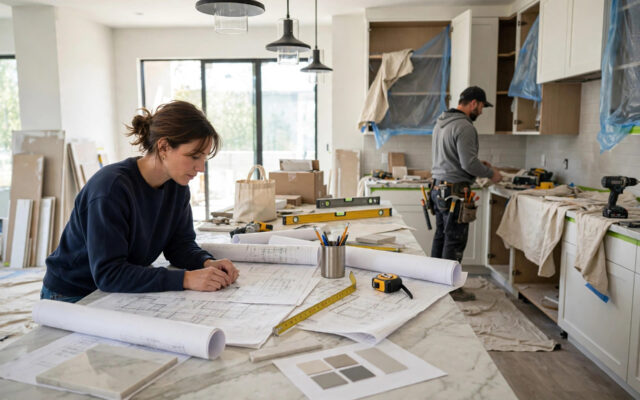
Get three quotes, minimum. Not two. Two quotes just tell you who’s cheaper. Three quotes tell you what the job should cost — the outlier (high or low) becomes obvious. And make sure all three are bidding on the same scope. Write down exactly what’s included: which tile, which fixtures, who’s buying materials, who’s handling the permit. A vague scope produces vague quotes, and vague quotes produce change orders.
Check the license and insurance yourself. Don’t take their word for it. Most states have an online contractor license lookup — it takes two minutes. Ask for a certificate of insurance and actually read it. An unlicensed contractor isn’t just a legal risk; it usually means no permit, no inspections, and no recourse when the grout crumbles in a year. Ask me how I know.
Ask for two recent bathroom references and call them. Not “references” in general — bathroom references, from the last year. Ask those homeowners: Did they finish on schedule? Were there surprise charges? Would you hire them again? The third question is the only one that matters. Hesitation is an answer.
Red flags that should stop you cold: a quote dramatically lower than the others (something’s missing — usually waterproofing, permits, or the good plumber), pressure to sign today for a “discount,” a request for more than 30–40% upfront, no written contract, or a contractor who badmouths every previous client. A standard payment schedule is a deposit, progress payments tied to milestones, and a final 10% held until the punch list is done. Never pay the last installment before the work is actually finished.
Get everything in writing. The contract should list the scope, the materials (brand and model where it matters), the timeline, the payment schedule, and how change orders are priced. “We’ll figure it out” is not a change-order policy. Change orders are where budgets go to die — a written process (written quote, your signature, before the work happens) keeps them honest.
How Long It Really Takes
A contractor who tells you two weeks for a full gut remodel is either not gutting it or not finishing it. Here’s a realistic timeline for a standard full bath:
- Planning and material ordering: 2–4 weeks (before any work starts — this is the phase people skip, then pay for)
- Demolition: 2–3 days
- Plumbing and electrical rough-in: 3–5 days
- Inspections: 2–5 days (waiting on the inspector’s schedule, not the work)
- Drywall, waterproofing, backer board: 3–5 days
- Tile: 5–10 days (the longest single phase — good tile work can’t be rushed)
- Fixtures, vanity, toilet set: 2–3 days
- Paint, trim, punch list: 3–5 days
Total: 4 to 6 weeks for a standard remodel, 6 to 8 for a primary bath with custom work. Add two weeks if materials aren’t ordered before demo. The most common cause of a “two-month bathroom” isn’t slow workers — it’s a vanity that was supposed to take three weeks and took nine.
What I’d Do With Your Money
If you take one thing from this guide, make it this: the most expensive bathroom remodel is the one you do twice. The cheap valve that floods the wall, the skipped waterproofing, the unlicensed contractor who disappears — every shortcut has a second bill attached to it, and the second bill is always bigger than what the shortcut saved.
That doesn’t mean spending lavishly. It means spending deliberately: keep the layout, pick your tile once, put the money in the valve and the waterproofing and the tile setter’s labor — the invisible stuff — and be ruthless about the visible stuff that doesn’t matter. A $220 toilet. A prefab vanity with real drawers. One splurge you’ll touch every day.
Get three quotes on an identical scope. Check the license. Hold the final 10%. Order everything before demo. Budget the 15% contingency and hope you don’t need it — but don’t skip it, because the wall you open up has been keeping secrets since before you bought the house.
Do that, and the number on the quote won’t scare you anymore. You’ll know exactly what it buys.