“How much does a kitchen remodel cost?” I get asked this constantly, and my honest answer is always the same: it depends on what you’re actually doing — but probably more than the number in your head right now. Most homeowners walk into a kitchen remodel with a budget that covers the visible stuff (cabinets, countertops, appliances) and get blindsided by everything hiding behind the walls and under the floor.
This guide is the realistic breakdown I wish someone had handed me before my first kitchen project. Real cost ranges for 2026, where the money actually goes, what drives prices up, and how to spend smart without ending up with a kitchen you resent.
The Short Answer: 2026 Cost Ranges
Kitchen remodel costs fall into three rough tiers, and knowing which tier you’re in matters more than any national average:
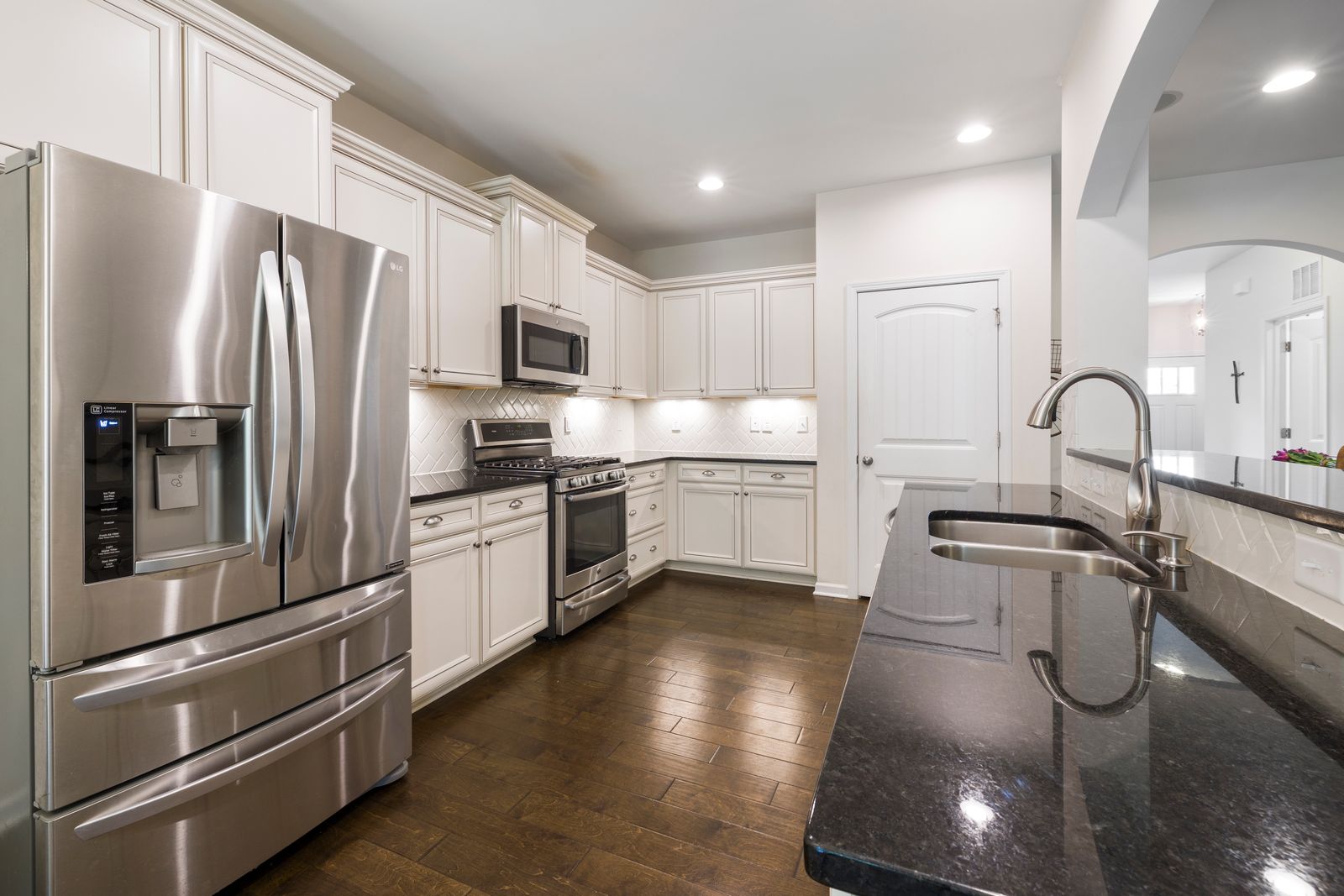
- Cosmetic refresh ($8,000–$20,000): Paint or reface cabinets, new hardware, new countertops on existing cabinets, updated lighting, maybe a new backsplash. No layout changes, no moving plumbing. This is the best bang-for-buck tier if your cabinets are structurally sound.
- Mid-range remodel ($25,000–$60,000): New semi-custom cabinets, stone or quartz countertops, new mid-range appliances, new flooring, updated plumbing and electrical, possibly minor layout tweaks. This is where most homeowners land.
- High-end / luxury ($65,000–$150,000+): Custom cabinetry, premium stone, professional-grade appliances, layout changes, moving plumbing and gas lines, structural work, designer involvement. The sky is genuinely the limit here — I’ve seen kitchens cross $200,000 when walls come down and everything goes custom.
National averages you’ll see quoted — often around $25,000–$50,000 for a typical remodel — are real but misleading, because the range is enormous. A galley kitchen refresh in Ohio and a full custom kitchen in San Francisco barely belong in the same conversation.
Where the Money Actually Goes
Here’s the part that surprised me most when I dug into real project budgets. For a typical mid-range remodel, the money splits roughly like this:
- Cabinets: 25–35% — the single biggest line item. Custom cabinets can easily hit $20,000–$35,000+ alone. This is why refacing or painting existing cabinets is the #1 budget saver.
- Labor: 20–30% — installation, plumbing, electrical, drywall, tile work. Labor is the cost people underestimate most, especially in high-cost metro areas.
- Appliances: 10–15% — a standard appliance package (range, fridge, dishwasher, microwave) runs $4,000–$8,000 mid-range; professional-grade packages start around $15,000 and climb fast.
- Countertops: 8–12% — quartz typically $60–$100+ per square foot installed; granite $50–$90; butcher block $30–$60; marble $75–$150+.
- Flooring: 5–8% — tile $8–$20/sq ft installed, hardwood $10–$18, luxury vinyl plank $4–$10.
- Plumbing fixtures + sink: 3–5% — a good faucet is $200–$500; the sink $300–$800.
- Lighting: 3–5% — under-cabinet lighting, pendants, recessed cans. Small line item, huge visual impact.
- Backsplash: 2–4% — tile $10–$40/sq ft installed depending on material and pattern complexity.
- Permits, design, misc: 5–10% — the unglamorous stuff that still has to be paid.
Notice how cabinets plus labor eat over half the budget. That’s the key insight: if you want to cut costs dramatically, those two lines are where the leverage is.
The Budget Killers Nobody Warns You About
Moving plumbing and gas lines. Relocating a sink or moving a gas range can cost $1,000–$3,000+ per move once you count the plumber, the drywall repair, and the permit. Every layout change that moves water or gas is a multiplier on cost. Keep the sink and stove where they are and you’ll save thousands without anyone noticing.
Electrical upgrades. Older kitchens often need a panel upgrade, new circuits for modern appliances, and GFCI protection to meet current code. Budget $1,500–$4,000 if your home’s electrical is more than 25 years old. Your contractor finds this during demo, not before — which is why smart people budget a 15–20% contingency.
Structural surprises. Water damage behind the sink cabinet. Rotten subfloor under the dishwasher. A load-bearing wall where you wanted an open concept. Demo reveals the truth, and the truth sometimes costs $2,000–$8,000 to fix. This isn’t pessimism — it’s the most common story in remodeling.
Scope creep. “While we’re at it, let’s redo the pantry.” “Might as well do the laundry room too.” Every “while we’re at it” is a budget line item wearing casual clothes. Write your scope down before demo starts, and make any addition a deliberate decision with a price attached — not a hallway conversation with your contractor.
My Own Kitchen Lesson (The Expensive One)
I’ll be honest about my first kitchen project, because the mistake is instructive. I fell in love with a marble countertop — the real thing, dramatic veining, the works. Nobody told me (or I didn’t listen) that marble stains if you look at it wrong, etches from lemon juice, and needs regular sealing. Within a year, my gorgeous countertop had ring marks and etch spots that drove me crazy.
The lesson wasn’t “don’t buy nice things.” It was: match the material to your actual life, not your fantasy life. I cook daily, I’m messy, and I have better things to do than baby a countertop. Quartz would have given me 90% of the look with none of the maintenance — for less money. Now when friends ask me about countertops, I ask them one question first: “Do you actually want to maintain this, or do you just want it to look good while you live your life?” The answer picks the material.
Cabinets: The Decision That Drives Everything
Since cabinets are the biggest line item, let’s get specific about your options:
Keep and paint ($2,000–$6,000). If your cabinet boxes are solid wood and the layout works, professional painting or refinishing transforms a kitchen for a fraction of replacement cost. Add new hardware ($3–$15 per pull) and it looks genuinely new. This is the smartest money in remodeling, full stop.
Reface ($8,000–$15,000). New doors, drawer fronts, and veneer over existing boxes. Looks like new cabinets, costs about half. Works great when the layout is fine but the style is dated.
Stock cabinets ($5,000–$12,000). Off-the-shelf from big-box stores. Limited sizes and styles, but the price is right and lead times are short. Quality varies — check the drawer construction (dovetail beats stapled) and the warranty.
Semi-custom ($12,000–$25,000). Made-to-order in standard increments with real customization options. The sweet spot for most mid-range remodels — you get the sizes and finishes you need without paying for fully bespoke.
Fully custom ($25,000–$50,000+). Built for your exact space. Worth it for odd layouts, specific storage needs, or high-end finishes. Overkill if your kitchen is a standard rectangle.
Appliances: Where Marketing Meets Reality
Appliance packages are where showrooms separate you from your money. Here’s my take after watching friends overspend here repeatedly:
A mid-range package — reliable brands, good reviews, no gimmicks — serves 95% of home cooks perfectly for $4,000–$8,000 total. The jump to professional-style ranges ($5,000–$12,000 for the range alone) buys looks and BTU bragging rights more than better Tuesday-night dinners. Unless you genuinely cook at a level that needs it, the mid-range package plus one splurge item (the fridge with the good ice maker, the quiet dishwasher) is the sweet spot.
Two practical notes: measure everything twice before ordering — returns on appliances are miserable — and check lead times. In 2026, most standard appliances are readily available, but specific models and finishes can still take 6–12 weeks. Order early; nothing stalls a remodel like a kitchen with no refrigerator for a month.
Also: a quiet dishwasher (under 45 decibels) is the single most underrated quality-of-life upgrade in a kitchen. You’ll notice it every single day. Spend the extra $200 here before you spend $2,000 on a fancier range.
Countertops, Honestly Ranked by Real Life
Quartz: The crowd favorite for good reason. Non-porous, no sealing, huge range of looks, $60–$100+/sq ft installed. Doesn’t handle extreme heat well (use trivets), but for daily life it’s nearly unbeatable. This is what I’d put in my own kitchen — and did, the second time around.
Granite: Natural stone, each slab unique, heat-resistant, $50–$90/sq ft installed. Needs periodic sealing. Still a great choice, especially if you find a slab you love — just know you’re committing to maintenance.
Butcher block: Warm, beautiful, $30–$60/sq ft. Scratches and needs oiling, but scratches sand out and the patina is part of the charm. Great for an island or a section, riskier as the only surface for heavy cooks.
Marble: Stunning, $75–$150+/sq ft, and high-maintenance — stains, etches, needs sealing. Buy it with open eyes. Gorgeous in a low-use kitchen or as an accent; a commitment in a hardworking one. (See: my expensive lesson above.)
Laminate: Don’t sleep on modern laminate. Today’s high-end laminates look shockingly good at $20–$40/sq ft installed. If the budget is tight, this is where you save without the kitchen looking cheap — put the savings into cabinets or appliances where they matter more.
How to Actually Save Money (Without Regretting It)
Keep the layout. I said it before; it’s worth repeating because it’s the single biggest saver. Moving plumbing, gas, and electrical is where mid-range budgets go to die.
Refinish instead of replace. Painted cabinets, refinished hardwood floors, and a new backsplash can make a kitchen feel brand new for under $15,000 total.
Do your own demo and painting. Demo is satisfying, saves $500–$1,500, and requires mostly enthusiasm and a dumpster. Painting walls yourself saves another $500–$1,000. Leave plumbing, electrical, and gas to licensed pros — this is not the place for YouTube confidence.
Buy appliances during sales. Holiday weekends (Memorial Day, Labor Day, Black Friday) routinely knock 20–30% off appliance packages. Time your purchase; the savings on a $6,000 package is real money.
Get three quotes, minimum. Contractor bids for the same scope can vary 30–50%. The cheapest isn’t always the best — check references, see past work, verify licensing and insurance — but you can’t know the market rate with one quote.
Don’t cheap out on what you touch daily. Faucets, drawer hardware, the dishwasher — these get used thousands of times. A $150 faucet that lasts 15 years beats a $60 faucet you replace twice. Spend on high-touch items; save on things nobody interacts with.
Timeline: How Long Will You Be Without a Kitchen?
Plan for it, because you’ll be washing dishes in the bathroom for a while:
- Cosmetic refresh: 2–4 weeks.
- Mid-range remodel: 6–10 weeks, plus 2–4 weeks of lead time for cabinets and appliances ordered in advance.
- High-end / structural: 3–6 months, sometimes more with custom cabinetry and permits.
Add 20% to whatever timeline your contractor quotes. Not because contractors lie — because demo reveals things, materials get delayed, and inspections take the time they take. Set up a temporary kitchen (microwave, toaster oven, electric kettle, paper plates) and budget for more takeout than usual. Your food spending will spike during the project; plan for it so it doesn’t feel like failure.
Permits and Contractors: The Unsexy Essentials
If your remodel touches electrical, plumbing, or structure, you almost certainly need permits. Budget $500–$2,000 depending on scope and location. Unpermitted work can torpedo a future home sale and void insurance claims — not worth the gamble.
For hiring: get everything in writing. Scope of work, materials (brand and model, not just “tile”), payment schedule tied to milestones (never pay more than 10–30% upfront), start and end dates, and how change orders are priced. A contractor who won’t put it in writing is telling you something — listen.
Red flags: demands large cash deposits, no license or insurance proof, no references, bid dramatically lower than everyone else, or pressure to decide “today.” Good contractors are busy; the one available tomorrow with the cheapest bid is available for a reason.
Will It Pay Off? The ROI Question
A kitchen remodel typically recoups 50–75% of its cost at resale, with minor mid-range remodels historically returning the best percentage. But here’s the honest framing: remodel for your life, not for resale. If you’re staying five-plus years, the “return” is every meal cooked in a kitchen you love. If you’re selling next year, do the cosmetic refresh — buyers respond to fresh and clean, and you won’t recoup a luxury renovation on a quick flip.
The projects with the best value ratio: cabinet refacing/painting, new countertops on existing cabinets, updated lighting, and a fresh backsplash. Maximum visual impact, minimum structural cost. That’s the formula whether you’re staying or selling.
So — how much does a kitchen remodel cost in 2026? Somewhere between $8,000 and $150,000, which sounds like a non-answer until you pick your tier, lock your layout, and budget the contingency. Do those three things before you buy a single tile, and you’ll end up with a kitchen you’re happy with at a price you planned for. That’s the whole game.
Lighting: The Cheapest Transformation in the Room
If I had to pick one underrated upgrade, it’s lighting — because bad lighting makes expensive kitchens look cheap, and good lighting makes modest kitchens look designed. Most older kitchens have a single central fixture that casts shadows exactly where you’re chopping vegetables. Here’s the three-layer approach designers actually use:
Task lighting is the workhorse: under-cabinet LED strips or pucks that light the counters. This is the single most impactful lighting addition you can make, and it’s cheap — $200–$600 for a typical kitchen if you’re handy, a bit more with an electrician. Once you’ve cooked with lit counters, you’ll never go back.
Ambient lighting is the general fill: recessed ceiling cans or a flush-mount fixture. If you’re opening the ceiling anyway, adding recessed lights on a dimmer is straightforward. Dimmers everywhere, by the way — a kitchen at full brightness for cooking and half brightness for evening is two rooms for the price of one switch.
Accent lighting is the jewelry: pendants over the island, in-cabinet lighting behind glass fronts, a strip above the cabinets for a glow. Pendants run $100–$400 each plus installation. They do almost nothing for actual visibility and everything for how the kitchen feels — which is precisely why they’re worth it.
One practical rule: put task lighting and decorative lighting on separate switches. You’ll use the under-cabinet lights daily and the pendants when people are over. Separate controls mean you’re never lighting the whole kitchen just to make coffee.
Before You Spend a Dollar: The Pre-Remodel Checklist
Run through this list before you sign anything or order anything. It takes an afternoon and saves months of regret:
- Live with the layout first. If you just moved in, cook in the kitchen for a month before planning. You’ll discover the real annoyances (the dishwasher door hits the island, there’s no landing space by the stove) versus the imagined ones.
- Decide your tier and write it down. Cosmetic, mid-range, or high-end — pick one and make every later decision serve it. Tier drift (“we’re doing mid-range but let’s just get the custom cabinets”) is how $35,000 budgets become $60,000 realities.
- Set the budget with a 15–20% contingency built in. Not as a vague hope — as a line item. If your max is $40,000, plan to spend $33,000 and hold $7,000 back for surprises. Surprises are not optional; they’re the one guaranteed feature of every remodel.
- Photograph and measure everything. Every wall, every outlet, the exact locations of plumbing stub-outs. You’ll reference these photos a dozen times, and your contractor will love you for having them.
- Check HOA and local rules. Some HOAs restrict work hours, dumpster placement, and even appliance types. Some municipalities require permits for work you’d assume is minor. A ten-minute call now beats a stop-work order later.
- Plan the temporary kitchen. Microwave, toaster oven, electric kettle, a folding table, paper plates. And mentally add 30–50% to your normal food spending for the project duration — eating around a construction zone costs money.
- Order long-lead items first. Cabinets, appliances, specialty tile — anything with a lead time gets ordered before demo starts, not after. A kitchen torn apart with no cabinets arriving for eight weeks is a special kind of misery.
- Get it in writing. Scope, materials by brand and model, payment milestones, timeline, change-order pricing. Every handshake deal in remodeling eventually becomes a disagreement about what the handshake meant.
Do this prep work and you’ll be in the minority of remodelers who finish on something resembling budget and schedule. Skip it, and you’ll learn the same lessons the expensive way — through change orders and arguments. The checklist is free. Use it.