Every homeowner knows the fantasy: you pour money into the house, the house becomes worth more money, and the renovation practically pays for itself. Sometimes that is true — a smart kitchen update in the right market can return most of what you spent. But sometimes the opposite happens. You spend $40,000 on a project you love, and when the appraisal comes back, the house is worth exactly what it was before. Or worse, buyers walk in, see your renovation, and start subtracting.

This is not about taste-shaming anyone’s choices. Your home is yours, and if a project makes you happy every day for ten years, its resale value is a secondary concern. But if you might sell within the next five years — and most homeowners eventually do — you should know which renovations reliably hurt resale value before you sign the contract. Here are the biggest offenders, why buyers punish them, and what to do instead.
The Swimming Pool Money Pit
Nothing divides buyers like a swimming pool. To the family that swims every weekend from May to September, it is a dream. To everyone else, it is a $60,000 hole in the backyard that costs $3,000 to $5,000 a year to maintain, raises insurance premiums, and terrifies parents of toddlers.
The numbers are brutal. An in-ground pool typically costs $50,000 to $100,000 to install, depending on region and finishes. At resale, appraisers and buyers generally credit it at a fraction of that — often $15,000 to $25,000 in warm climates where pools are expected, and close to zero (or even negative, once buyers factor in the option of filling it in for $10,000+) in colder markets. In the Northeast or Midwest, a pool can actively shrink your buyer pool — pun intended — because a meaningful share of buyers will rule out any house that has one.
Above-ground pools are worse: they add essentially nothing at resale and many buyers view them as something they will have to pay to remove. If you want a pool, install it for your own enjoyment with a long time horizon — ten-plus years of summers can justify anything. But never install one as an investment. It is a lifestyle purchase wearing an investment costume.
Hyper-Personalized Luxury Upgrades
The $25,000 home theater with the acoustic panels and the tiered seating. The wine cellar carved into the basement. The built-in aquarium wall. The professional-grade recording studio. These projects share a trait: they were designed for exactly one household’s passion, and they consume space every buyer needs for something else.
A finished basement is broadly appealing. A finished basement that is 80% home theater is appealing to the subset of buyers who want a home theater — and a deduction for everyone else, who mentally price converting it back into a playroom, guest suite, or office. The more specialized the build-out, the narrower your buyer pool and the harder the negotiation.
The same logic applies to luxury upgrades that overshoot the neighborhood. Installing a $60,000 gourmet kitchen with professional appliances in a neighborhood where homes sell for $250,000 does not make your house worth $310,000. It makes it the most expensive house on the street, and appraisals are anchored by comparable sales nearby — your kitchen cannot appraise for more than the neighborhood supports. Real estate agents call this “over-improving,” and it is one of the most reliable ways to set money on fire. The rule of thumb: keep any single project in proportion to your home’s value and your street’s price ceiling.
Removing Bedrooms and Bathrooms
Converting two small bedrooms into one grand primary suite feels luxurious when you live there. At resale, you just turned a four-bedroom house into a three-bedroom house — and in most markets, bedroom count is one of the first filters buyers apply. A family searching for four bedrooms will never even see your listing.
The math is unforgiving. Dropping from four bedrooms to three can easily cost you 5 to 10% of your buyer pool and a comparable slice of value, far more than the suite added. The same applies to removing a bathroom, or converting a garage into living space without adding parking. Every functional element you remove narrows the market.
There is a subtler version of this: the “bedroom” that is not legally a bedroom. If your renovation created a sleeping space without a closet or an egress window, it may not count as a bedroom in the listing or the appraisal, no matter how nicely you furnished it. Before removing or reclassifying rooms, check how your local market and appraisers count them — the labels on the listing matter enormously.
Bold, Permanent Design Choices
Design trends have a half-life, and permanent installations do not. The black-and-gold bathroom tile that looked stunning on the renovation show in 2021 reads as dated by 2026. Brightly colored kitchen cabinets, patterned cement tile through the whole house, industrial concrete floors in a colonial — these choices photograph boldly and age poorly.
The issue is not that buyers lack imagination. It is that every bold choice is a future project they are pricing in. A buyer looking at your emerald-green kitchen is not thinking “how striking” — they are thinking “$12,000 to repaint and refinish.” And they will discount their offer accordingly, usually by more than the work actually costs, because hassle has a price too.
The fix is simple and does not require beige-everything blandness: put the personality in the replaceable layers — paint, textiles, lighting, hardware, art — and keep the expensive permanent surfaces (flooring, tile, countertops, cabinetry) neutral and classic. You get the look you love today, and the next buyer sees a canvas instead of a demolition project. When you do sell, a $3,000 repaint in a warm neutral returns more than almost any other pre-listing spend.
DIY Work That Shows
There is DIY that adds value — painting, landscaping, installing a backsplash — and then there is DIY that subtracts it. Buyers and especially home inspectors can spot amateur electrical, plumbing, and structural work quickly, and nothing kills buyer confidence like visible shortcuts.
The value-killers: unpermitted additions or conversions (buyers’ lenders may refuse to count unpermitted square footage, and some deals die entirely over it), crooked tile work, uneven flooring transitions, painted-over wallpaper, and any electrical or plumbing that is not up to code. One visible amateur job makes buyers wonder what is hidden behind the walls, and wonder is the enemy of offers.
This is not an argument against DIY — it is an argument for knowing the line. Cosmetic work you can do beautifully: paint, landscaping, fixture swaps, hardware. Anything involving permits, load-bearing walls, electrical panels, or plumbing supply lines: hire licensed professionals and keep the permits and receipts. Documented professional work is a selling feature. Mystery work is a negotiating weapon for the buyer.
Over-Landscaping and High-Maintenance Exteriors
Curb appeal sells houses — but there is a line where landscaping stops being an asset and becomes a liability. Elaborate gardens with dozens of plant varieties, water features, koi ponds, and intricate hardscaping photograph beautifully and terrify buyers who do not garden. They see weekends of maintenance, irrigation bills, and a $400-a-month landscaper they did not budget for.
The sweet spot is “manicured but simple”: healthy lawn or tidy beds, trimmed shrubs, fresh mulch, one or two focal points. That reads as cared-for without reading as a second job. Anything requiring specialized knowledge to maintain — the rose garden, the orchard, the pond ecosystem — narrows your market to buyers who share the hobby.
Similarly, high-maintenance exterior finishes can hurt. Certain wood sidings, elaborate stonework that needs repointing, or flat roofs in rainy climates all raise the buyer’s mental maintenance budget. When choosing exterior materials during a renovation, favor the durable and the boring: fiber-cement siding, architectural shingles, composite decking. Buyers pay for “I will never have to think about this,” not for “look what I will get to maintain.”
The Garage Conversion Trap
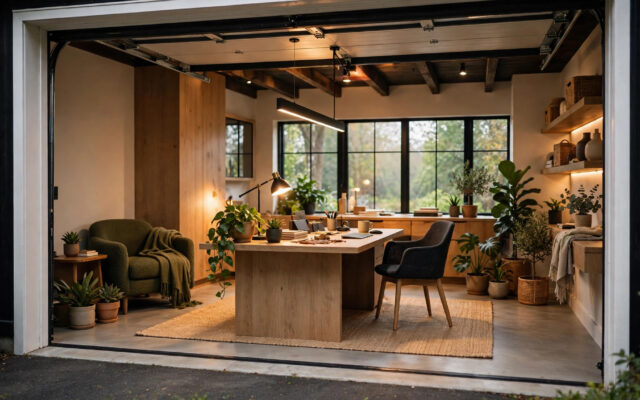
Converting the garage into a home office, gym, or guest suite is one of the most common value-destroying renovations in suburban markets. It feels like free square footage — the structure already exists — but in car-dependent areas, covered parking is a core expectation, not a bonus.
In many suburbs, losing the garage drops you out of consideration for a large share of buyers, particularly families. The converted space rarely appraises as highly as true interior square footage either, especially if the conversion was unpermitted or the garage door is still visible from the street. And reversing it costs $10,000 to $20,000, which buyers will happily subtract from their offer.
If you need the space, consider whether a modest addition or a finished basement/attic serves the purpose without sacrificing the garage. If you do convert, keep it reversible — leave the garage door mechanism intact and avoid structural changes — so the next owner has the option. Reversibility preserves value in a way permanence does not.
What to Do Instead: Renovations That Hold Value
None of this means you should never renovate. It means you should renovate with the exit in mind. The projects with the most reliable resale returns share three traits: every buyer needs them, they are hard to mess up aesthetically, and they address age or wear rather than taste.
- Kitchen refreshes, not gut jobs: refacing cabinets, new countertops, updated appliances, modern lighting. A $15,000 to $25,000 refresh in a mid-range home returns far more proportionally than a $75,000 luxury gut.
- Bathroom updates: new fixtures, re-grouting or re-tiling, modern vanities. Bathrooms are small, so the spend stays contained while the impact is outsized.
- Systems buyers fear: roof, HVAC, water heater, electrical panel. Unsexy, but a 20-year-old roof is a $15,000 objection on every offer. New systems remove objections rather than adding sizzle — and removing objections is what closes deals.
- Energy efficiency: insulation, efficient windows, heat pumps. These lower the buyer’s future bills, which is a universal selling point that never goes out of style.
- Fresh paint and flooring: the highest ROI per dollar in all of home improvement. Worn carpet and scuffed walls make buyers feel the whole house is tired; fresh versions of both make it feel new.
The through-line: renovate the things every buyer wants (clean, functional, efficient, neutral) and be cautious with the things only you want (pools, theaters, bold tile, garage conversions). Your home can absolutely reflect your personality — just keep the expensive parts classic and put the personality where the next owner can change it over a weekend.
The Bottom Line
A renovation hurts resale value when it narrows the buyer pool, overshoots the neighborhood, removes functional space, or saddles the next owner with maintenance they did not ask for. Before you commit to any major project, ask three questions: Would at least eight out of ten buyers in my market want this? Does it fit what homes on my street sell for? And can the next owner easily live with it — or easily change it?
If the answers are yes, renovate with confidence. If not, you have two fine options: do it anyway because you will enjoy it for years (a perfectly valid choice — just budget it as lifestyle spending, not investment), or redirect the money toward the unglamorous projects that reliably pay back. Either way, you will have made the decision with your eyes open, which is more than most renovators can say.
Regional Differences Matter More Than You Think
Every “renovations that hurt resale” list needs a regional asterisk, because the same project can be an asset in one market and a liability in another.
Swimming pools are the classic example: in Phoenix or Tampa, where summer lasts eight months and most comparable homes have pools, lacking one can hurt you — the pool is priced into the neighborhood. In Minneapolis or Boston, it is the reverse. Central air conditioning follows the same pattern: expected in the South, a nice bonus in the Pacific Northwest. Fireplaces add charm and value in cold climates and are decorative afterthoughts in hot ones.
Basements are another regional split. In the Midwest, a finished basement is nearly standard and an unfinished one reads as incomplete. In Texas and much of the South, basements barely exist, and buyers do not expect them. Local comparable sales — not national articles — define what your market rewards, which is why a fifteen-minute conversation with a local real estate agent before any major project is worth more than hours of online research. Ask them: “If I spend $30,000 on X, what happens to my sale price?” Agents answer this question weekly and their instincts are calibrated to your zip code.
How to Enjoy Your Home AND Protect Resale
Here is the liberating truth underneath all of this: you do not have to choose between a home you love and a home that sells well. You just have to separate the permanent from the personal.
The framework is simple. Spend freely on everything reversible: paint colors, wallpaper, light fixtures, cabinet hardware, textiles, furniture, art, landscaping accents. These are where your personality should live, because the next owner can change all of it in a weekend for a few thousand dollars — and in the meantime, you get to enjoy exactly the home you want.
Be conservative with everything permanent or expensive to undo: flooring, tile, countertops, cabinet boxes, structural changes, additions, pools, and exterior materials. Keep these neutral, classic, and in proportion to the neighborhood. “Neutral” does not mean boring — warm whites, soft grays, natural wood tones, and classic subway tile are neutral and also genuinely beautiful.
And keep a renovation file: permits, contractor invoices, product warranties, paint colors, appliance manuals. When you sell, this file answers buyers’ questions before they become objections, and documented professional work appraises better than mystery work every time. The homeowners who get top dollar are rarely the ones with the boldest taste — they are the ones whose houses feel solid, cared-for, and easy to imagine living in. That is a standard any style can meet.
Timing Your Renovation to the Market
When you renovate matters almost as much as what you renovate — especially if a sale is on the horizon.
If you plan to sell within a year or two, shift from “renovation mode” to “pre-listing mode.” That means cosmetic, high-visibility, broadly appealing work only: fresh paint, refreshed landscaping, updated lighting, minor kitchen and bath refreshes. Skip the big structural projects — you will not enjoy them long enough to justify the disruption, and you will not recoup the cost. Interestingly, the highest-ROI pre-listing projects are also the cheapest: a $4,000 paint-and-flooring refresh routinely influences offers more than a $25,000 project buyers did not ask for.
Seasonal timing affects both cost and convenience. Contractors are typically hungriest for work in late fall and winter (excluding the holiday weeks), which can mean better pricing and faster scheduling for interior projects. Spring and summer are peak season — expect higher bids and longer waits. If your project involves exterior work, though, weather dictates the schedule regardless of pricing, so plan around your climate, not just the calendar.
There is also a market-cycle consideration most homeowners miss: renovating at the top of a hot market to “cash in” often means paying peak contractor prices driven by the same demand that is lifting home prices. The spread between your cost and your return compresses. Counterintuitively, slower markets can be better times to renovate — contractors are more available and more negotiable — as long as you are renovating to enjoy the home for years, not to flip it next spring. Match the project to your timeline, not to the headlines.