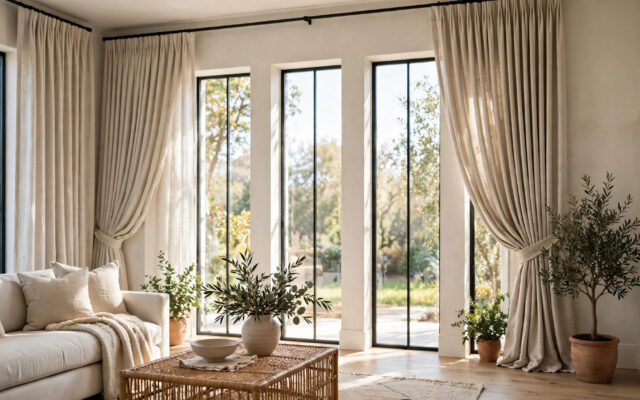
You spend roughly a third of your life in your bedroom, yet for most people it’s the last room to get any design attention — a place where mismatched furniture goes to retire and laundry goes to accumulate. That’s a shame, because the bedroom has a job no other room has: it needs to help you sleep. And sleep, it turns out, is deeply influenced by your environment — light, noise, temperature, color, and clutter all register with your brain long after you’ve closed your eyes.

Designing a sleep-friendly bedroom isn’t about buying an expensive mattress (though that helps) or following a particular style. It’s about understanding what your nervous system needs to downshift: darkness, quiet, coolness, visual calm, and a sense of order. Every design decision — from wall color to curtain lining to where you put your phone charger — either supports that downshift or fights it.
This guide covers the science-backed and designer-tested elements of a genuinely restful bedroom: light control, color psychology, noise management, temperature, bedding that actually works, furniture layout for calm, decluttering strategies, and the small rituals and details that signal “sleep” to your brain. Whether you’re starting from scratch or tweaking what you have, you’ll find practical steps for every budget.
Start With Darkness: Light Is the Master Switch
Light is the single most powerful environmental cue for sleep. Your brain’s production of melatonin — the hormone that makes you drowsy — is suppressed by light, especially the blue wavelengths from screens and daylight. A bedroom that isn’t truly dark is working against your biology every night.
The gold standard is blackout curtains or shades — not “room darkening,” which still leaks significant light, but true blackout. Layer them: blackout roller shades for full coverage plus curtains for softness and style. Check for light leaks around the edges; even thin gaps can matter. If new window treatments aren’t in the budget, a well-fitting sleep mask is a remarkably effective substitute.
Equally important is managing light inside the room. Cover or eliminate the small glowing culprits: LED indicators on chargers and power strips, the standby light on the TV, the bright display of an alarm clock. Use warm, dim lighting in the evening — table lamps with warm bulbs (2700K or lower) rather than overhead lights — to support your natural wind-down. And consider your morning: if you want to wake gently, curtains that let in gradual daylight (or a sunrise-simulating alarm) beat a blaring alarm in a pitch-black room.
Choose Colors That Whisper, Not Shout
Color affects mood, and in the bedroom, the goal is low stimulation. Research on sleep and color consistently favors soft, muted, cool-leaning tones: gentle blues, soft greens, warm grays, muted lavenders, and warm off-whites. Blue in particular is associated with calm and is repeatedly linked to longer reported sleep in surveys. What to avoid: high-energy saturated colors on large surfaces — bright red, vivid orange, electric yellow — which the brain reads as stimulating.
That doesn’t mean your bedroom must be beige and boring. The trick is value and saturation, not hue: a dusty sage, a deep muted navy, a warm mushroom — colors with depth but low intensity. Use the calmest color on the largest surfaces (walls, bedding) and reserve any bolder accents for small, easily changed items like a throw pillow or artwork.
If repainting feels like a big commitment, test large swatches first and observe them in both daylight and lamplight — colors shift dramatically. And remember that bedding covers more visual area than you think; swapping a busy duvet for a solid in a restful tone can transform the room’s feel for the price of a duvet cover.
Quiet the Room: Managing Noise
You don’t need total silence to sleep well — you need consistent, non-threatening sound. Sudden noises (traffic spikes, a neighbor’s door slamming, a dripping faucet) trigger micro-arousals even when you don’t fully wake. The strategy has three layers:
- Block: seal the easy gaps — weatherstrip the bedroom door, add a door sweep, fix rattles and drips. Heavy curtains and upholstered furniture absorb sound; bare hard surfaces bounce it around.
- Mask: a white noise machine or fan creates a steady sound floor that smooths over intermittent noises. Consistent low sound beats unpredictable quiet.
- Remove: relocate noise sources — the ticking clock, the humming old mini-fridge, the phone that buzzes with notifications all night (more on the phone below).
If you share walls with noisy neighbors or a busy street, a bookshelf filled with books against the shared wall is a surprisingly effective (and attractive) sound buffer. Rugs with thick pads do similar work for footfall noise from below or within.
Keep It Cool: Temperature Matters More Than You Think
Your body needs to drop its core temperature to fall asleep and stay asleep, which is why sleep researchers consistently recommend a cool bedroom — generally around 65°F (18°C), give or take a few degrees by personal preference. A hot, stuffy room is one of the most common and most fixable causes of restless sleep.
Design implications: breathable bedding (cotton, linen, or bamboo rather than heat-trapping synthetics), a mattress that doesn’t sleep hot (or a cooling topper), and bedding you can layer — it’s easier to adjust a layered bed through the night than to fix one heavy comforter. In warm climates, a ceiling fan or good cross-ventilation matters more than any decor choice. And the warm-bath-before-bed trick works because of temperature: the post-bath cooldown mimics the body’s natural pre-sleep temperature drop.
Bedding: Build the Bed for Sleep, Not for Show
A beautiful bed you dread getting into is a failed bed. Prioritize feel over looks, then make the looks follow:
- Mattress: replace it if it’s past its lifespan (typically 7–10 years) or if you wake with aches. Firmness is personal — side sleepers usually need softer, back and stomach sleepers firmer — but “supportive” matters more than any marketing term.
- Pillows: match pillow loft to sleep position — thinner for back/stomach, thicker for side — so your neck stays neutral. Replace pillows every 1–2 years; they lose support long before they look worn.
- Sheets: natural fibers (cotton percale for cool crispness, sateen for smoothness, linen for breathability) outperform synthetics for temperature regulation. Thread count is overrated past a point; weave and fiber matter more.
- Layers: a light blanket plus a duvet or quilt you can fold back gives you nighttime adjustability. Heavy, single-layer bedding traps heat and restricts movement.
The designer trick that costs nothing: make the bed every morning. It takes two minutes, and studies on bedroom order link a made bed to better-reported sleep quality. It’s also the fastest visual upgrade any bedroom can get.
Layout: Arrange for Calm and Flow
Bedroom layout affects both how the room feels and how easily you move through your routines. A few principles:
- Give the bed a wall. The bed should anchor against a solid wall (ideally the one you see when entering, or facing the door without being directly in line with it). A bed floating awkwardly or crammed under a window rarely feels restful.
- Clear the pathways. You should be able to walk around the bed and reach the door, closet, and bathroom without squeezing past furniture. Tight, obstacle-course layouts create low-grade stress — the opposite of what you want at 11 p.m.
- Symmetry soothes. Matching nightstands and lamps on both sides of the bed create visual balance that reads as calm. It doesn’t have to be perfect symmetry — similar scale and height is enough.
- Zone the room if it’s large. A reading chair with a lamp in a corner gives the room purpose beyond sleep and keeps the bed itself associated with rest, not with scrolling or working.
- Face the door (the “command position”). Evolutionary psychology aside, most people genuinely rest easier when they can see the entrance without being directly aligned with it. If your layout allows it, position the bed accordingly.
Declutter: Visual Noise Is Real Noise
Clutter isn’t just untidy — it’s visual noise that keeps your brain in low-level alert mode. Research on bedroom environments links cluttered rooms to poorer sleep quality and higher evening cortisol. The bedroom deserves stricter standards than the rest of the house because its job is rest.
Practical approach: give everything a closed home. Open shelving and “chairdrobes” (the chair where clothes accumulate) are clutter magnets; closed nightstand drawers, a lidded hamper, and a closet system that actually fits your wardrobe keep surfaces clear. Do a 15-minute nightly reset — clothes put away, surfaces cleared, tomorrow’s outfit laid out. It’s a small ritual with an outsized effect on how the room feels when you walk in tired.
Be ruthless about what belongs in the bedroom at all. Exercise equipment, work paperwork, and the overflow from other rooms don’t live here. Every non-sleep object in the bedroom dilutes the room’s single clear message to your brain: this is where we rest.
Evict the Screens (or at Least Contain Them)
The TV-in-the-bedroom debate has a clear scientific answer: screens before bed suppress melatonin, and the content keeps your mind activated. The ideal is no TV and no scrolling in bed. The realistic compromise for most people: charge the phone outside the bedroom (an old-fashioned alarm clock costs very little), keep the TV out if you can, and if you must have screens, set a hard cutoff — no screens for the last 30–60 minutes before sleep.
Design-wise, if the TV stays, mount it or place it in an armoire that closes — out of sight genuinely means out of mind. Keep chargers, laptops, and work materials out of the bedroom zone entirely. The bedroom should be the one room where work and the internet don’t follow you.
The Finishing Layer: Scent, Texture, and Ritual
Once the fundamentals are handled, the sensory details turn a functional bedroom into a sanctuary:
- Scent: lavender has the most evidence behind it for relaxation, but any scent you personally associate with calm works — cedar, chamomile, clean linen. A diffuser, linen spray, or simply clean bedding does the job. Keep it subtle; strong fragrance is stimulating.
- Texture: layer soft textures — a throw at the foot of the bed, a rug that’s pleasant underfoot for those first morning steps, curtains with some weight. Texture adds the coziness that makes a room feel enveloping.
- Personal calm: one or two meaningful items — a photograph, a piece of art that genuinely relaxes you — beat a gallery wall of visual busyness. Curate for calm.
- Evening ritual: design supports ritual. A carafe of water on the nightstand, a book waiting, dimmed lamps on a timer — these cues tell your brain the day is ending. The room becomes part of the wind-down, not just its setting.
Small Budgets, Big Impact: The Priority Order
If you can only change a few things, do them in this order: 1) blackout the windows (or get a sleep mask), 2) declutter ruthlessly and make the bed daily, 3) fix the pillow situation, 4) switch to warm dim evening lighting, 5) add a white noise source if noise is an issue. None of these requires a renovation, and together they address the factors research says matter most. Paint, new furniture, and decor come after the fundamentals — a beautiful room that leaks light and traps heat still sleeps poorly.
Adapting for Kids’ Rooms and Guest Bedrooms
Children’s bedrooms need the same sleep fundamentals — darkness, coolness, manageable noise — with a few adjustments. Blackout curtains matter even more for kids, whose melatonin rhythms are easily disrupted and who often have earlier bedtimes in bright summer evenings. Keep stimulating toys and bright colors in a play zone rather than around the bed, so the sleep area stays visually calm. A dim, warm nightlight is fine (and better than a bright hallway light spilling in), and a white noise machine helps babies and light sleepers alike. Involve kids in choosing bedding within your calm palette — ownership of the space supports the bedtime routine.
Guest bedrooms deserve the same care you’d give your own: blackout options, a white noise machine or fan, a clear bedside surface with a lamp and charging spot, and bedding in breathable natural fibers. Guests rarely complain about a room that’s dark, quiet, cool, and uncluttered — and they’ll remember a host who thought about their sleep. Keep the closet partially clear so visitors can unpack; living out of a suitcase for days is its own low-grade stress.
Frequently Asked Questions
What is the best color for a bedroom for sleep?
Soft, muted, cool-leaning colors — gentle blues, soft greens, warm grays, muted lavenders — are most associated with calm and good sleep. Keep saturation low on large surfaces; save bolder colors for small accents.
What temperature should a bedroom be for sleep?
Around 65°F (18°C) is the commonly recommended starting point, adjusted to personal preference. The key principle is cool rather than warm — your body needs to drop its core temperature to fall asleep. Breathable bedding and ventilation help maintain it.
Do blackout curtains really make a difference?
Yes — light suppression of melatonin is well established, and true blackout (not just “room darkening”) makes a noticeable difference, especially for light sleepers, shift workers, or anyone with streetlights or early sunrise. A sleep mask is an effective budget alternative.
Should I have a TV in the bedroom?
Sleep science says no: screens suppress melatonin and keep the mind activated, and a TV associates the bed with entertainment rather than rest. If yours stays, at minimum enforce a screen cutoff before sleep and keep it out of sight when not in use.
How do I make a small bedroom feel calm instead of cramped?
Keep the palette light and limited, use one rug to anchor the bed, choose furniture with legs (visible floor = visual space), mount lighting on walls instead of nightstands to free surfaces, and be extra strict about clutter — small rooms show every stray item.
How often should I replace my pillows and mattress?
Pillows every 1–2 years (they lose support before they look worn), mattresses every 7–10 years depending on type and use. If you consistently wake with neck or back aches, your pillow or mattress is the first suspect regardless of age.
Does making the bed actually affect sleep?
Survey data links making the bed to better-reported sleep quality, likely because it reduces visual clutter and creates a small sense of order and accomplishment. It’s a two-minute habit with no downside — worth adopting regardless.
Conclusion
A sleep-friendly bedroom isn’t a style — it’s a set of decisions that all point the same direction: darkness for your melatonin, quiet for your nervous system, coolness for your body temperature, calm colors and clear surfaces for your mind, and bedding built for comfort rather than display. You don’t need a renovation or a big budget; the highest-impact changes — blackout, decluttering, better pillows, warm dim light, the phone charging elsewhere — are small, cheap, and immediate. Start with the fundamentals in priority order, then layer in the textures, scents, and personal touches that make the room yours. Your bedroom has one job. Design it to do that job well, and the third of your life you spend there will pay you back every single morning.