Why Basements Leak in the First Place
A basement sits in a hole in the ground, and that is the whole story in miniature. The soil around your foundation holds water after rain, after snowmelt, and for much of the year in clay-heavy regions. That water pushes against your foundation walls and floor with real, measurable force — engineers call it hydrostatic pressure — and it looks for every weakness: the joint where the wall meets the footing, hairline shrinkage cracks, the porous concrete itself, old form-tie holes, and the gaps around pipes and windows. Water is patient. Given enough seasons, it finds a way in.
Most basement moisture problems are not plumbing leaks. In a typical older home, the culprits stack up in a predictable order. First, poor surface grading: the soil should slope away from the house at least 6 inches over the first 10 feet, but after a decade or two of settling, many yards slope inward. Second, failed or missing exterior drainage: the perforated pipe laid beside the footing when the house was built can clog with silt or collapse entirely, which means water accumulates against the foundation instead of being carried away. Third, interior humidity: even a “dry” basement can carry 60 to 70 percent relative humidity in summer, which condenses on cool walls and feeds mold. Understanding which of these you are dealing with matters enormously, because the right fix for a grading problem is not the same as the right fix for a failed footing drain.
Before spending a dollar, run a simple diagnosis. During or right after a heavy rain, walk the basement with a flashlight. Water seeping up through floor cracks or along the wall-footing joint points to pressure under the floor. Water running down the wall from a visible crack, or entering through a window well, points to the wall itself. Damp walls with no liquid water — beads of moisture, a musty smell, efflorescence (that white powdery residue) — may be condensation or slow seepage through porous concrete. And check the easy stuff first: gutters that dump water next to the foundation and downspouts that end two feet from the wall are responsible for a surprising share of basement trouble. Extending downspouts ten feet out costs about $30 and an afternoon, and it fixes cases that contractors might otherwise price at thousands.
Interior Waterproofing: Managing Water After It Arrives
Interior waterproofing does not stop water from reaching your foundation. Its philosophy is different: let water come in, then catch it and pump it out before it reaches your floor. The core of a proper interior system is a sub-floor drainage channel. Contractors cut a trench around the perimeter of the basement slab, usually 12 to 18 inches wide and deep enough to expose the top of the footing. A perforated pipe is bedded in washed stone along the inside of the footing, the trench is backfilled with more stone, and the slab edge is re-cemented. Any water that comes down the wall or up under the floor drops into this channel and flows to a sump basin, where a pump lifts it out of the house and discharges it well away from the foundation.
The sump pump is the heart of the system, and sizing and redundancy are everything. A standard 1/3-horsepower primary pump handles roughly 2,000 to 2,400 gallons per hour at a 10-foot lift, which covers most homes. But pumps fail — floats stick, breakers trip, power goes out exactly when storms arrive — so a serious interior system includes a battery backup pump or a water-powered backup, plus an audible high-water alarm. Expect the battery backup to add $400 to $900 to the project. For finished basements, many installers also add a secondary “dry” channel: a plastic membrane or a shallow trough on top of the footing that directs wall seepage into the main drain, useful in block or stone foundations where water travels down inside the wall cores.
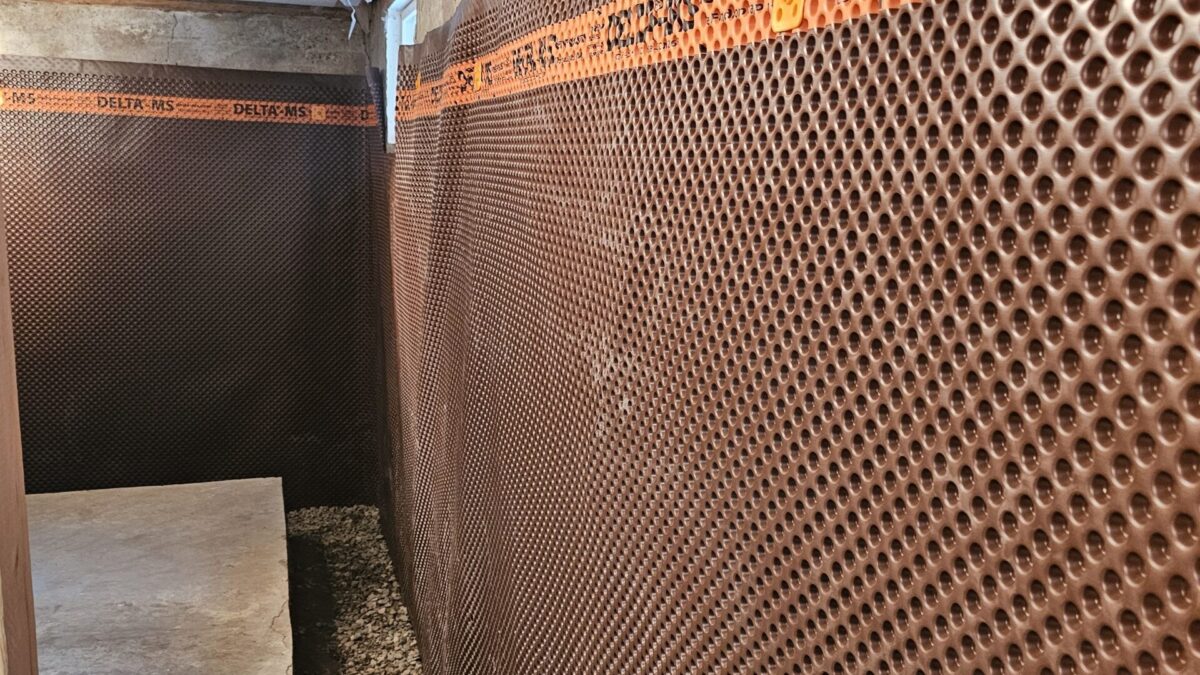
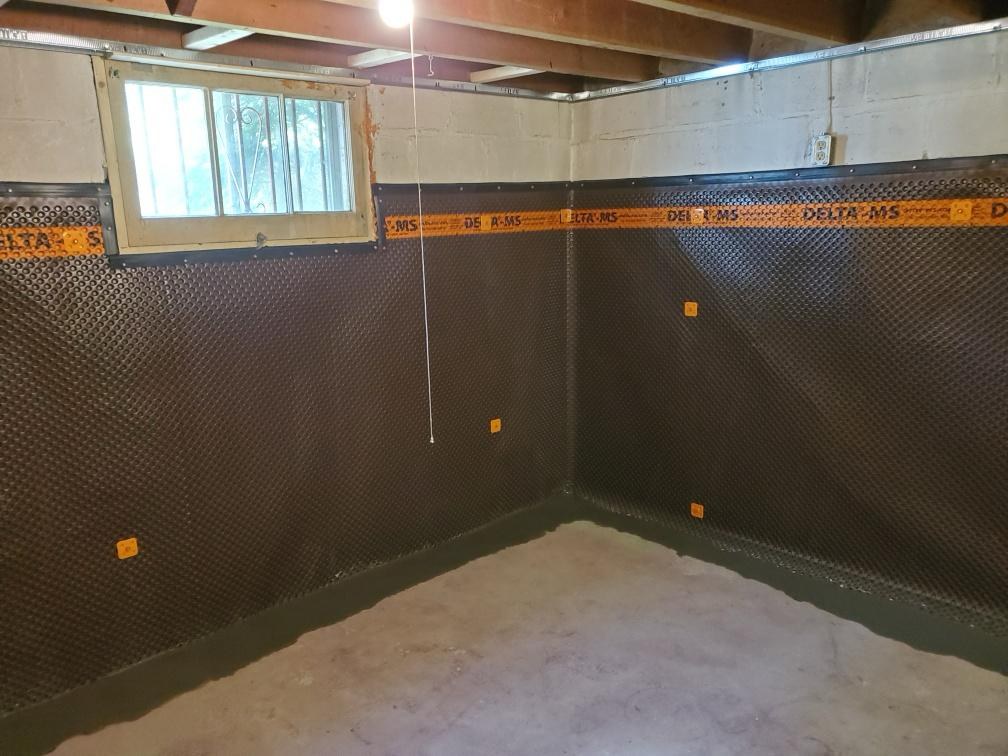
Wall treatments sit on top of drainage as a second layer. Dimpled plastic membranes fastened to the interior wall create an air gap so moisture travels down behind the membrane into the perimeter drain instead of into the room. Cementitious coatings and crystalline admixtures can slow seepage through porous poured concrete. Painted “waterproof” sealers sold at home centers, however, deserve a note of caution: applied to the inside of a wall, they trap pressure behind the paint film and routinely blister and peel within a year or two on a wall that is actively weeping. They are fine for a damp but not actively leaking wall, and useless against real hydrostatic pressure. Anyone who tells you a bucket of paint will fix a leaking basement is selling you a bucket of paint.
Exterior Waterproofing: Stopping Water Before It Arrives
Exterior waterproofing takes the opposite approach: keep water away from the foundation so pressure never builds. Done right, it is the more complete solution — and the more disruptive one. The classic method is full excavation: a backhoe digs down to the footing around the affected walls, the wall is cleaned, cracks are repaired with hydraulic cement or epoxy injection, a waterproof membrane or coating is applied to the wall’s outer face, a drainage board is added to protect the membrane and channel water downward, and a new perforated drain pipe is bedded in stone at the footing and connected to daylight drainage or a sump. Then everything is backfilled, ideally with free-draining material rather than the clay that came out.
The membrane choice matters. Trowel-applied asphalt or polymer coatings are the old standard; sheet membranes — self-adhesive rubberized asphalt or EPDM sheets — provide a more consistent barrier and are the choice for most high-end work today. Over the membrane goes a protection and drainage board, a dimpled or fabric-faced panel that shields the membrane during backfill and gives water a fast path down to the footing drain. The whole assembly is sometimes called a “belt and suspenders” system, and it is the closest thing waterproofing has to a permanent fix: a properly installed exterior membrane typically carries a 10- to 30-year warranty and can last the life of the house.
Excavation is not the only exterior option, and it is often not needed. Surface water management solves a huge fraction of basement problems without digging at all. Regrading the soil around the house, extending downspouts, installing a swale or a French drain (a shallow gravel trench with a perforated pipe) to intercept surface water running toward the house, and sealing window wells with covers and proper drainage — each of these is an exterior solution in the truest sense, because each keeps water from ever reaching the foundation. A French drain to carry surface water around a house typically runs $2,500 to $6,000, versus $15,000 to $40,000 for full excavation waterproofing. Any contractor who quotes you a dig without first looking at your grading and gutters is skipping the cheapest fixes.
Head-to-Head: Interior vs Exterior
So which is better? The honest answer is that they solve different problems, and the best contractors often combine them. Here is the comparison, point by point.
- What it stops. Exterior waterproofing stops water from entering the wall and floor at all. Interior systems accept water entry and manage it. If you are finishing the basement with drywall and flooring, exterior is the safer bet because the wall stays dry; if you are keeping the space unfinished as storage and laundry, interior drainage is usually enough.
- Cost. Interior perimeter drainage systems typically cost $5,000 to $12,000 for an average home, depending on linear footage, pump redundancy, and whether wall membranes are added. Exterior excavation work typically costs $150 to $250 per linear foot, putting a full-house job in the $15,000 to $40,000 range, sometimes more if decks, patios, or landscaping have to be removed and restored.
- Disruption. Interior work happens in the basement: jackhammers, dust, a week or two of noise, but your yard stays intact. Exterior excavation tears up landscaping, driveways, and patios, and requires heavy equipment — but leaves the interior untouched. If the basement is already finished, exterior work may actually be less disruptive to your living space.
- Warranty. Exterior membrane work usually carries longer and stronger warranties (often lifetime or 30-year transferable warranties) than interior drainage (typically 10 to 25 years), though warranty terms vary wildly by company and fine print matters more than headline years.
- Risk profile. Exterior systems have no moving parts; they cannot fail in a power outage. Interior systems depend on a pump that needs electricity and maintenance. On the other hand, a poorly executed exterior job — bad backfill, a damaged membrane — can be worse than useless, while a well-built interior system is forgiving and easy to service.
The combination many specialists recommend for a finished basement in a wet climate: exterior surface-water control (grading, gutters, downspout extensions) plus interior perimeter drainage with backup pumps. You get the pump-independent protection against surface water and the belt-and-suspenders interior system for groundwater, at a fraction of the cost of full excavation.
Realistic Costs and How to Get Honest Quotes
Waterproofing is an industry with a reputation problem: the same job can draw quotes ranging from $4,000 to $18,000, and the highest-pressure sales tactics in home contracting cluster around basement systems. Protect yourself with process. Get at least three quotes from established local companies, and make sure each one diagnoses the same problem — if one company says you need interior drainage and another says you need excavation, one of them is wrong, and you should find out which before signing anything. Ask every bidder the same questions: What is the water source you are addressing? What exactly does the system include — linear feet of drain, type of pump, backup, wall treatment? Who pulls permits? What does the warranty cover, specifically — dry floor, or the system itself? Is the warranty transferable to the next owner?
Ballpark figures for planning purposes, in U.S. dollars: crack injection for a single wall crack runs $300 to $800. An interior perimeter drain system runs $50 to $100 per linear foot, installed. A sump pump replacement runs $500 to $1,200; a battery backup adds $400 to $900. Exterior excavation waterproofing runs $150 to $250 per linear foot, all-in. A surface French drain runs $30 to $60 per linear foot. Wall membranes on the interior add $3 to $7 per square foot. These are planning ranges, not quotes — local labor rates, access, and foundation type shift them substantially. Stone and block foundations, which leak through mortar joints across the whole wall, almost always need full-wall treatment rather than crack repair, and cost accordingly.
DIY vs Hiring a Professional
There is honest middle ground here. Homeowners can safely do a great deal of the prevention work themselves: regrading soil, extending downspouts, installing window-well covers and drains, applying a cementitious coating to a damp (not actively leaking) wall, sealing floor cracks with polyurethane, and even installing a basic sump pump in a home that already has a basin. These are weekend projects with real payoff.
The line to respect is the perimeter drain and the excavation. Cutting a trench around your basement slab means working inches from the footing that holds your house up; going too deep or too wide in the wrong soil can undermine it. Excavation means a backhoe against your foundation, shoring requirements in deeper digs, and the very real possibility of a wall collapse if the soil is saturated. Crack injection and hydraulic cement repair are also better left to people who can tell a shrinkage crack from a structural one — a crack wider than a quarter inch, one that is offset (one side higher than the other), or horizontal cracking in a block wall all signal structural issues that waterproofing alone does not fix, and that need an engineer’s eyes before a contractor’s.
Keeping the System Working for Decades
A waterproofing system is not a monument; it is a machine, and machines need maintenance. Sump pumps should be tested at least twice a year — pour a bucket of water into the basin and confirm the pump kicks on, runs, and shuts off. Most pumps last 7 to 10 years; replacing a working-but-aging pump before it dies during a storm is cheap insurance. Clean gutters every fall and spring. Walk the perimeter after heavy rain and confirm water flows away from the house, not toward it. If you have an interior drain system, keep the basement humidity under 50 percent with a dehumidifier — dry air protects the finishes and the framing even when the drainage is doing its job.
Watch for the signs that a system is failing: water where it has never been before, a pump that runs constantly in dry weather (which suggests a stuck switch or a rising water table), white efflorescence spreading on walls, or a musty smell returning to a finished basement. Catch these early and the fix is usually a repair; catch them late and it is usually a replacement.
Permits, Insurance, and Resale Value
Waterproofing permits vary by municipality, but the pattern is consistent: interior drainage work usually needs a permit because it involves the slab and the electrical work for the pump, and exterior excavation almost always needs one because it affects drainage off your property. Pulling permits is not bureaucracy for its own sake — an inspector’s visit catches the shortcuts that cause systems to fail, like a discharge line that dumps water at the foundation instead of twenty feet away. On the insurance side, standard homeowner policies cover sudden water damage from a failed sump pump only if you carry a water-backup endorsement, which typically costs $50 to $100 a year and is one of the cheapest riders you can buy. Without it, a pump failure during a storm can be a five-figure loss with no coverage.
For resale, a dry basement with a documented, warrantied system is a genuine asset: appraisers and buyers both treat a warrantied interior system or exterior membrane as deferred maintenance that has been done. Keep every document — the contract, the warranty certificate, pump manuals, the as-built sketch of where the drain runs — in a folder you can hand a buyer. Transferable warranties, which most reputable companies offer for a small fee, remove the number-one objection buyers raise about waterproofing systems. A dry basement does not add as much value as a new kitchen, but a wet one subtracts far more than waterproofing costs.
The Bottom Line
Interior and exterior waterproofing are not rivals so much as tools for different jobs. Interior drainage is the pragmatic choice for most homes: it handles groundwater pressure at a reasonable cost, installs with minimal disruption, and works on every foundation type. Exterior waterproofing is the definitive choice when the wall itself is compromised, when the basement will be finished to a high standard, or when landscaping is already slated for an overhaul. And surface-water control — grading, gutters, downspouts — is the mandatory first step for everyone, because no interior system or membrane should have to fight water that could simply have been sent somewhere else. Diagnose carefully, bid honestly, and build the system your basement actually needs, not the one a salesman wants to sell.
This article was produced with the assistance of AI.