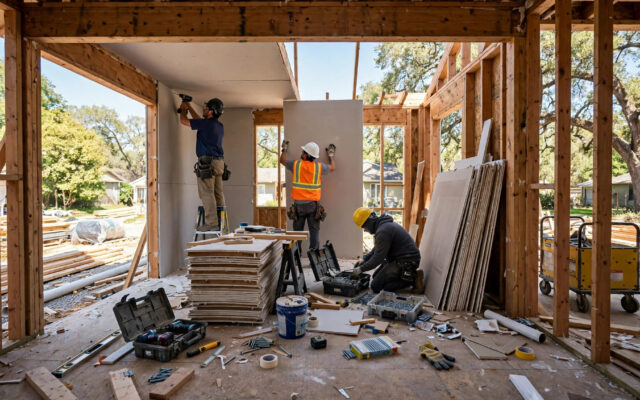
Getting your home renovated is exciting, but it is also one of the most financially exposed things a homeowner can do. Unlike buying a product with a fixed price tag, a renovation is a custom project whose final cost depends on labor markets, material choices, site conditions, and the contractor’s own business model. The quote you receive is not just a number — it is the contractor’s interpretation of your project, and two honest, competent contractors can look at the same kitchen and arrive at numbers thousands of dollars apart.

That is why learning how to get accurate quotes — and more importantly, how to compare them — is the single most valuable skill you can build before a renovation begins. A sloppy quoting process leads to the most common renovation disaster: hiring on the cheapest price, then watching costs balloon through change orders, shortcuts, and disputes. Homeowners who get three detailed, comparable quotes and know how to read them consistently pay less over the life of the project than those who chase the lowest bid. This guide walks through the entire process: preparing your project so contractors can price it accurately, finding and vetting contractors, conducting site visits that produce comparable numbers, and reading quotes line by line so you can spot the traps that separate a bargain from a headache.
The core idea is simple: accuracy comes from clarity. The more clearly you define what you want, the more accurately any contractor can price it — and the more meaningfully you can compare quotes against each other. Every step below is built around that principle.
Define Your Project Before You Call Anyone
Contractors cannot price ambiguity. If you tell three contractors “I want to update my kitchen,” each will imagine a different kitchen. One pictures a cosmetic refresh with new cabinet doors and a backsplash. Another imagines new cabinetry, stone counters, and relocated plumbing. A third assumes high-end appliances and custom millwork. You will receive three wildly different prices, and none of them will be “accurate” because none of them describe the same job. Accurate quotes start with a written project scope that you create before the first phone call.
A good scope document does not need to be professional or technical. It needs to answer the practical questions a contractor will ask. Start with the rooms involved and the work you want in each. For a kitchen, that might be: remove and replace upper and lower cabinets, install quartz countertops, replace the sink and faucet, retile the backsplash, refinish or replace flooring in the kitchen area, repaint walls and ceiling, replace pendant lighting, and install a new dishwasher hookup. Write it as a plain list. Then add your expectations for quality: mid-range finishes, brand names you prefer or the tier you expect, and anything you explicitly do not want changed.
Photographs help enormously. Take wide shots of each room from multiple angles, plus close-ups of problem areas — water damage, cracked tile, uneven floors. Contractors reading these before a visit arrive better prepared, and the photos become part of your shared record of the starting condition. Measure the rooms and note the dimensions in your scope document. Square footage of flooring, linear feet of countertop, and the number of windows or fixtures to be replaced are the units contractors think in; handing them these numbers removes guesswork and shows you are a serious client.
Decide What Is Fixed and What Is Flexible
Every renovation has negotiable and non-negotiable elements. Mark yours. The load-bearing wall stays. The bathtub can become a walk-in shower if it saves money. The hardwood floors must be refinished, but you are open to luxury vinyl if refinishing is impossible. When contractors know where they have flexibility, they can offer alternatives that reduce cost without touching your must-haves. This also protects you from a common quoting distortion: contractors quietly substituting cheaper approaches for things you assumed were fixed, then surprising you later.
Decide early who supplies materials. There are three common arrangements: contractor supplies everything, homeowner supplies finishes (tile, fixtures, paint) while the contractor supplies rough materials, or a hybrid. Each affects the quote differently. Homeowner-supplied materials can save money and give you control over style, but they also make you responsible for delivery timing, damage, and warranty gaps if a product fails. Whichever you choose, state it in the scope document so every quote prices the same division of labor.
Find the Right Contractors to Quote
The quality of your quotes depends heavily on the quality of the contractors you invite. Aim for three to five quotes from contractors who are genuinely comparable — similar size, similar market tier, similar specialization. Comparing a one-person handyman operation against a full design-build firm will not give you a useful comparison; their overhead structures, crew sizes, and service levels are different businesses. A solo contractor will almost always be cheaper, but that price reflects less project management, less insurance, and less recourse if something goes wrong.
Start with referrals from people whose homes and standards resemble yours. A friend who renovated a similar house in your neighborhood is worth more than a hundred online reviews. Ask specifically: did the contractor finish on time, did the final cost match the quote, how did they handle problems, and would you hire them again? Those four questions filter out most bad actors. Supplement referrals with local trade associations, your city’s licensed contractor registry, and review platforms — but read reviews for patterns rather than averages. A contractor with forty reviews mentioning cleanliness and communication is telling you something real.
Verify the basics before inviting anyone to your home: a current license for your jurisdiction, general liability insurance, and workers’ compensation coverage for their crew. Ask for the license number and the insurance certificate, and actually check the license against your state or municipal database. Unlicensed contractors are not automatically bad craftspeople, but they are automatically a liability risk: if a worker is injured on your property or the work damages your home, you can end up carrying the loss. Licensed, insured contractors cost more partly because they carry these costs legitimately.
Pre-Screen on the Phone
A ten-minute phone call before a site visit saves hours. Describe your project in two sentences, then ask: Have you done projects like this recently? What is your current lead time? How do you structure payment? Do you use your own crew or subcontractors? What is your typical project size range? Listen for fit. A contractor who mainly builds additions will not give your bathroom refresh the attention it deserves. A contractor who is booked six months out and needs a large deposit to hold your slot is telling you about their demand — factor it in, but do not mistake busyness for quality.
Ask each contractor to bring the same thing to the site visit: their standard contract template and a sample itemized quote from a past project (with the client’s details redacted). This single request separates professionals from improvisers. A contractor who can show you how they normally break down a quote will produce a quote you can actually compare. One who works from a single handwritten number on a notepad will produce exactly that.
Run Site Visits That Produce Comparable Quotes
The site visit is where accuracy is won or lost. Walk every contractor through the identical scope, in the same order, pointing out the same details and constraints. Resist the urge to chat each contractor up differently or to add ideas mid-visit for one contractor and not another. If a new idea occurs to you during the second visit, write it down and present it to all contractors equally — otherwise you are pricing two different projects.
Give each contractor your written scope document and your room photos at the start of the visit. Walk the space together. Point out the things that are hard to see: the slow drain, the outlet that sparks, the floor that slopes, the water stain on the ceiling below the bathroom. Hidden conditions are the number one source of quote inaccuracy, and disclosing them upfront gets them priced in rather than discovered mid-project as expensive change orders. A good contractor will also spot things you missed — ask them directly, “What problems do you see that I haven’t mentioned?” Their answer is both a diagnostic and a test of thoroughness.
Discuss access and logistics during the visit: where the crew parks, which entrance they use, where the dumpster goes, what hours they work, whether anyone is home during the day, and whether pets or children need accommodation in the plan. These details affect labor cost more than most homeowners realize. A third-floor bathroom with no elevator access costs more to renovate than the identical bathroom on the ground floor, because every bag of thinset and every sheet of drywall travels by hand.
Ask the Questions That Reveal How They Price
During the visit, ask questions that expose the contractor’s pricing logic. How do you handle unexpected issues behind the walls — is there a contingency in the quote or do you bill those separately? What is excluded from your quote — permits, dumpster fees, design work, painting touch-ups? How do you charge for changes I request mid-project? What is your payment schedule? Do you warranty your work, and for how long? Write down every answer. When the quotes arrive, these answers become your decoder ring for understanding why numbers differ.
Ask about timeline explicitly: when could you start, and how long will the project take? Then ask what could delay it. Contractors who give you a realistic window with named risks (material lead times, inspection scheduling, subcontractor availability) are pricing honestly. Contractors who promise an aggressive timeline with no caveats are either not in demand or not telling you the truth. An unrealistic timeline is itself a cost risk, because delays cascade into your life — temporary housing, eating out, lost work time.
Read Each Quote Line by Line
When quotes arrive, resist the temptation to look at the bottom line first. Start at the top and read every line item. A proper renovation quote breaks the project into labor and materials by task: demolition, framing, electrical, plumbing, drywall, flooring, tile work, cabinetry installation, painting, trim, and cleanup. Each line should name the work, the quantity or scope, the materials included (with brand or tier where it matters), and the price. This itemization is what makes comparison possible. A quote that says “Kitchen remodel: $48,000” with no breakdown is not a quote — it is a guess wearing a price tag.
Check that every quote covers the same scope. This is the most common reason quotes look different: one contractor included the electrical panel upgrade your scope mentioned, another priced it as an optional extra, and a third missed it entirely. Go through your scope document line by line against each quote and mark what is included, excluded, or unclear. Then send every contractor the same list of clarification questions. This round of follow-up is what turns three rough estimates into three genuinely comparable quotes.
Look at how materials are specified. “Tile: $2,800” tells you nothing. “Tile labor and materials: 120 sq ft porcelain floor tile, mid-range ($4–$7/sq ft material), thinset, grout, and sealer: $2,800” tells you what you are buying. Vague material lines are where contractors hide either padding or planned downgrades. Ask for the allowance amounts: many quotes use “allowances” for items you will select later, like lighting fixtures or faucets. An allowance of $300 for a kitchen faucet and $1,200 for the same faucet produce very different final costs even though both quotes look complete today.
The Line Items People Forget to Check
Certain costs are routinely left out of quotes, and their absence makes a quote look cheaper than the project will be. Run this checklist against every quote you receive:
- Permits and inspection fees. Who pulls the permits and who pays? In many jurisdictions the homeowner is legally responsible even if the contractor handles the paperwork. Permit costs vary wildly by city and project type.
- Demolition and disposal. Tear-out labor and dumpster or hauling fees. Some quotes bury this; some omit it and bill it later.
- Design and engineering. If your project needs drawings, structural calculations, or a designer’s selections, that work is either in the quote or coming out of your pocket separately.
- Temporary facilities. Portable toilets for the crew on longer projects, dust barriers, floor protection — small lines that signal a professional operation.
- Final cleaning. Construction cleaning is a specialized service. A quote that ends at “paint complete” leaves you with the dust.
- Warranty terms. What is covered, for how long, and what voids it. A one-year workmanship warranty is standard in many markets; the absence of any warranty is a red flag.
- Sales tax. Depending on your jurisdiction, tax may apply to materials, labor, or the total. Know whether the quoted number includes it.
If a line is missing from one quote but present in two others, do not assume the project does not need it — assume the quote is incomplete and ask. The cheapest quote is frequently the cheapest because it is missing the most.
Compare Quotes Systematically, Not by Gut Feel
Build a simple comparison spreadsheet. Rows are the line items from your scope (demolition, electrical, plumbing, tile, cabinets, counters, flooring, paint, fixtures, cleanup, permits, contingency). Columns are the contractors. Fill in each cell from the quotes, marking items as included, excluded, or allowance with the allowance amount. This single exercise does more for your decision than any amount of staring at bottom lines, because it forces every difference into the open.
Once the spreadsheet is filled, normalize the quotes. Add back the cost of excluded items using the average of the contractors who included them, so you are comparing complete projects. Adjust allowances to a consistent level — if you plan to buy a $900 vanity, set every quote’s vanity allowance to $900 and adjust the totals accordingly. Only after normalization does the bottom-line comparison mean anything. Homeowners who skip this step routinely “save” $5,000 on paper and spend $8,000 extra in change orders.
Now look at the labor-to-materials ratio. On most residential renovations, labor runs roughly 40 to 60 percent of the total, varying by trade and region. A quote where labor is suspiciously low may mean the contractor plans to rush, use day labor, or make it up in change orders. A quote where materials are suspiciously low may mean planned downgrades. Neither ratio proves anything alone, but outliers deserve a direct question: “Your labor number is well below the others — help me understand how you get there.”
Price the Intangibles
Not everything that matters fits in a spreadsheet cell. Communication quality, demonstrated thoroughness during the site visit, clarity of the written quote, realistic scheduling, and the references you checked all carry real dollar value. A contractor who answers the phone, documents changes in writing, and protects your floors is worth a premium over one who does none of those things — because the second contractor’s “savings” get spent by you in stress, delays, and repairs. Assign these factors honest weight in your decision. The goal is the lowest total cost of a successful project, not the lowest number on a page.
Be especially careful with the lowest bid. Industry experience says that a bid more than 15 to 20 percent below the cluster is rarely a bargain — it is usually a misunderstanding of the scope, an omission of necessary work, or a deliberate lowball designed to win the job and recover margin through change orders. That does not mean you should never take the lowest bid. It means you should require the low bidder to explain, line by line, how they achieve the price, and get their scope commitments in writing before you sign.
Negotiate Without Damaging the Relationship
Negotiation is normal in renovation work, but it has to be done in a way that does not poison the project. The wrong way is to take the lowest number to your preferred contractor and demand they match it. That tells the contractor you value price over everything and invites them to cut corners to hit the number. The right way is to share information and ask for options: “Your quote is about 12 percent above the others. I prefer working with you — is there scope we can adjust, materials we can substitute, or phasing we can do to close the gap?”
Good contractors will engage with this honestly. They might suggest value-engineering: a different countertop material, keeping the existing tub, simplifying tile patterns, or phasing the project so the guest bath waits until next year. These are legitimate ways to reduce cost without reducing quality. What you should not ask a contractor to do is simply “sharpen the pencil” on the same scope — that just squeezes their margin, and squeezed margins get recovered somewhere you cannot see.
Everything negotiated must end up in writing. Verbal promises made during negotiation — “oh, we’ll include the backsplash at that price” — evaporate the moment there is a dispute. After any negotiation, ask for a revised written quote reflecting the agreed changes, and make that revised quote an attachment to the contract.
Turn the Winning Quote Into a Protective Contract
The quote becomes powerful only when it is anchored in a contract. A solid renovation contract includes: the full scope of work (attach the quote and your scope document), the total price and what it includes, the payment schedule tied to completed milestones (never large upfront deposits — a common structure is a modest deposit, then payments as phases complete, with a meaningful holdback of 10 percent until final walkthrough), start and completion dates with what happens if they slip, the change-order process (all changes in writing, priced and signed before work begins), warranty terms, insurance and license details, permit responsibility, daily cleanup and work hours, and a termination clause.
Pay special attention to the change-order clause, because change orders are where renovation budgets die. The contract should state that no extra work proceeds without a written change order signed by both parties, showing the added cost and any schedule impact. This single sentence, enforced consistently, prevents the most common billing dispute in residential construction: the contractor’s claim that you verbally approved extra work and your memory that you did not.
Never pay the final installment until the final walkthrough is complete and the punch list — the list of small incomplete or defective items — is finished to your satisfaction. The holdback is your only leverage for getting the last 5 percent of the work done to the standard of the first 95 percent. Contractors know this; reputable ones expect it and will not pressure you to release it early.
Frequently Asked Questions
How many quotes should I get for a renovation?
A: Three to five quotes from comparable contractors is the sweet spot. Fewer than three gives you no basis for comparison; more than five creates scheduling chaos and diminishing returns, since each additional site visit costs you time and each contractor’s pricing converges around the same market rate. For very small jobs under a few thousand dollars, two detailed quotes can be enough.
Should I tell contractors what my budget is?
A: Yes — share a realistic budget range. Contrary to popular fear, a good contractor will not simply quote your maximum; they will use the budget to tell you what is achievable and suggest scope adjustments if your wishes exceed it. Hiding your budget usually produces quotes you cannot use, wasting everyone’s time. The protection against being taken advantage of is multiple comparable quotes, not secrecy.
Why do quotes for the same project vary so much?
A: The biggest causes are different interpretations of an unclear scope, different material tiers assumed, different labor models (own crew versus subcontractors), different overhead and insurance costs, different levels of quote completeness (missing line items), and different current workloads. Systematic comparison — normalizing scope, allowances, and exclusions — usually explains most of the gap.
Is the lowest bid always a bad choice?
A: Not always, but it demands scrutiny. A bid far below the cluster often signals misunderstood scope, omitted work, or a deliberate lowball strategy. If the low bidder can explain their number line by line and commits to the full scope in writing, the bid may be genuine — perhaps they have lower overhead or a gap in their schedule. Never accept a low bid without that explanation.
What is a reasonable deposit for a contractor?
A: Norms vary by jurisdiction — some places cap deposits by law — but a common reasonable structure is 10 to 20 percent down or a fixed mobilization amount, with the rest tied to completed milestones and a final holdback of around 10 percent until the punch list is done. Be wary of anyone demanding half or more upfront; it removes your leverage and, in the worst cases, funds someone else’s project.
How do I handle a quote that is just one lump-sum number?
A: Ask for it to be broken down by trade or task with materials specified. A professional contractor can do this without much effort because they built the number from those components. If a contractor refuses to itemize, treat that as information about how they will handle transparency during the project — and consider whether you want that relationship.
What should I do if all the quotes come in over budget?
A: Do not simply pick the cheapest and hope. Go back to your scope and value-engineer: reduce square footage affected, choose mid-range finishes, simplify designs, phase the project, or do some work yourself (like demolition or painting). Then ask your preferred contractors to re-quote the revised scope. A smaller, well-executed project beats a compromised full one.
Final Thoughts
Accurate renovation quotes are not found — they are built. They are built from a clear scope document, from site visits where every contractor sees the same project, from itemized numbers you normalize and compare systematically, and from a contract that locks in what the winning quote promised. The homeowners who get the best value are rarely the best negotiators; they are the best preparers. Do the homework up front, and the numbers take care of themselves.
Start this week: write your one-page scope, take your photos, and call three contractors for site visits. Within a month you can hold three genuinely comparable quotes in your hands — and the confidence that comes from knowing exactly what your renovation should cost, and why.